In today's Music Week, we speak to some of the leading lights of the UK festival scene about the 2017 season and their thoughts going forward.
Here, to give an international perspective, we speak to Anders Wahrén, head of programme for Denmark's legendary Roskilde Festival.
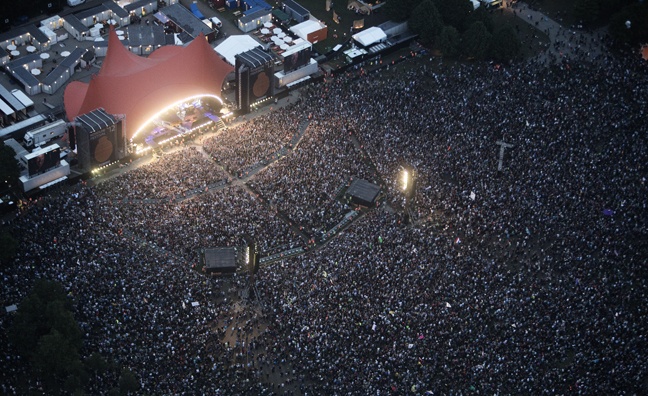
Considered one of the A-list festivals on the European circuit, the event has featured acts such as The Rolling Stones, Bruce Springsteen, David Bowie, Bob Marley and U2, and was headlined this year by Foo Fighters, Arcade Fire and The Weeknd.
The largest festival in Northern Europe, it is run by the not-for-profit Roskilde Foundation.
How was 2017 for Roskilde?
We are very pleased with this year’s edition. It was once again completely sold out, which means we’ll be able to donate a lot of money to social and cultural charities. We had 180 acts playing to an audience from all over the world, celebrating diversity and togetherness for a full week. As pointed out by many guests and medias alike, there were many of these very special and touching moments in front of our stages and around the festival area.
What are the biggest challenges facing the festival market?
It is easy to say the weather, as we have seen quite a few festivals struggle just over the last two seasons. But if you look at the stuff that we can actually do something about, I think the biggest challenge is that a lot of acts are touring too much. It is harder than ever to get a good vacuum built and it feels like pretty much everyone is always touring - at least to some extent. The rising fees just does not correlate with this, so it is something we consider carefully when we put together our line-ups.
What are the biggest opportunities for the festival market?
More people than ever, from many different demographics, are attending festivals, so there are plenty of potential ticket buyers. The growing competition means that you have to consider what can make your festival stand out, but if you get it right and nurture the profile and the connection with the fans, you can still build strong new festivals. Or in our case maintain a unique position in the festival market. As long as we keep doing what we do best and continue to renew our festival, I strongly believe that there will be a place for Roskilde for many many years to come.
How important are headliners to your event?
The most important thing is for us is the full experience. Headliners are important but, for us, so are the stars of tomorrow. Whereas the smaller shows offer more intimacy, our headliners create an incredible feeling of togetherness across generations in the 17,000 capacity arena tent or on our biggest stage, the iconic Orange Stage. Headliners also, obviously, help sell a lot of tickets, which in turn means we can book more experimental and unknown acts as well. A lot of times the first-time ticket buyers go because of headliners, but the ones that return year after year are less dependent on headliners and more interested in the full scope of what we present.
Glastonbury is taking 2018 off, do you think this will have any wider implications for the European festival sector?
Glastonbury has taken a year off before and as far as I can recall that did not really change much for the rest of us. There will be a lot of festivals both in the UK and in continental Europe competing for the many thousands of visitors that would otherwise have gone to Glastonbury. It may be easier for some of the festivals in their weekend to book certain acts, but on overall I do not feel that it changes the supply of acts.
Has there been any impact on overseas festivals as a result of the Brexit situation in the UK?
No one is sure of the exact implications of Brexit yet, but there is a lot of speculation. I haven’t seen any impact just yet, but I hope our colleagues in the UK won’t be affected too badly from the possible costs of getting non-UK bands to play. I guess we will be a little wiser as the negotiations move on, but most likely there will not be any effect on 2018 festivals.
To what extent can you plan for adverse weather conditions?
We have taken our fair share of rain and mud over the course of 47 years, so we do have a lot of experience in the field and have worked with the city on getting the festival ground (that we do not own but rent) drained, having good roads for supply so we do not have to drive on the grass with heavy machinery and so on. We have protocols for heavy rain, thunderstorms, different levels of wind and pretty much every version of severe weather you can come up with. But in the end of the day it is the part of an outdoor event that you can plan and control the least, so we are happy for the many good years we have had and pray for sun every year.
Did your security arrangements increase significantly this year in response to the current terrorism threat?
We make adjustments each year, and we focus on a strong dialogue with the relevant authorities that we have built excellent relationships with over the years. This year we made more visible changes, such as additional road blocks and more police at strategic places. We really can’t stress enough that the safety and well-being of our guests is our top priority. At the same time some of the precautions are not very visible in nature, but there is a lot going on behind the lines.
Do you expect the festival market to change much over the next few years?
A lot has happened over the past few years in terms of new festivals, booking, security and much more. New festivals are still popping up all over the place, both boutique and larger ones. So far we haven’t reached saturation point, and we will most likely see more investments and ownership changes in the next few years.