opinion

Live music is worth billions - why are Black and South Asian communities being shut out?

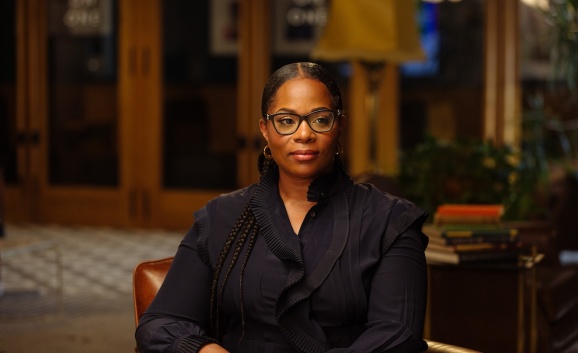
The REMEL (Race Equality in Music Event Licensing) research project has found that Black music events are cancelled, restricted and shut down at far higher rates than other events.  Here, Dr Charisse Beaumont, chief executive and co-founder, Black Lives In ...
Centre Stage: Mark Davyd assesses the state of the grassroots music sector

Centre Stage: Mark Davyd assesses the state of the grassroots music sector FIFA announced in late July that it wanted to create FIFA Forward Enterprise, a company holding the commercial rights and event delivery of all its tournaments. This was valued at around $20 billion, with minority stakes to be sold to investors to raise $4.2 billion. JP Morgan was advising. Thrive, run by Josh Kushner, was expected to front the investor group. FIFA insisted that, despite these developments, “for FIFA, nothing changes”. UEFA responded with a sharp rebuke, saying that the soul and governance of the game “are not assets to trade”, while The Football Supporters’ Association called it “a new low”. European associations started arranging an emergency meeting, with a boycott discussed openly. And the Prime Minister, who administered the Football Task Force and chaired Supporters Direct before he was Culture Secretary, posted to say that “once you have sold a piece of it, you have sold out”. FIFA had scrapped the whole proposal by the start of August. The fact that the entire British and European football establishment mobilised inside 24 hours to resist a proposal to sell a minority holding in a subsidiary now leads me to observe something, very politely. Vast swathes of the live music sector have already been sold in this exact manner. And all we got was a survey. In February, Live DMA and the Reset! network mapped ownership across European live music. More than 150 of the continent’s largest festivals are operated or controlled by four companies. The largest is Superstruct, with over 80 festivals in 10 countries, assembled by one private equity firm, starting in 2017, and sold to another in 2024 for over €1 billion.  There was no ballot about these acquisitions, no consideration of their overall impact, no mechanism by which a ticket buyer could be consulted. The founders of Sónar Festival had spent 30 years building it and learned who now owned it at the same time as everybody else. Boiler Room’s management ended up publicly disowning the investments of an owner they had no hand in choosing. There was no emergency meeting and no statement from a governing body, for the simple reason that we don’t have one.  Importantly, it is the same money sitting at the centre of both of these conversations. The capital circling the World Cup, the capital that bought the festival circuit, the investors who effectively own live music’s biggest companies, all want the exact same asset: a date in the calendar that people will pay to attend at whatever the price.  It happened to music first because music was the cheaper and easier purchase: no regulator, no ownership rules, no consultation stipulation. Football has been getting attention because it has established mechanisms by which the views of fans can be known and shouted about. Nobody can pretend the shift in the ownership of music went unrecorded. Lord Brennan of Canton reported in April, after a year running a fan-led review modelled on football’s, that fans feel “neglected and ripped off”, with the Music Fans’ Voice survey and its 8,000 responses clearly backing the feeling among fans that their stake in live music was being ignored. Then, in May, the Business and Trade Committee concluded that all three tests of market dominance were met and recommended that the CMA open a full market investigation before the end of 2026. Football has a practical advantage in that it can still be protected with words. Nothing has been signed, there is a future to be prevented, and there is a Prime Minister saying all the right things, with the FSA behind him. Sadly for Andy Burnham, music’s ownership and the way that it feels increasingly distant from the fans cannot be repaired with statements. Warm words about how much this Government loves music won’t butter parsnips. Things can be done. A levy that actually delivers at the scale the 93% of fans who backed it had in mind. Protected status in planning and licensing for the venues that 94% of fans want protected. Real secondary ticketing legislation rather than another consultation to confirm what we already know. The fan association Lord Brennan recommended being funded and given standing. And freeholds bought and held permanently in community ownership, one building at a time, which is the most practical and permanent response to the question of who does music belong to. Because the answer it provides is very simple and fundamental: us.  The World Cup was saved by a justifiable campaign and a PM who was prepared to say what fans were thinking. Unfortunately, nothing in music is getting saved that way. What is required are concrete actions to restore music to the centre of our towns and cities as an essential element of the nation’s identity. 

No cash, just trash: Darcy Thomas on how climate mitigation can change the music industry

Art Ain’t Trash/UK Youth Day founder Darcy Thomas recently organised the UK’s first festival to accept plastic waste as an entry fee with backing from Westminster Council, Power Up and Mete Coban, GLA deputy mayor for energy. Here, he calls for systemic change to help address the climate crisis… On International Youth Day (August 12), I hosted the UK’s first festival to accept plastic waste as an entry fee (supported by Westminster Council, Power Up and Mete Coban: GLA deputy mayor for energy). Using on-site plastic recycling machinery at the UK Youth Day festival, we tested a ‘no cash, just trash’ model, where over 450 attendees brought plastic waste to unlock entry, which was repurposed on-site in our ‘Art Ain’t Trash’ plastic recycling workshops, with the remaining waste turned into art for our events in October. The UK music industry stands at a critical crossroads. Julie’s Bicycle revealed that UK festivals produce 20,000+ tonnes of waste annually. Meanwhile, live music and audience travel account for roughly 75% of the sector's total greenhouse gas emissions. As the climate crisis accelerates, pressure across the industry has never been higher. Yet much of the response relies on top-down initiatives that feel like passive compliance, greenwashing, or a modern form of waste colonialism.  To build an industry framework that genuinely heals the people and environments it relies upon, we must enact systemic change across three core pillars. 1 Creative systems change Redefining waste as value true transition requires implementing new green technologies/localised recycling methods, and renewable power directly into live infrastructure, building on the proof-of-concept established at UK Youth Day. Global Majority-led events like City Splash and Notting Hill Carnival face high operational waste challenges and should be prioritised for circular investments. Darcy Thomas with Not3s, Sans Soucis and KVibes at a recycling centre in Lewisham  In my research funded by Westminster Council, I found Notting Hill Carnival highlights that processed waste can be diverted from landfills to manufacture stage builds, costume design and creative workshops that empower communities most affected by climate injustice; preventing that same waste from being sent back to our motherlands. 2 Holistic, sustainable and ethical talent development Global Majority talent drives over 80% of UK recorded music revenue. Talent development can no longer be limited to studio time and social media strategies; it must empower artists as environmental stewards.  Incorporating talent into community clean-ups and our Art Ain’t Trash workshops transforms sustainability into creative flow, community connection, and improved mental and physical health. Wellbeing is essential: according to the UK Musicians’ Census, 74% of UK musicians earn under £30,000 annually from music, with 43% taking home less than £14,000, fuelling a mental health crisis that leaves nearly 30% reporting poor wellbeing and a quarter unable to support themselves. When most creators struggle to sustain a living, asking them to fund standard, high-emission marketing campaigns is unfeasible. Educating artists in circular practices is an economic lifeline. Those most affected by environmental degradation must lead the solutions Darcy Thomas Simple choices – like sourcing wardrobe from charity shops or circular archives – dramatically reduce budgets while embedding sustainability directly into the visual aesthetics.  Implementing resource-efficient production cuts overhead for independent creators, freeing up vital capital while protecting artist longevity. I manage musician, composer and artist Che Lingo who shows me daily how creators act as direct conduits for environmental awareness. Che is the perfect fit. His music speaks directly to the young, Global Majority demographics statistically most vulnerable to climate injustice, making his platform uniquely powerful.  UK Youth Day festival 2026 His work with me on the Art Ain’t Trash outreach events and workshops shows a genuine sense of environmental stewardship, empowering the artist while activating his audience as catalysts for local and global change. By hosting events like UK Youth Day or our Project R3claimed stage at The Alternative Escape 2026 (supported by Power Up), we prove labels can help artists operate sustainably while opening new revenue streams: Solar showcases & low-emission touring:Mobile live shows powered by renewable energy and low-carbon logistics to cut overheads. Waste-to-resource merchandise & releases:Turning venue waste or community clean-up plastics into merch, recycled plastic vinyl and stage infrastructure: converting a waste stream into direct artist resources/revenue. 3 Global Majority leadership & ownership Systemic change is impossible without representative leadership. Studies by Youth Music and Black Lives In Music highlight a stark disconnect: while Global Majority creators shape the UK's sound, only 22.1% of industry leadership roles are held by ethnically diverse individuals, and just 29% of young Global Majority creatives feel represented by decision-makers.  Crucially, the Global Majority remains almost entirely absent from owning the companies holding key procurement contracts for climate mitigation: waste management, energy supply, and venue operations. Festivals, venues and labels must actively commit to ring-fencing procurement spend for Global Majority-owned green-tech and circular suppliers. Without Global Majority leadership, we risk letting the narrative be driven by the same systemic structures that caused the climate crisis. Those most affected by environmental degradation must lead the solutions; not only for ethical, political, and cultural reasons, but to rebuild a fairer economic balance. If the music industry is built on the backs of Global Majority pioneers, these same leaders must be given the agency, contracts, and platforms to direct its sustainable future.  

'People yearn for belonging': Rebecca Dixon on the industry's problem with fandom

'We are invisible': Music Producers Guild calls for government backing for recording studios

Centre Stage: Mark Davyd on what new PM Andy Burnham can bring to the grassroots sector

subscribers only

MORE Music Week Features

Show More
Loading
subscribe link free-trial link

follow us...