
“I’m the world’s worst morning person!” Sulinna Ong tells Music Week at the start of our 7:30am conversation, but what ensues gives us reason to doubt her proclamation. In her first interview since leaving her role as global head of editorial at Spotify to manage U2 with Full Stop Management’s Irving and Jeffrey Azoff, the LA-based exec is in sparkling form. As U2 begin a huge album campaign, she reveals all about their new era and – with contributions from both Azoffs – explains why she left streaming for the “scary” world of management…
WORDS: BEN HOMEWOOD
PHOTOS: WILLIAM RODNEY CAMPBELL
“I’m obsessed with being a sniper, I’m very good at it…”
Sulinna Ong is talking about video games, specifically one called Sniper Elite 5, which she’s been playing a lot recently to while away the weeks before the upcoming release of Grand Theft Auto VI.
“I’m always a sniper when I’m playing battle warfare games, but GTA V is my favourite game of all time; I’m waiting with bated breath for the new one,” Ong informs us. “The reason I’ve always loved video games is because it’s an immersive world, it keeps your mind active and you’re not thinking about anything else. I also love meeting people from all over the world. I’ve been on Discord for many years and I have met some really wonderful people through those communities that I’m still friends with.”
We’re only a couple of minutes into our chat with Ong, the former global head of editorial at Spotify who recently left to join U2’s management team, and already she’s painting a vivid picture of her life in LA. She moved to the city in 2022 after being promoted from Spotify’s head of music for the UK & Ireland. Her previous roles include two years at Deezer, managing artists such as Kasabian and Fun Lovin’ Criminals, and various posts in tech at companies including Sony Electronics, Sony BMG, Live Nation and WholeWorldBand. Amidst all that, she was “honoured, on a very special day” to be crowned Music Champion at the Music Week Women In Music Awards in 2021.
Ong’s loquaciousness is even more notable given it’s 7:30am and, as she says a few moments in, she is apparently “the world’s worst morning person”. Despite the evidence to the contrary, Ong tells us she is still struggling to get used to the pace of the mornings in LA. On hand to provide physical proof of the point she is about to make is her phone, which begins to ping repeatedly until she puts it on silent.
“Sorry, it’s just because everyone’s up and knows that I’m up,” she smiles. “Mornings are the thing that I have struggled with the most here, because pretty much as soon as your eyes open at six, you’re straight in. There’s no, ‘I’ll gather my thoughts and have a coffee.’ It’s, ‘Bam! Straight in.’ And I’m not the only one. I think pretty much everyone who works in the business here is the same.”
Ong’s remedial measures include the strict preservation of her sleep and reading books (current favourites include Cory Doctorow’s Enshittification and Meditations by Marcus Aurelius, which she says is “in my handbag at all times”). Video games, too, help her switch off at the end of a long day.
Just recently, her days have been extra jam-packed. At the end of May, it was announced that, at the personal request of U2, Ong was to take up a newly created role with the band’s management team. She joined as a management partner, working alongside Full Stop Management’s Irving and Jeffrey Azoff. Carnaval De Luz, their first album in nine years, is due on November 13, with a tour – and more besides – to follow. So it’s no wonder Ong is busier than ever.
“The band felt they needed a third partner to complement Irving and Jeffrey, and now the three of us work as a unit together,” she explains. “I have a creative history and lens, which is wrapped in my experience in streaming and technology, so my role is really focused on innovation and creativity.”
Ong had dealt with Jeffrey Azoff while at Spotify, and got to know Irving during talks for her new position. She speaks glowingly about them both.
“What always impressed me – and still does – about Jeffrey is how calm, measured and thoughtful he is,” she says. “He’s a real deep thinker. How he carried himself really interested me, it was very different from most managers.”
She describes Azoff senior as “a legend”.
“Irving is just amazing, he really is,” she adds. “He’s so fast, he’s so quick and he’s funny, which I really appreciate. When you’re working with people closely on a day-to-day basis, a sense of humour and being able to laugh at things gets you through the stressful periods. I’ve already learned so much from them both.”
Irving Azoff is effusive in his praise of his new colleague.
“I mean, to find someone with Sulinna’s qualities who has relevant, meaningful experience across the label side, live, management and streaming, that’s the equivalent of a unicorn, I think,” he tells Music Week. “I’ve been doing this for quite a while and I think I can safely say that she’s rare. When you start from a baseline of her just having impeccable taste and instincts and being exceptionally bright, and you add in the incredible depth she has across the various fields of the music industry, it’s no mystery why we were excited to be able to bring her on.”
In Ong, he sees a reflection of his own view of the art of management.
“My approach is very simple and always has been: do what’s right for the artists,” he explains. “Protect your artists, advocate and go to bat for them every time. Sulinna builds on that concept seamlessly. She has an ability to speak and comprehend the creative language with the artist, but also understands the business and the current landscape well enough to help navigate the path from the conception to the reality of a project.”
Jeffrey Azoff recalls “a great history” working with Ong during her seven years at Spotify.
“She consistently carried herself with respect, class and, of course, taste,” he states. “Unsurprisingly, absolutely nothing has changed now that she is on the other side. The only difference is that we speak all day now, which I absolutely love. She is constantly putting me onto new ideas, new art and most importantly, a new perspective.”
Ong’s singular take on things has been shaped by both her background and her career. Born in the UK to a Chinese father and a Persian mother, Ong lived in Iran and then Australia, where she would study music. As we reflect on her music-obsessed teenage years, we uncover her U2 origin story.
“I discovered Sunday Bloody Sunday at 12 or 13,” she recalls. “I didn’t know what it was about, so I transcribed the lyrics and looked it up. At that age, I would buy every single music magazine and read every single liner note. What fascinated me about U2 was the very unique tone they used to convey social and political commentary, and it was always wrapped in inspiration and a hopefulness, rather than outright aggression or anger. They didn’t shy away from the message, but it was very much true to the DNA of who they are as people.”
As she watched their black-and-white videos and admired the work of director Anton Corbijn, the teenage Ong had no idea that she would one day be tasked with helping to shape the future of a band now five decades into their career. And yet, that is precisely where she finds herself. Indeed, prior to our conversation, she took a call from Bono himself.
“I have been fortunate to have many opportunities come to me and a lot of them didn’t feel right, or weren’t the right timing,” she says. “But when U2 and Irving and Jeffrey approached me about this, it did really feel right, and it was…”
On that note, it’s time to quiz Ong about swapping streaming for management, what’s next for U2, and her take on the evolving industry landscape…
First of all, talk us through how you made the decision to leave Spotify – it can’t have been easy?
“No, not at all. I had been in streaming for 10 years. It was a very special chapter of my career because I entered streaming at a very pivotal moment. It was still new and on the rise, and there was a lot of energy and innovation around it. I feel very lucky to have been in a golden period. I really loved my time [there] and the people, and the decision to move on was not an easy one, but there was a lot of thought behind it.”
Can you elaborate?
“If you look at my career, I have always had different chapters. What drives me is being able to build a really diverse skill set, to work in different sectors and to always be growing and challenged. I tend to reinvent myself in cycles of between five and seven years. I was thinking about the change in the music landscape and had a desire to be closer to artists when this opportunity arose. The combination of U2 and their stature, their music, their work and the ambition they still have for the future, plus Irving and Jeffrey in the mix… It was an opportunity that I had to explore and to jump at.”
So the decision wasn’t a reflection of your thoughts on where music streaming is going?
“It has changed, but everything changes. Anyone who thinks that I’m leaving so streaming is done gives me far too much credit and influence! Streaming will be absolutely fine. It just evolves and changes, and there are different phases of every company, every technology, every format. I did 10 years during a really unique time. It was the building time and now streaming is in a different phase of its iteration. I wanted to take everything that I had learned and come back to the artist side, [working] with an artist and a team that had a huge breadth of diversity to the remit.”
Why did you want to get back into management specifically?
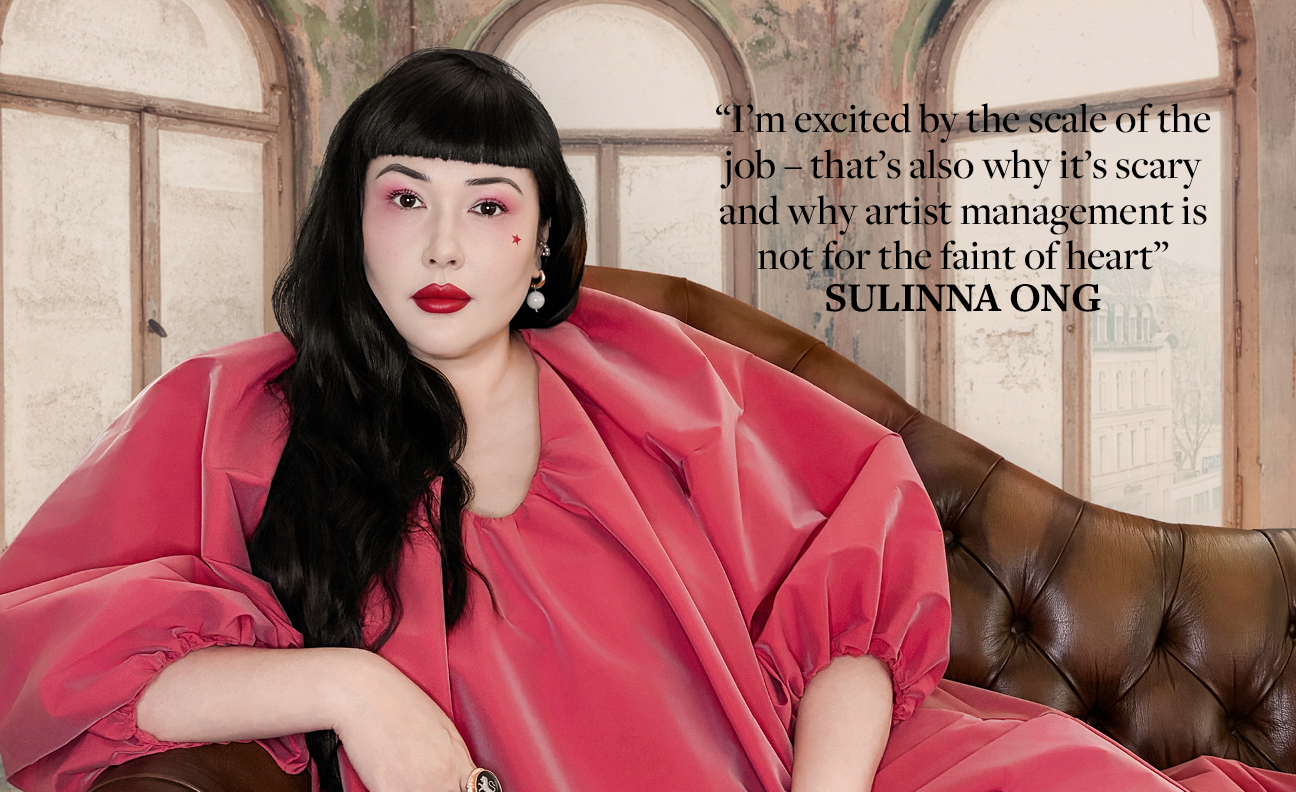
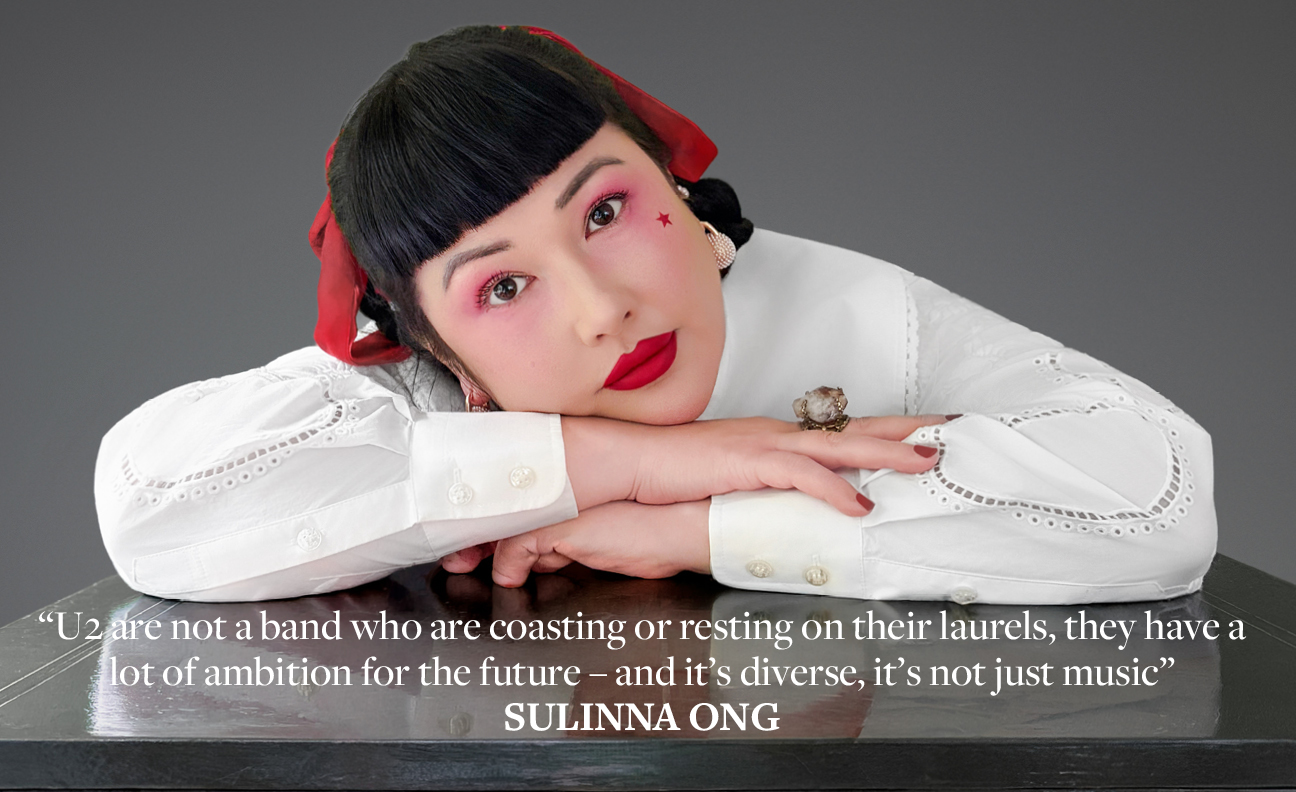
“It’s the scale of the job. That’s also why it’s scary and why artist management is not for the faint of heart, let’s say. You are responsible for so many different things across an artist’s career – especially with an artist like U2, with the breadth of the catalogue that they have, as well as their own ambitions. They have a lot of ambition for the future. This is not a band who are coasting or resting on their laurels. And it’s diverse – it’s not just music. So that was the thing that really attracted me.”
How different is the management landscape from when you were last involved?
“It’s very different. Managers drive so much more now than they used to, even compared to five years ago. That was attractive to me. Plus, being able to work at [this] particular level – the Azoffs are masters of the craft – and [collaborating] closely with them and an artist with the ambition and the history that U2 have is quite unique.”
What defines good artist management?
“Tenacity is number one. You really have to be strategic, now more than ever. I think you have to be extremely resourceful. There are many stakeholders that contribute to an artist project – it’s not just management. You really rely on the partners, the promoter, the agent, the label… It’s obviously different for each artist and team, but at the centre of it sits artist management and you are juggling all of these different pieces. You are representing and fighting for the best for your artist. And then you’re also grappling with a music landscape that is probably the hardest to navigate, I would say, compared to anything previously in history. And it’s going to be increasingly complex as we go forward because of all the things that are shifting right now and will in the coming years. So it’s strategy, patience, tenacity, resourcefulness and the ability to quieten down all of the noise around you to think clearly, beyond just reacting. I am always thinking, ‘Am I reacting or am I actually being strategic?’”
Can you tell us what you will bring to U2’s team?
“It’s about honouring their legacy and how we represent that in innovative ways – connecting the dots in terms of where they are culturally now and introducing their music to new audiences in new ways. Catalogue is certainly an important part for an artist like U2 and they have a very clear vision of what they want to achieve. We are here to take that and innovate, then hopefully the sum of us equals something greater. I think about how unique the U2 story is. They’re celebrating 50 years as a band, since the day that Larry Mullen Jr, as a teenager, pinned a note to the school notice board saying, ‘Drummer seeking other musicians to form a band.’ I can’t think of another band that has been together as four core original members for as long as they have. I’m focused on how I am going to tell that story in the future across various platforms, whether that’s film, TV series, documentaries or different types of formats.”
In terms of the new album itself, what can people expect?
“It’s a diverse album. There are classic U2 songs on there that you would expect, but also ones that you wouldn’t. I’m really excited to be working on it. There are some familiar names in terms of their longtime collaborators like Jacknife Lee, Daniel Lanois, Steve Lillywhite, Brian Eno and Anton Corbijn. One song in particular called The Greatest Show On Earth, which is my personal favourite on the album, is a really powerful, beautiful song. I’ve heard the band say that they can consider it almost like a continuation of With Or Without You.”
How is your relationship with the band evolving?
“Artist management is so intense and you’re working together at such close quarters. It’s really important to be able to talk to your artists. There are four of them in the band and it’s very equal – I think that’s part of the reason they’ve made it through 50 years. The nature of the relationship is transparency, honesty and being able to inspire one another, but also have difficult conversations. And to know that you’re all working towards the same goal, and also to challenge one another. They challenge me all the time – I love it. It pushes you to rise to the occasion beyond what you might have done initially. I like that and I think it’s the same vice versa. One of the things I really respect about U2 is when they told me, ‘We don’t want a yes-person; that’s not what we need in our manager.’ I was like, ‘Yes, that’s incredible!’”
You’re now on a different side of the conversation around artist campaigns from when you were at Spotify. How are you adjusting?
“I knew that for the next chapter, I wanted to use muscles I hadn’t used for some time, as well as build new ones. I love the challenge of having to wear different hats and also being presented with things where I’m like, ‘I don’t know how to do this, but I’m going to figure it out.’ I also like asking, ‘What if we did this?’ If people say, ‘You’re crazy, it’s never been done before,’ I’m like, ‘Why? Why is it crazy? And if it hasn’t ever been done before, maybe we should try it.’”
Earlier you spoke about how the business is shifting – what areas are you paying closest attention to?
“Obviously, the way people listen to and discover music has changed significantly, even over the past five years. Algorithmic programming across the board – whether that’s music on your social media feed, or even your news feed – has had a huge impact on discovery. That will evolve even further with AI in the mix. That’s the big thing on everyone’s minds, as it should be. I have experience with AI and I’m very closely watching the developments globally on how countries and governments are tackling it. You look to countries like Australia, which has led the charge in regulation. I’m watching all of these things unfold very, very closely, and seeing how they will impact or influence other markets.”
What’s your general take on AI?
“It is a massive question. My personal stance is that human artistry is what I’m always focused on. I think AI is a very important technology, definitely transformative – more so than anything that we’ve seen in the past. With that comes the need to really be thoughtful on protections for artists and how AI enhances their work, versus anything that takes away from it. It is a balance of understanding the opportunities but also, at the core of it, being respectful and thoughtful about human artistry. I think you can see from my career that I have always leaned into it and have formed the basis of my expertise at the intersection of music, entertainment, culture and new technology. And technology is now a big part of our industry, whether anyone likes it or not, so having the ability to understand it, but also be adaptable and fluid, is very important.”
Technology is just one challenge facing artists. How do issues such as rising costs and the sheer volume of music now available to consumers affect a band like U2?
“I don’t think any artist is excluded from thinking about these things. U2 care about the industry as a whole. We often have conversations about new artists coming up, because they are very interested in and concerned for new and developing artists. Even if something doesn’t affect them, they care about what it’s like being a new artist right now. And there’s a lot to think about – not only do you have rising costs for touring, but rising costs for everyone in the world in terms of just living and existing. Then there are the complexities of cutting through and being discovered in a time when it’s so noisy, where people are insulated in their own personalised algorithmic bubbles.”
What’s the answer to these challenges?
“My view is that things are cumulative. Rarely do you have this one lever you can pull that shifts everything. Even some of those moments that look like a phenomenon – things that seemingly take off and take over the cultural discourse – might seem like [the result of] one lever, but they aren’t. It will have been bubbling away for some time. I look at it as a whole: it’s about being able to hold your nerve and figure out what’s true to your artist, keep building and putting all the pieces together.”
Circling back to your own career, has starting your new role given you pause for thought about your path through the business and the opportunities for the next generation of young women?
“I think about this a lot. Unfortunately, I see fewer women in senior positions now than, say, three years ago. It’s not that there’s more work to do – sometimes I feel that when I look at the landscape now, we’ve taken a couple of steps back, not forward. My approach is to really think about how I can support executive talent coming into the business and as they go through their career journeys. I don’t want to hire in my own image, but I am very interested in people who come from different backgrounds and have different life experiences. Actually, my most successful or innovative projects have been the ones where there has been a very diverse team from different backgrounds… social, economic, all of those things. So, to answer your question in terms of how I feel about it, I’m worried. I want to ensure that, as we go into the future, we have that new talent coming in. I try to go beyond my own network to seek people out who might not be in those circles. That is something I’m always on the lookout for.”
Finally, beyond the frantic mornings, what are your biggest lessons after four years living in LA?
“No place is perfect! [Laughs]. The time has gone by in a flash. The pace is faster and there is a cultural difference. Americans are much more social, and mix business and socialising more so than the Brits. You might think you know the US from across the pond, but only when you live and breathe it and work here do you understand the complexity of the market. There’s a tendency when you’re not American and you haven’t lived here to think of the US as one big country, but the landmass is huge. It’s easier to perceive it more like Europe and that the states are all different countries in themselves. That has been fascinating to get an understanding of.”
 FOLLOW