interviews

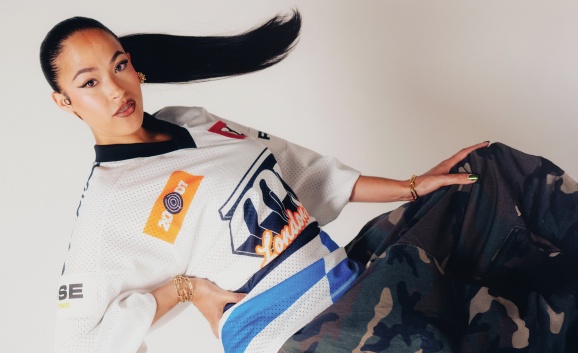
Jazzy - The Music Week Interview

Jazzy has been one of the most exciting stars to have emerged from the dance music scene in recent years, but that’s not enough for the Irish artist. She wants more. Her debut album Peace & Patience represents the latest ...
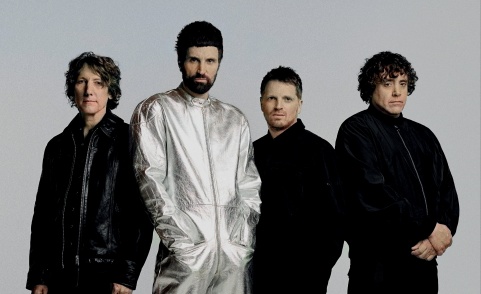
A Class Act: Kasabian and team get into Act III

Kasabian have just scored their eighth consecutive No.1 album. Here's a chance to revisit our interview with the band from earlier this year... Over the course of two decades and counting, Kasabian have become one of the biggest of their generation, and with new record Act III and a huge headline show at Finsbury Park fast approaching, they are aiming higher still. To get the full lowdown, Music Week meets their inimitable leader Serge Pizzorno, plus co-manager John Coyne and Columbia president Dipesh Parmar, for a conversation that takes in overcoming adversity, the enduring appeal of guitar bands and why, in 2026, music “has to be wild, otherwise, who cares?”... WORDS: LISA WRIGHTPHOTOS: NEIL BEDFORD There are many things that you might have come to associate with Kasabian over the years. There is, of course, their incendiary live show that’s seen them top many festival bills, including a Glastonbury Pyramid Stage headline slot in 2014. For another: their playful, wildcard brand of genre-straddling rock that’s earned them seven consecutive UK No.1 albums. And that’s not to mention their impressive tenacity in the face of adversity and internal, highly publicised hurdles.  One thing you probably won’t have linked Kasabian – made up of frontman and songwriter Serge Pizzorno, bassist Chris Edwards, drummer Ian Matthews and guitarist Tim Carter – with, however, is Chanel. But the singer has a theory that the famous fashion house and their ninth album, Act III, might be cut from the same cloth… “This is going to sound a bit leftfield, but I love the Chanel shopping bag,” Pizzorno begins with a glint in his eye. “I think it’s the most perfect thing ever. It’s just a white bag, with black handles and the Chanel font. It’s so simple, efficient and iconic, and I like the idea that these songs get the job done in that same way. The riffs are simple at times, but they’re perfect and in the right place. I could see Act III on one of those bags in black font, very similar to Chanel.”  And would founder Coco have been a fan of Kasabian?  “It depends on what paper she read,” Pizzorno notes, wryly. “If she met me, she would be. But if she read the wrong paper she’d probably think that we were crazy people that she wouldn’t want anything to do with…” He is talking to Music Week from a room of his house painted floor-to-ceiling in horizontal black and white stripes, like a monochrome take on the Cheshire Cat from Alice In Wonderland (an analogy he’d probably enjoy) or a sideways Newcastle United kit (one the partisan Leicester City fan almost certainly would not). He’s in high spirits talking about the band’s upcoming release, due on July 17 via Columbia, who have been on board since their 2006 second album Empire.  With 844,683 sales to date according to the Official Charts Company, that record kicked off their run of chart-toppers, followed by 2009’s West Ryder Pauper Lunatic Asylum (993,885), Velociraptor! in 2011 (682,341), 2014 effort 48:13 (524,447), 2017’s For Crying Out Loud (220,412), The Alchemist’s Euphoria in 2022 (38,613) and 2024’s Happenings (34,017). Their self-titled 2004 debut, which peaked at No.4, has 1,112,022 sales. No wonder Columbia president Dipesh Parmar is full of praise for their achievements.  “Kasabian are a band that have not only defined decades of British music, but continue to evolve and push the boundaries,” he says. “There are so many standout moments across their catalogue, and they keep getting better.” “Serge has written and produced seven No.1 albums and we are looking at number eight,” chips in their long-term manager John Coyne, who has been with the band for the past 22 years, alongside co-manager and SJM MD Simon Moran, who has been involved for the last 15. “I think that achievement as a songwriter is monumental.” Act III, like its theatrical title implies, represents a new phase for the band – one, Pizzorno explains, where “all the madness levels out”.  “The last six years have felt like an opera of sorts,” he says. “In the great stories, the third act is when things come together and you get this resolve. It feels a bit like that. It’s a great way to jump off from this point to somewhere completely new and different for the next record, and it puts an end to this chapter.” If this portion of their career has been an opera, then for a time in 2020 it also threatened to be a tragedy. After being charged with assault against his then-fiancée, original frontman Tom Meighan stepped down after pleading guilty that July. The band said they were “left with no choice but to ask Tom to leave”, adding there is “no way we can condone his assault conviction”. Their future seemed uncertain, but in May 2021, Kasabian announced a tour with Pizzorno – their sole songwriter since the beginning – stepping up to the mic and into centre stage. It was a move that began out of necessity and a need to “solve a problem”, and half a decade later, he describes the decision as having “changed my life in every way”. “You have to grow up in some respects and take care of yourself in that role at my vintage,” he chuckles. “If you want to do it to a big level and entertain 50 or 60,000 people, you cannot be a wreckhead. You have to take it seriously. If you want to play the Academies and have a little laugh, fine. But I don’t want to do that. I want to keep going forward.” The team at Columbia didn’t question his choice to step up. “They were unbelievable,” he recalls. “Nothing was even said about it. It was just, ‘Great, can’t wait to hear the album.’”  Meanwhile, co-manager Coyne is justifiably proud of how they handled the shift.  “They’ve never been stronger,” he asserts. “Serge has grown in confidence and stature as a frontman, and I’m very proud of the band for surviving the highs and lows of recent years. Now, we’re looking at probably the biggest live summer they’ve ever had.” That summer will reach its apex with a massive outdoor headline show at London’s Finsbury Park. It is the band’s latest live milestone, following a homecoming 2024 headline at Leicester’s Victoria Park to 50,000 fans.  “The band have grown up with their audience and there’s a really strong connection between them,” says Coyne. “Saying that, the consistent headline slots at festivals across the UK have also given them access to a younger audience, which is paying off to this day and is a testament to their ongoing appeal.”  Across the coming months, they’ll also top the bill at TRNSMT in Glasgow, Boardmasters in Cornwall, and on the Thursday night of Leeds Festival.  Coyne highlights the impact of working with Simon Moran as a key driver of their triumphant live shows.  “We make a great team,” he says. “The band and I feel very lucky to have Simon by our side. Obviously, a massive part of Kasabian’s success is live, and of course that is what Simon lives and breathes. His encyclopedic knowledge and pragmatic approach to all areas is pretty unique, too.”  Dipesh Parmar thinks their ability to reach different audiences through multiple mediums is essential to their cross-generational appeal.  “You go to their shows and it’s so mixed,” he says. “They have a huge fanbase that’s grown with them and a whole new one coming through. Whether it’s people discovering them through social media channels like TikTok, hearing G.O.A.T synced on Sky Sports, seeing Serge as the chauffeur for Ghostface Killah in Mark Ronson’s legendary performance at the BRITs, or their recent collaboration with Calvin Harris, it’s about that hunger and ambition to continue to resonate with new audiences.”  Pizzorno collaborated with Little Simz for his The SLP solo project and has also worked with LL Cool J and DJ Shadow, among others. Coyne’s assertion that this adds up to Kasabian being “much more than just an indie band” is backed up by Parmar.  “They are creative, they are huge music fans and are very across the current landscape,” he says. “Serge is always talking to us about new artists he has discovered and really has his finger on the pulse.” For Pizzorno – an eminently youthful, cheeky presence still at 45 – there is evident fuel to be found in watching a new generation of Kasabian fans join the fold.  “If you stay in the game long enough, you go through a transition where the crowd gets older with you and then gets younger again, which is the best outcome, because then the mosh pit returns to an insane level – to the level it was when we first started,” he enthuses. “The gigs are better than ever because you’ve got that injection of youth and excitement, but also the people that have lived it with you for the last 20 years.” Life seems deservedly smooth for Pizzorno right now. During the making of Act III, he would go on runs and watch “artisan 1970s films” with his teenage sons; and perhaps as a result of this relative calm, the songs practically fell out of him.  “This album came so quickly,” he recalls of the time spent in his home studio, affectionately nicknamed The Sergery. “I was only doing four or five hours a day, which is a new thing. But I was just getting it done.”  “I don’t think that Serge is thinking about No.1 albums in the making of his records,” Parmar comments. “It’s about figuring out the sound, what he wants the music to say and how he wants people to feel when listening to the body of work.”  Mark Ralph (Years & Years, Becky Hill, Clean Bandit), who co-produced Happenings, returned once more, providing the foil to Pizzorno’s chaotic creativity.  “Mark’s like a scientist; he’s got a really good pop sensibility, so we can bring some of those crafted, technical things that pop music does so well, and then dial it into the madness,” he laughs.  As a result, Act III contains some of Kasabian’s most concise material to date, from the euphoria of second single Great Pretender to the new-wave synths of Nothing Better Than This. When the record arrives, Kasabian will be chasing a coveted eighth UK No.1. Currently, they stand as only the second band and third act in history to have seven records debut at the top spot in a row.  “And if we went eight, where would that put us in that league table?” Pizzorno questions, eyebrow comically raised. “Not that I’m bothered…”  There’s a hustler mentality that lives on in the frontman, ignited in their early days fighting for their spot first in Leicester and then amongst a heavily London-centric industry. It’s still present, even now that they’ve achieved sustained and substantial success. “The hustle starts when you’re going around school persuading people to come and see your band, because you only get a gig if you can bring enough people in to buy beer,” he says. “I enjoyed that hustle and I don’t see it any differently now, trying to get the eighth No.1. It’s still just me going around school saying, ‘You’ve got to watch us, man, because we’re the best fucking band you’ve ever seen.’”  “Kasabian have always been a band of the people,” Coyne attests. “The songs resonate with their audience and the band are pretty obsessed with delivering amazing shows time after time and the results speak for themselves.”  “They have an incredibly loyal fanbase and are continually bringing new people in, too,” adds Parmar. “People want to see them win.”  Kasabian have been big hitters in the British guitar landscape since they started. Alongside their incredible charts record, almost a quarter of a century in, they still boast hefty streaming numbers, with more than five million monthly Spotify listeners.  Parmar is clearly proud of helping foster their longevity.  “Columbia has a history of building career artists,” he says. “Artists like Manic Street Preachers, Calvin Harris, MK, Davido and Mark Ronson have been signed to us from an early stage and we are really proud of that. We love having hits, of course, and we do that very well. But being part of an artist’s journey from day one and creating longevity is why we come to work every day. There is a lot of trust involved in taking the time to build strong relationships, and Kasabian are a brilliant example of that.”  Nodding to a busy period, Parmar says Kasabian’s latest campaign is part of an exciting bigger picture. “We are also locked in with our artist development propositions with the likes of Skye Newman, Aaron Rowe and Chloe Qisha,” he says. “So we’re excited about where we can go long term.” For Pizzorno, the trust invested in him by the label to “just let me do what I do” has been instrumental in allowing the band to grow without compromising on his vision.  “From day one, when we got signed by Ged Doherty at BMG, through to having Mike Pickering [formerly of Columbia] as an A&R, to now with Dipesh, there was never anyone that would ever get in the way,” he says. “I’m forever grateful because I’ve been treated like an auteur, which is incredible.”  Indeed, he reckons there might be a lesson there. “It’s food for thought, letting people be, and saying, ‘Trust in the art,’” he says. “No one really understands what’s going to connect or not because, at the end of the day, the people decide, so let the art find a way.”  Pizzorno cites a couple of examples of what he means, describing Raye’s No.1 album This Music May Contain Hope as “stunning” and “authentic – although I hate that word”. He also singles out Rosalía as an artist who embodies the importance of letting people create without boundaries.  “It’s someone being left to follow [their intuition],” he says. “Because of that, it just feels like someone being free.” Unsurprisingly, Pizzorno is a vehement detractor of the rise in AI songwriting, comparing it to the difference between “fast food or a paté that’s been handmade and took the chef 20 years to develop”.  “People who are using it now to write them a song – are they that desperate to be famous?” he wonders. “It’s taken me 25 years to get to a point where I can confidently say I know how to write a song, and it’s the joy of my life, so why would I let something else take that away from me?”  He does, however, proceed to share his concerns for the current generation of artists. “But then, if I was 15 now I’d think, ‘Well, I’m not gonna put 25 years of work into this,’” he says. “I worry more for the next generation of writers going, ‘Why the fuck would I bother learning how to do that?’”  Pizzorno illustrates what can happen when the traditional path is followed. The image of him in The Sergery is of a six-foot-plus musical alchemist, cooking up the sort of earth-rattling bangers that can make tens of thousands of people lose their minds. It seems he’s almost allergic to being pigeonholed.  “I don’t really make records – I make worlds,” he offers. “I’ve never thought of it as one genre or another.” Release The Pressure, Kasabian’s recent Calvin Harris collaboration, speaks exactly to this outlook.  “That was such a great link-up,” Dipesh Parmar smiles. “Serge and Calvin got on well when they spent time together at The BRITs last year and it developed organically from that. It’s a brilliant record and it was great to get the band out there to a new fanbase who really responded well to it. Kasabian have always had that rave influence, so this actually felt like quite a natural extension to some of the music they’ve experimented with and continue to make.”  For Pizzorno, Harris’ “incredible craftsmanship with melody” was appealing, but so too was the opportunity to throw yet another curveball out to the world.  “I like the leftfield-ness of it,” he grins. “We live in an age where if you don’t do anything new, you just get lost. On some level, it has to be wild because otherwise, who cares? You put something out and then an hour later, someone else does.”  This sort of thought process is why both his manager and label head describe him separately as a “visionary”.  “Kasabian are special because there’s no one like them,” praises John Coyne. “Serge has always had a vision that’s singular to him and he’s been able to translate that to the band. He really is that rare thing: a true artist.”  For Parmar, too, the band’s appeal boils down to a winning mix of spark and determination.  “Serge and the guys love what they do and you can really feel that,” he offers. “They’re ambitious and continue to push themselves at every opportunity.” Yet, despite all this eclecticism – and a track record that places them in the upper echelons of modern British success stories – Kasabian have long been fighting to debunk the idea of themselves as something else entirely in the eyes of their detractors.  “The first album was influenced by Kraftwerk and Neu, so to be called ‘lad rock’ seemed wild,” says Pizzorno. “But once you’re put in a box, it’s hard to ever escape that.”  Coyne suggests it is a more general issue.  “To be fair, I don’t think bands overall get the credit they deserve,” he notes. “There’s something so special about bands; that bond between the audience and the artist is so strong and reinforced whenever they play live. One of Kasabian’s strengths is transferring that feeling from album to stage and vice versa.” Even so, over the years, Kasabian have often borne the brunt of misrepresentation, perhaps more than most. In some ways, it’s been responsible for much of the fire and fighting spirit that has categorised the band’s outlook.  “I always used it as a positive thing,” says Pizzorno. “The more that I was misinterpreted or misunderstood, the more opportunity it gave me to push the weird [elements] and to push all the things that I love.” However, the sense remains that certain portrayals of the band came from something deeper than just genre; something more related to their background and inability to fit in with the London-centric press of the time.  “We didn’t really know how to communicate [back then],” he says. “We’d meet journalists who were really clever and articulate, and we couldn’t speak the same language so we’d just revert to being like, ‘Fuck you’ because that’s the only way we knew. So I get it. I get what it was seen as.” Fast-forward to the present day, and the unfurling decentralisation of the industry is a hot topic, with the BRITs, MOBOs and the Mercury Prize all taking place outside of London. For Pizzorno, championing the regions is absolutely integral.  “In all those smaller towns and cities, there’s so much talent out there,” he says. “We just need to make it kinder on people who want to be in a band or make shit, and give them the opportunities to do it. Have councils step up and start providing cheaper rents for artists so they can start a scene. It’s not rocket science. Especially in places like Leicester, Stoke or Lincoln, the sort of satellite towns on the edges, having somewhere to go is so important.”  He’s been thinking about starting an initiative in Leicester himself.  “I’m trying to figure something out so the city has that,” he muses. “Because Kasabian didn’t have that, we had to make it on our own, and I’d like to see Leicester evolve from that somehow.” You can see why, in 2026, young people would want to be in a band like Kasabian. They’re one of a number of rock groups playing massive outdoor shows this summer, sharing the Finsbury Park calendar with Wolf Alice and Biffy Clyro, while fellow noughties bands like The Kooks and The Wombats still command huge audiences and top festival slots around the UK and Europe. The cacophonous excitement of last year’s Oasis reunion is, Pizzorno suggests, bound to also have a ripple effect.  “It takes something like that seismic moment to remind people and to wake them up,” he reasons.  Naturally, Pizzorno – who has played shows with both Gallagher brothers – went along himself. “I went to the first show in Cardiff, and then the last one at Wembley, and it was beautiful,” he sighs. “It was just so many things…” It’s a rare concession to nostalgia from an artist whose relentless forward motion and search for the next musical thrill has defined his ethos from the start. If Act III marks the closing of a chapter, then it’s one that’s seen Kasabian firmly write their way into the history books.  “Seven No.1 albums to date is no mean feat and they are one of the few UK artists to do it,” says Dipesh Parmar. “I think people are taking note. The guys are very humble about what they’ve achieved but they’re proud too, as are we. It’s a huge achievement and something to celebrate.” An eighth would be even more impressive but, Pizzorno notes, it’s much more than chart results that sets Kasabian apart.  “I think, as a person, I’m an anomaly – I don’t really fit anywhere,” he says, concocting one final thought. “I like not being a part of it and I think that’s kept us in good stead. The reason we’re nine albums in and have had No.1 records in three different decades is because there’s so much more going on than just being an indie band…”

President Elect: Hitmaker and Snow Patrol star Johnny McDaid talks AI, BMI and more

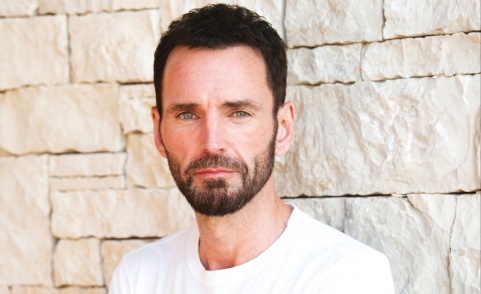
“Do people perceive me?” is something of an existential question for a globally renowned songwriter who has played a part in multiple million-selling hits for the likes of Pink, BTS and many more to ask, but Johnny McDaid is no ordinary hitmaker. The recipient of The President’s Award at this month’s BMI Awards is in celebratory mood as Music Week catches up with him to interrogate his methods, get his views on the rights and wrongs of streaming, and unravel the magic behind his long-term songwriting partnership with Ed Sheeran… WORDS: CHRIS CATCHPOLEPHOTOS: YORGOS FASOULIS When Music Week catches up with Johnny McDaid, he’s taking some well-earned R&R by the pool in Greece. “I think it’s probably been five years since I last shut off properly,” he reckons. “I really do struggle to switch off. But I also love what I do. When you love what you do, time off can feel a bit like, ‘Why am I taking time off from something I love?’” McDaid’s work-life balance issues are understandable given how in demand he’s become as a collaborator within the industry. The songs McDaid has co-written have become some of the most successful tracks of the past 15 years, breaking countless streaming records and embedding themselves into the global consciousness. The numbers behind the songs he’s written with Ed Sheeran alone are head-spinning. Shape Of You, which has 7,040,145 UK sales according to the Official Charts Company, was the first song in history to reach two billion streams on Spotify. It topped the UK singles chart for 14 weeks, is RIAA-certified 13x Platinum, and has 6.7 billion YouTube views. Photograph (3,594,780 sales), Shivers (3,407,323) and Bad Habits (4,397,535) have 7.6 billion Spotify streams between them, while 2025’s Sapphire has clocked up 530 million views on TikTok. This year, Animal, the track he, Sheeran, Blake Slatkin and Omer Fedi wrote for Katseye surpassed 10 million YouTube views within two days of release, and, as we speak, has already passed 315 million views on TikTok. McDaid’s success goes beyond his collaborations with Sheeran, however, with global hits by artists including Robbie Williams, Biffy Clyro, Alicia Keys, Pink, BTS, Lewis Capaldi, David Guetta, Weezer and Kelly Clarkson among the many feathers in his cap as a writer. Though he’s been a member of Snow Patrol throughout this time, joining the band for their sixth album, Fallen Empires, in 2011, McDaid might not be as recognisable to the general public as the artists he’s worked with. This means he can move around the world and witness the songs he’s helped bring to life work their magic, incognito. “It actually happened three times on the way to this holiday,” he laughs. “I checked in through security, and The Vow was playing [from Ed Sheeran’s Play], then I went downstairs and Bottle Up [by The Backstreet Boys] was playing in Duty Free. Then on the escalator back up to the flight, These Alarms [Snow Patrol’s collaboration with Kylie Minogue] was playing. Nobody around me had a fucking clue that I had anything to do with these songs. Isn’t that kind of the best of all worlds?” McDaid’s relative anonymity means that he can go to an Ed Sheeran or an Alicia Keys concert and stand in the crowd, watching the songs he helped create touch thousands of people. It also means he can get some more unfiltered feedback on his work. “When Shape Of You came out, it very quickly became ubiquitous,” he recalls. “It was just everywhere. I got into the back of a taxi in London, and it came on the radio. This cabbie went, ‘Oh Jesus, no!’ And he turned it off as soon as the intro played. He was so bummed out that he was hearing it for the 50th time that day!” Rather than be offended, McDaid took it as a compliment – proof that the song he and Sheeran had written together was having an impact, even if the reaction wasn’t always positive. “I remember being a kid and writing a song, having it on tape and sending it into my local radio station and the producer calling and saying that they were going to play it,” he continues. “The thrill of, like, 20 people listening to something you’ve made on a local radio station – I got a similar thrill in that taxi. That someone was really pissed off that a song I helped to make was so present. It was amazing. It was the same feeling, just that the opposite thing happened!” Moving from Derry to London as a teen, McDaid spent 10 years fronting the band Vega4 before trying his luck as a songwriter. He travelled around America, working with everyone from EDM producers and singer-songwriters to DJs and Nashville veterans, learning as much as he could and realising that regardless of genre, the heart of any great song is its ability to communicate something honest to other people. “It was all down to a woman called Michelle De Vries, who still works in the music business,” he remembers. “Michelle met me when I was in Vega4, and she just really believed in me as a songwriter. When the band split up, I went to Michelle and I was like, ‘What the fuck am I going to do?’ She was the one who put together that tour for me across America. She stuck her neck out and called people. She wasn’t even my publisher. She didn’t have any skin in the game other than the fact she believed in me and thought I should be given a chance. There are still people like this in this business, and they should be celebrated.” For his own remarkable contribution to music, McDaid is being celebrated with the BMI President’s Award at the BMI Awards in London this month. The organisation’s top honour, it has previously been handed to the likes of Noel Gallagher, Willie Nelson, Pitbull, Brian Wilson, and two of McDaid’s closest collaborators, Pink and Fraser T Smith. Starting with the subject of his latest honour, we settle in for an in-depth conversation with McDaid… Since you’ve already won 17 BMI Awards, what makes the President’s Award different for you? “Whenever I’ve been to these awards, I’m always floored by the amount of talent in the room. To be amongst them at all feels like an honour. I struggled a bit being selected for this, to be honest. It feels like it should be me and the other people I work with. To be singularly receiving it is something I have to lean into a bit. It means a lot to me to be celebrated amongst people I really respect, any one of whom could be receiving this. Two people I’ve worked with very closely – Fraser T Smith and Alecia [Beth Moore-Hart, aka Pink] – have both been recipients of this award. Those are some big shoes.” How do you think you are perceived in the wider industry? “Am I perceived? [laughs] Or are the songs I’m writing perceived? It’s always going to be more important to me how the work is received and perceived. Am I that guy in that band who writes those songs with that guy? I don’t know! That might be a question I can’t answer.” Some of those songs you have written with ‘that guy’, Ed Sheeran, have been phenomenally successful. When you start talking about streams and views in their billions, does it start becoming an abstract thing?  “I’m not blasé about it at all. I still feel like it’s a massive honour because it’s indicative of [a song] connecting in some way. If you look at a number and you think, ‘Well, there are eight billion people in the world, if a song has had eight billion streams, then it’s not difficult to do the maths that if everybody in the world played the song once, then that’s the number it would be.’ But I just look at it as a fun thing when you collaborate on a song and it goes like that. Like, we wrote Animal and it became a hit for someone else – it’s then a fun little text message between us. We had this moment in a studio, we spent an hour working on something, and now it’s a hit – look how many people are listening to it. I didn’t think that would happen, there wasn’t any expectation that that was going to happen, so I just find it fun.” It’s not just songs you’ve written with Ed Sheeran, though. What About Us, one of the songs you wrote with Pink, has had over one billion Spotify streams. In that context, what constitutes a failure? “I think failures can only be failures if they’re measured against something. I probably used to have inappropriate expectations, because when you’re on a run and everything that you’re working on seems to connect in a certain way, you can be tricked into thinking that that’s a given, and it’s not a given at all. Even if you’re writing songs that you believe are of the same quality, you put the same into them, and they mean as much to you, but they’re not connecting for whatever reason, then you could measure that as a failure. But if you measure the process as the successful bit – did you, at the end of that process, feel that when that song was complete, something special happened and that something that was meant to be said had been said? – then there is no way to fail.”  How do you pick what projects you work on these days? “If someone reaches out and wants to work with me, I’ll usually listen and just see if it resonates with me; then I’ll explore it further. What I really like to do, if time permits, is to have a meeting with them – and not a songwriting meeting. It’s not always possible, but when you’re going to go in with someone, it’s all about connection, so I’ll explore that connection outside of songwriting, if possible, to see if on a human level there’s a vibe, and if it’s reciprocal. It’s not just about whether I want to work with them; it’s whether they want to work with me. I remember the first time I met Pink; we met in a coffee shop in LA. We were meant to meet for half an hour, and we ended up spending three hours there. We were so connected, instantly. I just wished there had been an instrument there, but it was a great prelude to what ended up becoming a really good writing relationship.” Robbie Williams has described you as like his “musical therapist”, and Foy Vance, who you’ve worked with a lot, calls you “the song whisperer”. How would you describe your process? “I’ve discovered over time that when people ask me what I do, I struggle to describe it, and if I were to describe it, I would often be describing something that sounds nothing like writing a song. Working with other songwriters and hearing them describe their process, I think that maybe what I do is a little bit different. Maybe my way of approaching it is quite antithetical to how they might approach it.” In what sense? “I don’t go in with starts. Sometimes I’ll have a chord sequence or an idea with an artist that I’ve worked with, or sometimes a writer who I’ll be collaborating with will have a chord sequence, but I don’t come with any preordained ideas. The possibility that this could be anything – that’s the important thing to me. I don’t know many people who would admit to not doing their homework, but it serves me really well. There’s a danger that happens when you walk into a room with nothing, knowing that everything can happen inside that nothing. I really enjoy that danger. There’s a vulnerability that appears in that place, and working it out together means we really own it.” Ed has described your songwriting partnership as like a “yin and yang”. How would you characterise it? “Not to be too reductive about it, but he’s fast and I’m slow. Ed is the most replete-with-ideas human that I’ve ever met. He has so many ideas. It’s like he’s a hosepipe connected to the ether and ideas just pour out. My role is to accept that he has so many ideas and to guard the ones that feel precious. Ed is very available to multiple things simultaneously. I’m only available to one thing at a time, which means I’m hyper-focused. He’s multi-focused. He has an incredible ability with the architecture of songwriting, in which he can think about the intro, the pre-chorus, the chorus, the verse, and the outro all at the same time. I can really only focus on one of them at once, so I’m kind of zooming in. He’s macro, and I’m micro.” How did you first meet? “I messaged him on MySpace. He was still sleeping on couches at that point, but he was making music and putting it online. My assistant at the time sent me a link and as soon as I heard him, I was like, ‘Who the fuck is this kid!?’ It was amazing. So I reached out to him. We arranged to get together at my studio, but my dad was very ill, so I had to cancel. I cancelled three meetings with him, and bless his heart, he was so understanding about it.” You didn’t start writing together for another couple of years, though? “Ed was opening for Snow Patrol in America. He was staying in these shithole hotels, so he would come back in the car with me to my hotel and I had a studio set up there. He would stay over and we wrote songs through the night. Photograph was maybe the second or third song we wrote. That felt like, ‘Wow, something special just happened.’” How did Photograph come together? “My dad had just passed away. I had photographs of my family around the studio and Ed was really taken by how emotional I felt when I saw these photographs and talked about my family – my dad particularly – and he said, ‘I want to write a song that does that to people, that moves people the way you get moved when you look at your family photographs.’ Photograph was born out of this idea of trying to transmute grief, love, loss, hope and hurt, and also joy, all into one song. I’d only just met him, really, but I think that night something really shifted. I just thought, ‘This guy is extraordinary.’ And I don’t use the word lightly. He can tap into something so deep and meaningful with me. He doesn’t need me, but when he has me, something else happens…” You and Ed also write together with other artists. How does that dynamic work when he brings you along to a session with someone else? “Last year, Ed was going to work with U2. I love U2, they were a huge reason for me wanting to make music in the first place. When Ed was asked to go and work with them, Bono and Edge were having a writing session together and Ed asked me to come with him. We go in, and it was Edge, Bono, Jacknife Lee, me and Ed in Bono’s house. I was thinking, ‘What can I bring to this that matters?’ I think I may have confessed to them that they were the only band whose poster I ever had on my wall, but they treated me instantly like an equal. They wanted to know what I thought. I instantly felt that if something wanted to be challenged, then I could challenge it. Ed was incredible as a sort of a catalyst amongst it, because he’s so replete with ideas, as I said, and so is Bono. So you have these two fountains of ideas, and then you have Edge, who is the most calming genius in the background, and so I’m sort of sitting in between. At one point, I was sitting in between Edge and Bono and they were coming up with these ideas and I was on the keyboard trying to pass the ideas between them. That was a real epiphany moment for me because it exceeded expectations. I could have gone in there and felt a bit like a spare part and not really myself. I’ve since gone on to have a really amazing relationship with Bono. I don’t know if there’s the possibility that something that we made there will come out, but I’ll never forget it as a moment.” Ed signed to Interscope earlier this year. Is that the start of a new era for him? “It is a new start. It’s a big move for him. All I want for Ed is for him to be supported and have champions behind him. There are some amazing people at Interscope and Ed is extraordinary. So if you put that into an equation, it’s going to be a really interesting result.” You’ve had a lot of success in recent years with K-pop acts – not just Katseye, but also BTS. How do you find working in that world? “I don’t necessarily think of it as a genre, not in a pejorative way. When I’m making a song, I probably separate what feels like a pop song versus what feels like something that’s more pop-adjacent, that might have a little more depth or exploration in there, but to me, it’s the song. If you remove the genre from it and you distil it down to its brass tacks, it’s still a song. Any one of those songs you could play on a piano or an acoustic guitar and sing it and it would survive as a song. A lot of the time, particularly with Alicia Keys and Pink, I have to sing the melody line myself. Because when they sing it could be shit and still sound fucking incredible. So I go, ‘Wait a second, I have to sing this…’ If it stands that test, I reckon it’s good.” You’re one of the most successful songwriters of the streaming era. How do you feel about how music is consumed these days? “To be honest, I’m a little worried about music in the streaming era. It can feel at times like there’s an algorithm managing what is successful or what connects, and that is worrisome to me because I think there’s a lot of great music that’s not getting heard. I think that if we’re not careful, we could end up with pop eating itself and music resynthesizing itself into algorithms, and we’ll miss so much great stuff. Stuff that inspired me as a kid – U2, Nirvana and The Cure – would those bands survive today? Would they make it through the filters that are placed around music at the moment? I benefit a lot from the algorithm, but I think we need to look really seriously at what the algorithm is doing. We need to have very open, challenging conversations about how music is consumed and how music reaches people.” What are your thoughts on AI being incorporated into the creative process? “It’s probably too late for a moratorium on it right now because it’s off and running, but I’m very circumspect about it, personally. I have a bit of a romantic idea about the creation of music, where the thing that I identify with is that a human made it. The nutrient in a record to me is that I know that there is a human in the world who had these thoughts and organised them into a song and put it out into the world, and on the other side of that song is a life with experience and feelings and a psyche and a soul. The second I know that that’s not a human, I’m personally really disconnected from it. I’m a huge fan of tech and I think it’s really important for us to invest in and to understand and to manage the responsibility of these things – you can’t just stick your head in the sand and say it doesn’t exist – but it is incumbent on us as a business to look at it, and if we go for the quick dopamine hit rather than the long-term gain, we’re going to end up with nothing left.” Finally, what’s next for you? “I’m in New York with Pink and Steve Mac for a week when I get back [from holiday], which I’m excited about, and then there’s quite a lot of Snow Patrol stuff. We’re doing an [2006’s fourth album] Eyes Open run at the Royal Albert Hall this year for three nights, which is really exciting; then we’re going to go into the studio with Fraser T Smith to start making the next record. Gary [Lightbody] and I have already done a fair bit of writing, so there’ll be a new Snow Patrol record next year.”

45RPM MD Ayla Owen on the enduring power of sync and opportunities for British talent

Amy Wheatley - The Music Week Interview

subscribers only

Start Me Up: Backstage Music

subscribers only

MORE Music Week Features

Show More
Loading
subscribe link free-trial link

follow us...