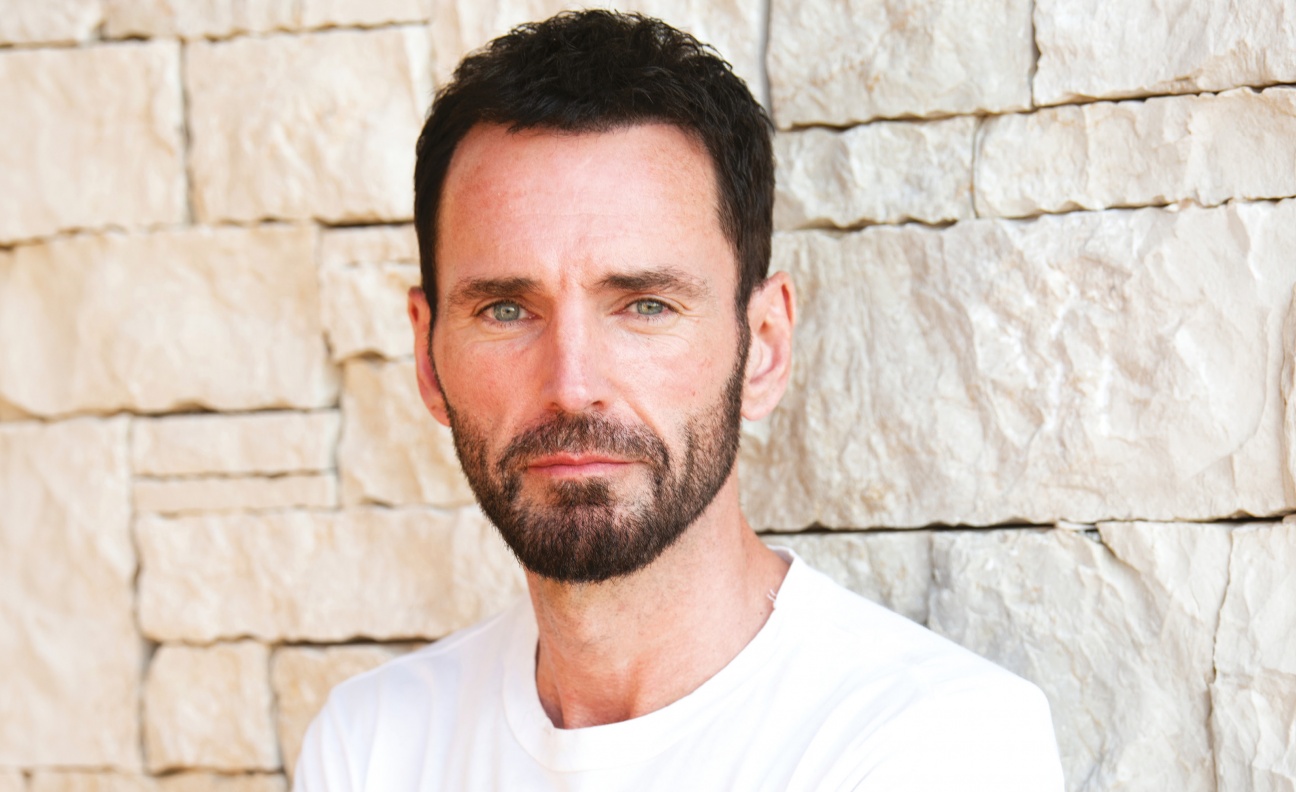
Hitmaker Johnny McDaid was honoured with the President’s Award at the BMI London Awards held at The Dorchester last night.
The organisation’s top honour, the President’s Award has previously been handed to the likes of Noel Gallagher, Willie Nelson, Pitbull, Brian Wilson, and two of McDaid’s closest collaborators, Pink and Fraser T Smith.
As well as co-writing global smash hits with Ed Sheeran (Shape Of You alone is on more than five billion Spotify streams), McDaid has collaborated on global hits by artists including Robbie Williams, Biffy Clyro, Alicia Keys, Pink, BTS, Lewis Capaldi, David Guetta, Weezer and Kelly Clarkson.
His most recent co-writes include Bottle Up for The Backstreet Boys and Animal for Katseye.
Not only that, he’s been a member of Snow Patrol throughout this time, joining the band for their sixth album, Fallen Empires, in 2011.
McDaid speaks to Music Week’s Chris Catchpole in the latest edition of the magazine. In this extract from the interview, the hugely successful songwriter opens up about the creative process in the streaming age, superstar collaborators and the impact of AI…
Since you’ve already won 17 BMI Awards, what makes the President’s Award different for you?
“Whenever I’ve been to these awards, I’m always floored by the amount of talent in the room. To be amongst them at all feels like an honour. I struggled a bit being selected for this, to be honest. It feels like it should be me and the other people I work with. To be singularly receiving it is something I have to lean into a bit. It means a lot to me to be celebrated amongst people I really respect, any one of whom could be receiving this. Two people I’ve worked with very closely – Fraser T Smith and Alecia [Beth Moore-Hart, aka Pink] – have both been recipients of this award. Those are some big shoes.”
How do you pick what projects you work on these days?
“If someone reaches out and wants to work with me, I’ll usually listen and just see if it resonates with me; then I’ll explore it further. What I really like to do, if time permits, is to have a meeting with them – and not a songwriting meeting. It’s not always possible, but when you’re going to go in with someone, it’s all about connection, so I’ll explore that connection outside of songwriting, if possible, to see if on a human level there’s a vibe, and if it’s reciprocal. It’s not just about whether I want to work with them; it’s whether they want to work with me.
“I remember the first time I met Pink; we met in a coffee shop in LA. We were meant to meet for half an hour, and we ended up spending three hours there. We were so connected, instantly. I just wished there had been an instrument there, but it was a great prelude to what ended up becoming a really good writing relationship.”
Robbie Williams has described you as like his “musical therapist”, and Foy Vance, who you’ve worked with a lot, calls you “the song whisperer”. How would you describe your process?
“I’ve discovered over time that when people ask me what I do, I struggle to describe it, and if I were to describe it, I would often be describing something that sounds nothing like writing a song. Working with other songwriters and hearing them describe their process, I think that maybe what I do is a little bit different. Maybe my way of approaching it is quite antithetical to how they might approach it.”
In what sense?
“I don’t go in with starts. Sometimes I’ll have a chord sequence or an idea with an artist that I’ve worked with, or sometimes a writer who I’ll be collaborating with will have a chord sequence, but I don’t come with any preordained ideas. The possibility that this could be anything – that’s the important thing to me. I don’t know many people who would admit to not doing their homework, but it serves me really well. There’s a danger that happens when you walk into a room with nothing, knowing that everything can happen inside that nothing. I really enjoy that danger. There’s a vulnerability that appears in that place, and working it out together means we really own it.”
Ed Sheeran has described your songwriting partnership as like a “yin and yang”. How would you characterise it?
“Not to be too reductive about it, but he’s fast and I’m slow. Ed is the most replete-with-ideas human that I’ve ever met. He has so many ideas. It’s like he’s a hosepipe connected to the ether and ideas just pour out. My role is to accept that he has so many ideas and to guard the ones that feel precious. Ed is very available to multiple things simultaneously. I’m only available to one thing at a time, which means I’m hyper-focused. He’s multi-focused. He has an incredible ability with the architecture of songwriting, in which he can think about the intro, the pre-chorus, the chorus, the verse, and the outro all at the same time. I can really only focus on one of them at once, so I’m kind of zooming in. He’s macro, and I’m micro.”
You’re one of the most successful songwriters of the streaming era. How do you feel about how music is consumed these days?
“To be honest, I’m a little worried about music in the streaming era. It can feel at times like there’s an algorithm managing what is successful or what connects, and that is worrisome to me because I think there’s a lot of great music that’s not getting heard. I think that if we’re not careful, we could end up with pop eating itself and music resynthesizing itself into algorithms, and we’ll miss so much great stuff.
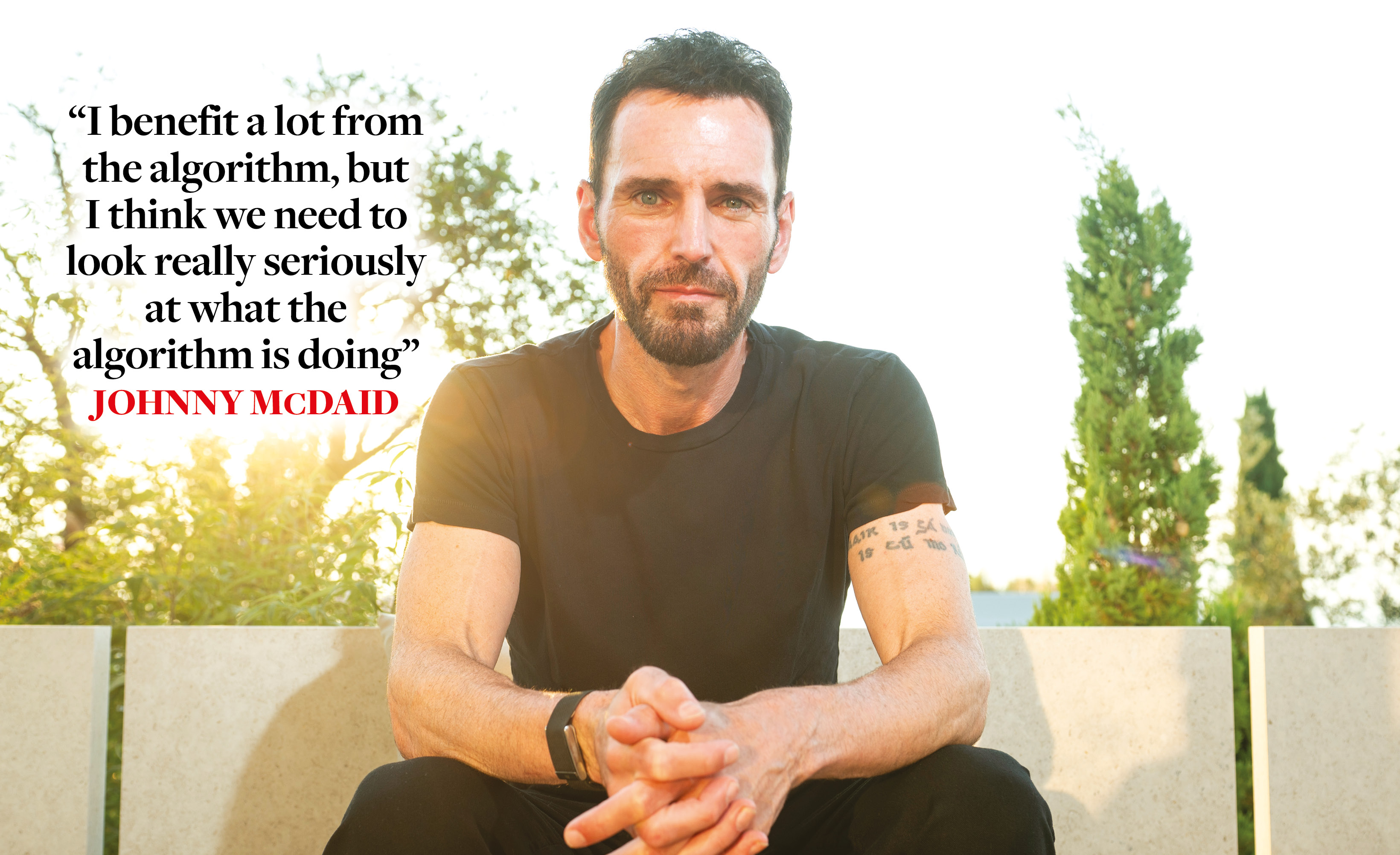
“Stuff that inspired me as a kid – U2, Nirvana and The Cure – would those bands survive today? Would they make it through the filters that are placed around music at the moment? I benefit a lot from the algorithm, but I think we need to look really seriously at what the algorithm is doing. We need to have very open, challenging conversations about how music is consumed and how music reaches people.”
What are your thoughts on AI being incorporated into the creative process?
“It’s probably too late for a moratorium on it right now because it’s off and running, but I’m very circumspect about it, personally. I have a bit of a romantic idea about the creation of music, where the thing that I identify with is that a human made it. The nutrient in a record to me is that I know that there is a human in the world who had these thoughts and organised them into a song and put it out into the world, and on the other side of that song is a life with experience and feelings and a psyche and a soul. The second I know that that’s not a human, I’m personally really disconnected from it.
“I’m a huge fan of tech and I think it’s really important for us to invest in and to understand and to manage the responsibility of these things – you can’t just stick your head in the sand and say it doesn’t exist – but it is incumbent on us as a business to look at it, and if we go for the quick dopamine hit rather than the long-term gain, we’re going to end up with nothing left.”
Finally, what’s next for you?
“I’m in New York with Pink and Steve Mac for a week when I get back [from holiday], which I’m excited about, and then there’s quite a lot of Snow Patrol stuff. We’re going to go into the studio with Fraser T Smith to start making the next record. Gary [Lightbody] and I have already done a fair bit of writing, so there’ll be a new Snow Patrol record next year.”
PHOTOS: YORGOS FASOULIS