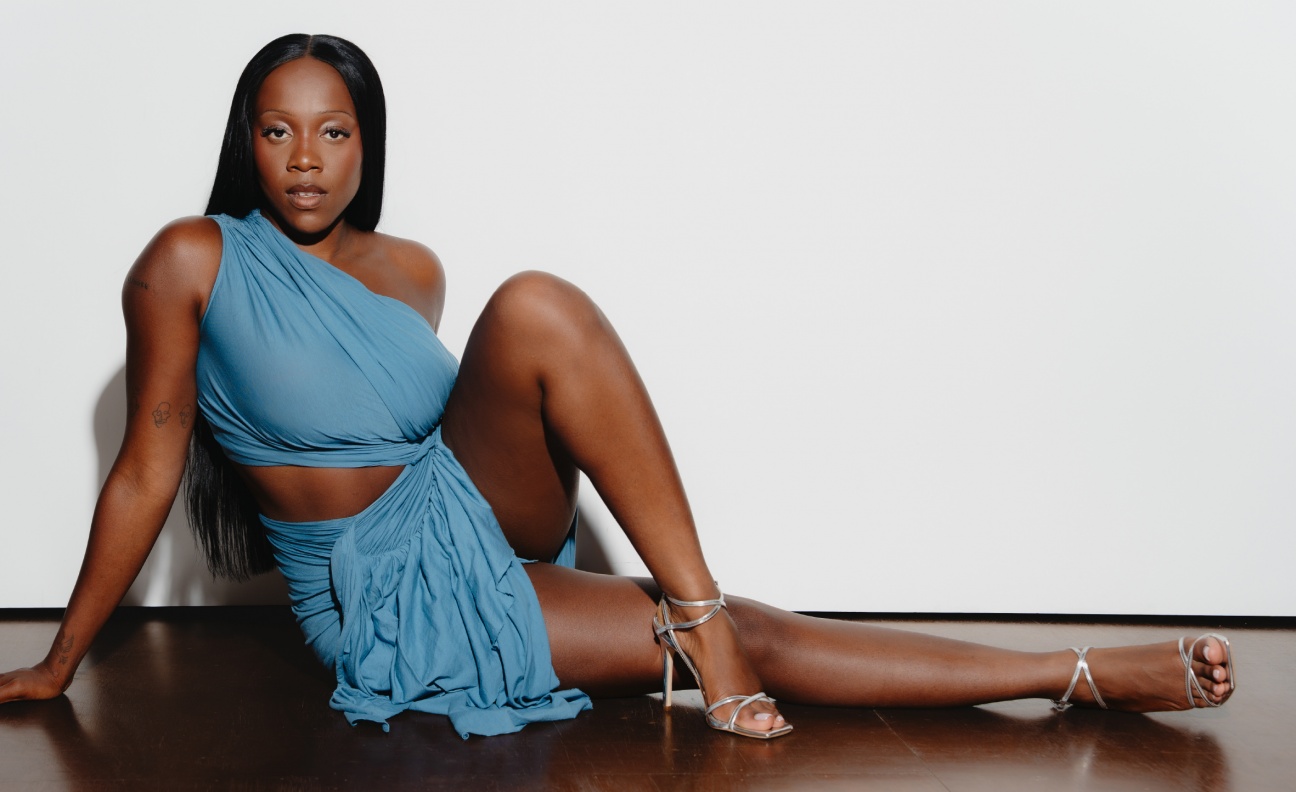
As Rachel Chinouriri releases new album I Think I Spoke Too Soon, here's a chance to read our recent cover feature with the singer/songwriter, alongside manager Duncan Ellis and Warner executives Aaron Bay-Schuck, Joe Kentish and Jen Ivory...
As building blocks for a new album campaign go, co-signs from Olivia Rodrigo, Sabrina Carpenter and more are the kind of thing most artists could only dream of. Yet this is the reality for Rachel Chinouriri, whose imminent return with I Think I Spoke Too Soon is set to signal a new career high for a singer/songwriter who has never compromised. Music Week meets her, alongside manager Duncan Ellis and Warner/Parlophone executives Aaron Bay-Schuck, Joe Kentish and Jen Ivory, to hear how the retooled major is powering her bid to go stratospheric and why she doesn’t “have to adapt” her music to fit in anywhere…
WORDS: YEMI ABIADE
PHOTOS: LAUREN HARRIS
It is a bright Friday morning in North London and Rachel Chinouriri cannot stop smiling – and with good reason. Less than 48 hours ago, the two-time BRIT and Ivor Novello nominee announced her second album, I Think I Spoke Too Soon – due on October 16 via Parlophone/Atlas Artists – and put out its first single, One Song Away From Crying.
For some artists, it might warrant a celebration, yet here she is, sitting outside a minimalist café, plants and coffee-stained walls behind her, an iced matcha latte in hand, denim skirt pooled around her as London gets on with its business in the background.
“I went a bit viral the other day,” she begins, laughing as she explains the flurry of replies and likes she has been dispensing. “So I’ve been doing general social media housekeeping. And some life admin.”
It is a strangely ordinary admission for an artist in the middle of a milestone week. But that, in many ways, is the essence of Rachel Chinouriri. Whatever the scale of the moment, she remains resolutely, disarmingly herself.
Over the course of our time together, that warmth barely dips. Not even when a butterfly drifts past mid-sentence and derails us into a tangent about Chinouriri’s opinions on insects. It is a fitting metaphor, in its own weird way, for where she is right now: something is undeniably transforming, and she is watching it happen with a mixture of wonder, mild disbelief and total presence.
Because this is, by any measure, the biggest career moment yet for a singer who has almost three million monthly listeners on Spotify and whose biggest song in sales terms is 2022 track All I Ever Asked (319,677 sales, according to the Official Charts Company).
Her recent achievements include supporting Sabrina Carpenter on her UK/EU run, being invited to play Olivia Rodrigo’s Daisy Chain Fields festival (she is the only UK act on the bill) and also being booked to open for Gracie Abrams’ upcoming US arena tour. Also in 2026, Chinouriri has shared the stage with Florence + The Machine and Wolf Alice, and won the Best New Music Award at the O2 Silver Clefs.
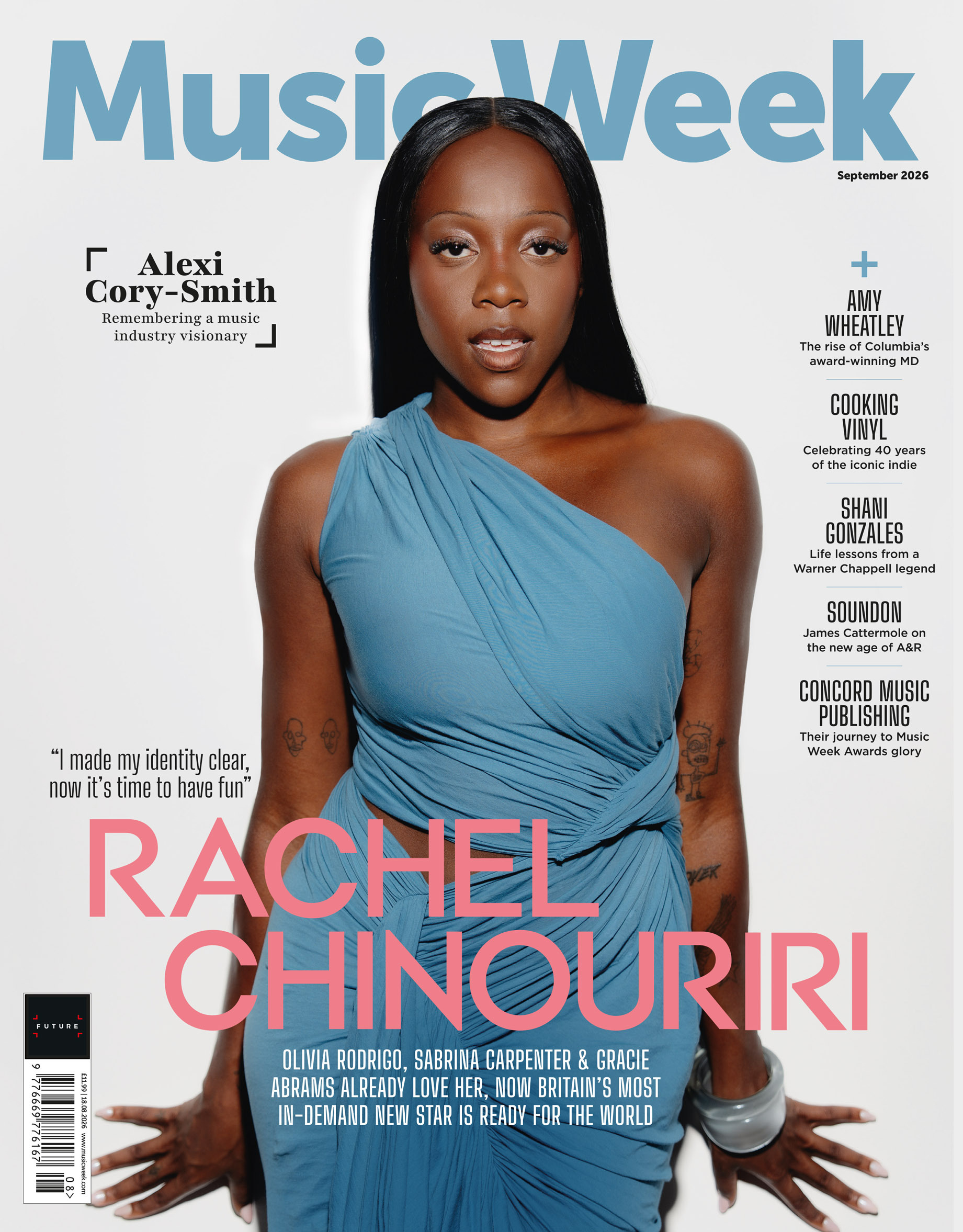
Add to that an expansive second album and you have an artist who, as Duncan Ellis – her manager of more than 10 years at Atlas Artists – puts it, has “earned her place at the table”.
No wonder Aaron Bay-Schuck, co-chairman & CEO, Warner Records Group, strikes a positive tone.
“Rachel has been making music for the past decade, and that is reflected in the deep intimacy of her songs and the charisma of her performances in the studio and on the stage,” he says.
Joe Kentish, president, Warner Records Label Group UK, is similarly effusive.
“Rachel is a one-of-a-kind artist, with a distinct voice, great songwriting instincts and a very clear vision for who she is,” he affirms. “I’ve been incredibly impressed by the new music and creative direction, and I can’t wait for the world to hear it.”
Parlophone MD Jen Ivory chimes in with more compliments.
“The sound and creative direction for this new era is beautiful and so elevated; Rachel has taken everything to a whole new level,” she says. “I couldn’t be more excited for what’s ahead.”
If Chinouriri’s 2024 Top 20 debut album What A Devastating Turn Of Events was about proving, as she puts it, “that I have a space” in an industry that has tried to file her under R&B and soul despite music rooted in indie and pop, then its follow-up is about something else entirely: permission to enjoy yourself.
“On my first album, I was trying to make myself a pop star in the industry,” she reflects today. “There was a lot of conversation about being Black and pop, about Black pop stars in general. I deliberately wanted to make my identity clear and see if I had a space. I’ve done that, and now it’s time to have fun as an artist. Even though I can speak about my traumas, I don’t want to wallow in them, so this record lets a bit of that go.”
Musically, she describes the shift as a move from indie and alt-indie pop into something she now calls “alt-pop,” heavily influenced by Madonna, Kylie Minogue, LCD Soundsystem, MGMT and Donna Summer, with a bit of Prince thrown in.
Where her first album was largely introspective, this one reaches for the dancefloor without losing its emotional honesty. But the fun doesn’t come at the expense of realness. Threaded through the record are the same themes that have always defined her writing: partying, self-reflection, and her mental and physical health. The result is an LP that lets her hold both truths at once: she can lay herself bare and still, unapologetically, want you to dance.
The aforementioned lead single One Song Away From Crying is a shimmering, synth-driven cut that summons the precise moment on a night out when the glamour tips into something rawer: the instant you clock that you look great but feel terrible, and have to decide whether to stay or go.
The album’s genesis traces back roughly a year, beginning in Shoreditch, East London, with longtime collaborators APOB (Aaron O’Brien), Mary Weitz and Glen Roberts – the trio Chinouriri describes as her key creative anchors – alongside sessions in Herefordshire, where she and Roberts holed up to fine-tune songs. It was a chance writing session with producer Eli Teplin and songwriter Sarah Aarons, though, that refined the album’s sonic focus.
“That was the first time I started thinking I could go disco,” she says. “Eli just added a lease of life. The sounds started evolving once he got involved.”
The most transformative chapter, though, played out thousands of miles from home. Chinouriri travelled to Los Angeles intending to stay a month; she ended up there for three, working extensively with Lucy Dacus. What was meant to be a short writing trip became, by her own account, one of her most significant creative relationships.
“Lucy was able to turn whatever you say into the most beautiful lyrics,” she says. “That intrigued me, the way she unlocked this way of being and living her life.”
The extended stay had its costs, however.
“Leaving my boyfriend and friends for that long, I felt really lonely at that point,” she admits.
Through Dacus, Chinouriri found a friend in unfamiliar surroundings, making LA a home away from home.
“I confided in her a lot, about drinking, relationships, feminism and my identity, and she made it so easy,” she says. “She’d be like, ‘I feel like this is who you are, that’s fine. This is how you navigate.’ It felt really nice to be seen; she made America feel like home.”
It also gave her a new perspective on the LA hitmaking machine.
“The first time I went, it felt very factory-like,” she says. “People had no time outside of a couple of hours to work. Like, if you spent half a day on a verse, they’d be like, ‘What are you doing?’ Then encourage you to move on to the next thing. This time my team really tailored it. I met some incredible writers, mainly women, and even the super successful ones gave me the time and space I needed.”
No conversation about the album, however, can avoid the sheer scale of the artists now publicly backing her. As someone who has spent years building things from the ground up, the sudden proximity to pop’s biggest names feels both surreal and deserved.
“I really respect Olivia Rodrigo’s artistry,” she says. “I keep watching her show up with each album and just be able to evolve. It’s the same with Gracie; seeing the levels of success they’ve had, the fanbases they’ve built, inspires me to want that relationship with my own fans. Getting those co-signs motivated me because I knew what I was making, what was coming, and the timing just felt right. This is maybe what I needed.”
The bookings themselves came, by her account, with all the simplicity in the world.
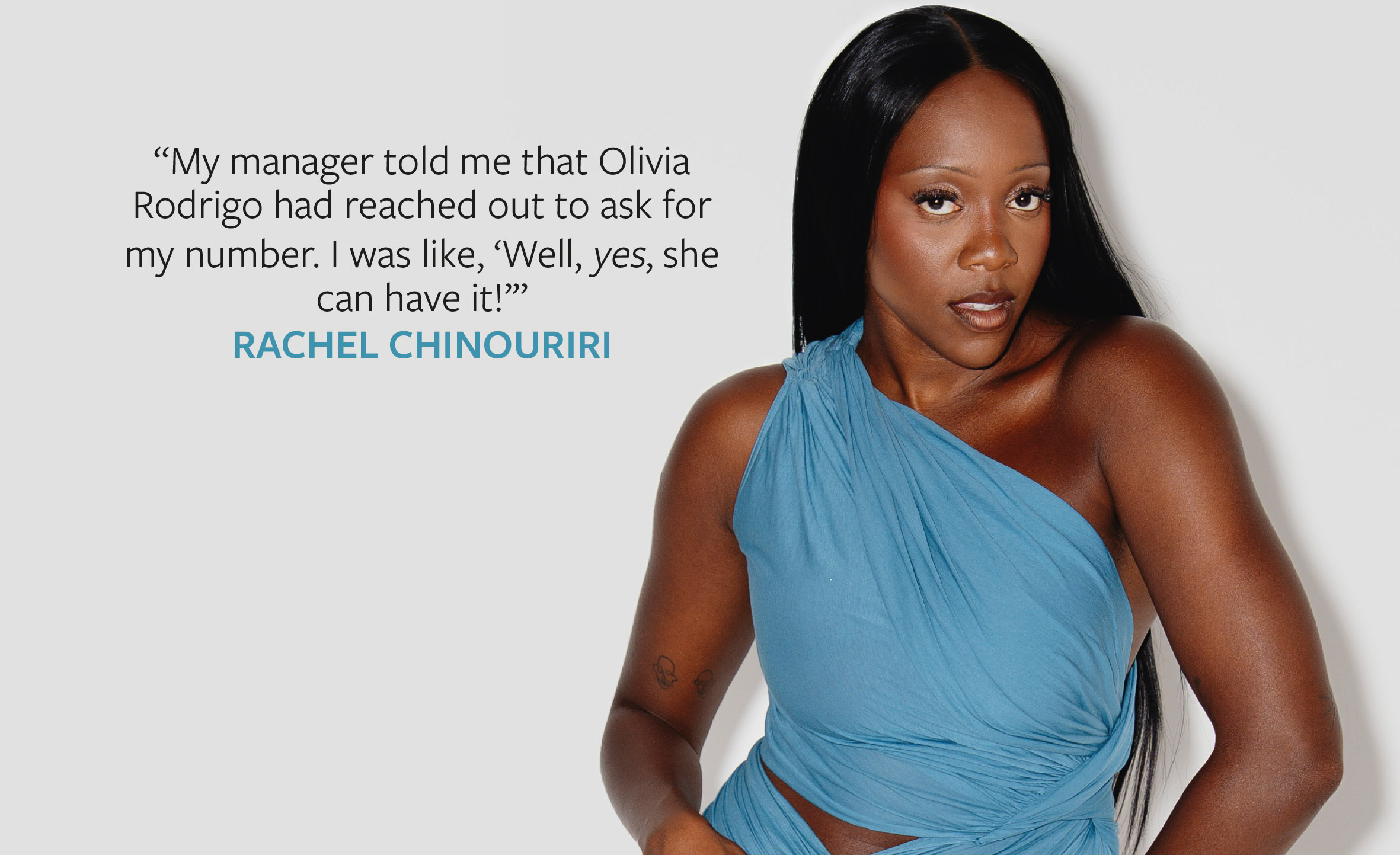
“Olivia called me!” she exclaims. “Duncan said she’d reached out to him and asked for my number. I was like, ‘Well, yes, she can have it.’ She told me what was going on with the festival. I tried to act cool, but I don’t think it worked! With Gracie, we heard there was interest and my team went after it, and she DM’d saying she loved my songs. I was like, ‘Well, I guess we’re doing this!’ They’re very sweet girls and I’m just so excited for everything!”
It’s a marked change from an artist who admits she “used to be so scared” of chasing such moments.
“Now I’m like, ‘If it’s meant to happen, it’ll happen,’” she says. “As soon as I had that mindset, suddenly I was on the Sabrina tour. I told myself to chill out, focus on the music, the storytelling and the artistic integrity and the rest will follow.”
While supporting Carpenter, Chinouriri was “arrested” one night during the regular section of the headline set, a story she now wears like a badge of honour.
“Sabrina said, ‘You look good, girl, come over here,’ and I was like, ‘Arrest me, girl!’” she recalls.
Such high-profile looks could signal she is moving up a level.
“I think it signifies the potential for that,” she says. “It shows a degree of belief that an artist at that level believes you’re good enough, that their fanbase will support you. It’s a hint of something that could be so much bigger than you, and you start to think, ‘Maybe one day I can do that.’”
It’s a theme Duncan Ellis returns to with pride. Asked whether Chinouriri – who he previously told Music Week has never quite been an “industry darling” – is now seeing that change, he doesn’t hesitate.
“It feels that way,” he says. “It’s all through Rachel’s hard work and endeavour, through really earning her stripes, her great music and a really wonderful work ethic. I think you need great music, a point of difference, an individual voice, a connection to culture and to your audience – more than ever – and you need to work bloody hard. Rachel possesses all of those things. She’s done it in the right way.”
Chinouriri herself is candid about how the current explosion of British talent across the world – Olivia Dean, Raye and Lola Young among them – has reshaped the landscape.
“Them being at the top opens a path for everyone,” she says. “It’s almost like a ship going, and everyone can go behind it. It’s opened doors for British music. Before, you’d really try to break America; now, because of virality, it’s easier. There’s a place for all of us.”
Manager Ellis warms to the theme.
“British music as an export seems to be doing really well again,” he posits. “Interestingly, America has always been Rachel’s number one market. The social and streaming numbers were always North America-leaning. So the opportunity for her right now is really exciting for us.”
For an artist stepping into rooms alongside some of the biggest names in pop, the current state of the genre is clearly something Chinouriri has thought about deeply. Rather than feeling restricted by it, she says the sheer variety of the landscape has become a source of comfort.
“If you want something more Fiona Apple, you’ve got Olivia Rodrigo,” she says. “If you want something more jazz-soul, you’ve got Olivia Dean. If you want something fun and playful, you’ve got Charli XCX. If you want that raw soul, the girl who can sing, you’ve got Raye. The amount of variety makes me really happy; it means I don’t have to adapt my music to fit anywhere.”
Chinouriri takes great confidence from that feeling.
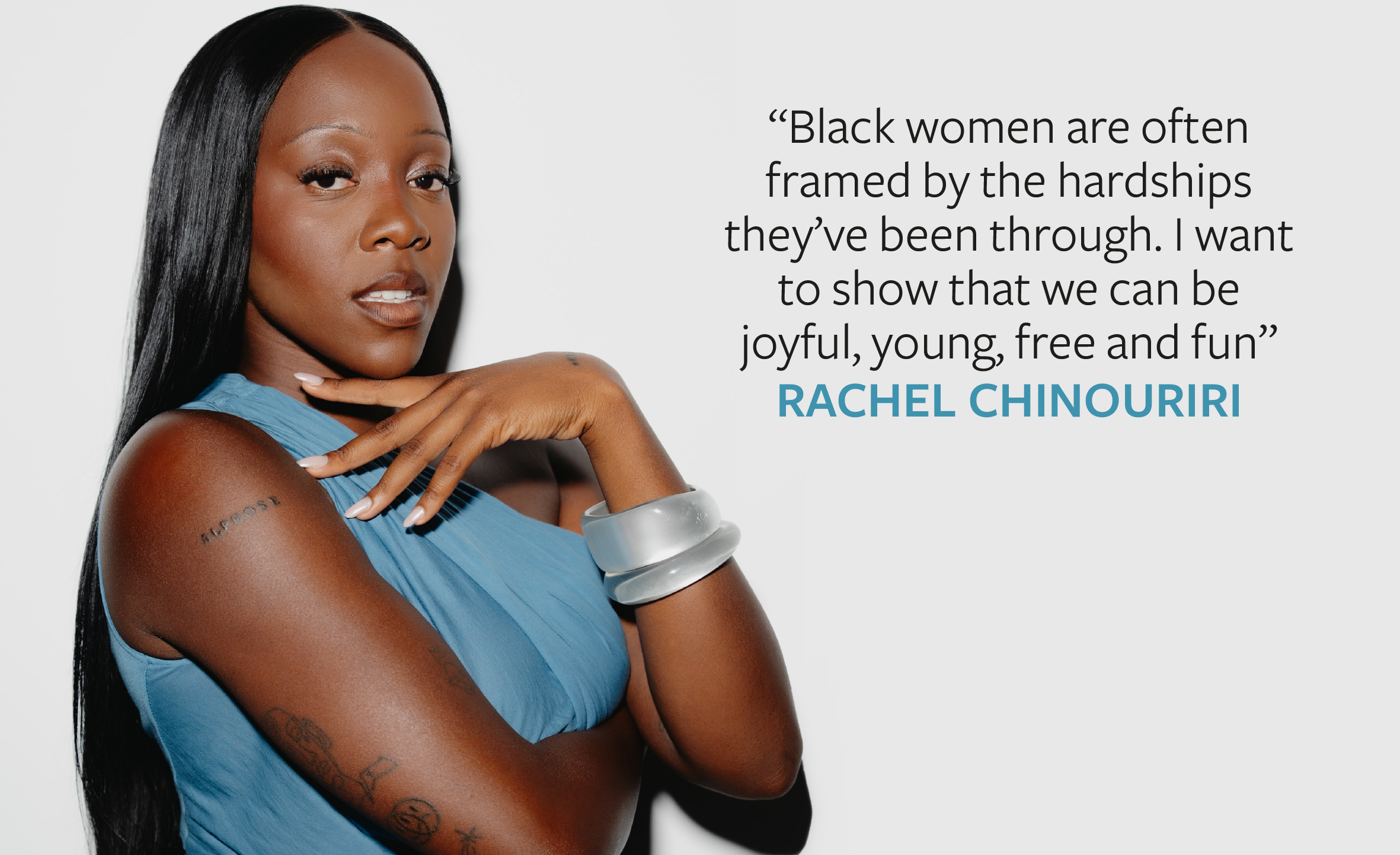
“I feel like I have the ability to be up there with the indie-pop girls,” she says. “There are people like SZA and Coco Jones, but I think Black women are often framed in terms of the hardships they’ve been through, the need to be tough, to be strong. I want to show that Black women can be joyful too, can be young, can be free and fun.”
It would be impossible to tell Chinouriri’s story without addressing the shifts that have reshaped her label Parlophone and its parent, Warner Music UK, in the time between her two records.
With Warner now operating under US leadership following Tony Harlow’s departure as Warner Music UK CEO in 2025, Joe Kentish now sits on the global leadership team, reporting to Aaron Bay-Schuck and Tom Corson, who was recently promoted from his role as co-chairman and COO of Warner Records to become chief operating officer of Warner Music Group. The stated goal, according to WMG CEO Robert Kyncl’s message when the news broke in September 2025, was to “put more firepower behind British artists, while strengthening the UK’s place in our ecosystem, as one of our highest priority markets”.
Chinouriri recalls hearing about the restructure while walking in the Herefordshire countryside, midway through making her new album.
“I looked at my phone, and [found out that] people I knew had gone,” she recalls. “I was like, ‘Right, what does that actually mean?’ Then when I came back to the label, it felt different. There were necessary growing pains, and I can see now why they were, because how the label is now is incredible.”
Her praise for Parlophone’s current regime, led in the UK by Kentish and Jen Ivory, is unreserved.
“Jen is one of my favourite people ever, a total girl boss,” she says. “She came in at the beginning of my album campaign and let me shoot the videos I wanted, do the artwork I wanted, with no push-back. The campaign wouldn’t have been what it was without her. And knowing what Joe’s accomplished, and meeting all the new people, I just love what it’s become.”
Part of that comfort has come from mentors within the Warner stable, not least Bay-Schuck.
“I went for breakfast with Aaron in LA and it was so insightful,” she recalls. “Hearing about his experiences, his career, the other artists he’s worked with. Learning the business from people like that has been really valuable.”
Bay-Schuck remembers the meeting fondly.
“I’ve really enjoyed getting to know Rachel and seeing her creative vision in action as she worked on this album,” he offers. “Partnering with our UK teams has been energising from the start, and the momentum she’s created there speaks for itself. We’re excited to help build on it worldwide.”
Kentish describes Chinouriri’s development and trajectory over the last few years as remarkable.
“She has huge champions within our US label, and with our new structure ensuring we’re working closer and more aligned than ever, her potential across North America and the international markets is massive,” he offers. “This next record is all about stepping up to a whole new level.”
Ivory describes the new set-up as “fantastic” for Chinouriri.
“We have unified A&R and global marketing firepower and she is seen as a major priority on both sides of the Atlantic, and has massive supporters in Tom and Aaron,” she says. “By working so closely with our US label, the campaign has the scale, speed and backing of a global heavyweight while maintaining the tight-knit, artist-first ethos of Warner Records/Parlophone.”
For Ellis, the transition at the label has ultimately strengthened Chinouriri’s position.
“We’ve navigated some choppy waters, for sure, but where we are now is brilliant,” he says. “We have a very good relationship with the label. There’s trust and respect. We don’t agree on everything, but that’s like any normal, healthy working relationship. I think we were lucky, in a way, because we had a record out and momentum behind us during those changes, so we were able to keep our heads above water. Rachel certainly feels like a big priority for the UK label now, and the conversations around exporting her internationally are very positive.”
If there is a through-line to Chinouriri’s account of the past two years, it is the stability of the people around her. Her relationship with Ellis specifically, forged when she was 17 and still at the BRIT School, is one she describes in almost familial terms.
“Duncan has been more like a guiding figure – not just in a work sense but personally, too,” she explains. “Your manager and team need to encourage healthy habits, and Duncan has taught me so much about that.”
Ellis, for his part, frames the entire relationship – and by extension his management philosophy – around openness.
“Most successful relationships, personal or professional, come down to honesty and trust,” he says. “That doesn’t mean we agree on everything. But you have to be honest, otherwise the relationship breaks down. It’s about being grown-up and responsible, presenting your perspective and talking it through. Ultimately, the decision always sits with Rachel; we can only guide and offer our honest opinion.”
For all the pop superstar company she now keeps, Chinouriri remains protective of the intimacy she has built with her fanbase, affectionately known as her ‘Darlings’. It is something she credits as the true foundation of her rise and she still writes fan mail by hand and posts the letters herself.
“It’s better than social media,” she muses. “Social media makes you feel connected to someone, but you’re not really. There’s a craft to letter writing that feels more personal.”
Chinouriri has 274,000 followers on Instagram and 562,000 (plus 31.4 million likes) on TikTok. But she also runs a private X account where some of her most meaningful engagement happens, and keeps a WhatsApp group to message her core fanbase directly.
“One thing I never want to lose is the intimacy I have with my fans,” she states, admitting that her relationship with social media itself remains complicated.
“I hate it – honestly, my screen time is usually two hours a day; this week it’s been closer to seven, because I want to see what people are saying,” she reveals. “But I try to do as much in-person stuff as I can, in a healthy way.”
Ellis sees that instinct as central not just to the new record, but to the business being built around Chinouriri long-term.
“It’s always been about her audience and super-serving that growing fanbase,” he says. “Rather than being a hyped artist reliant on media levers, we’ve built something from the ground up, based on real connection, real emotional and commercial transactions. If you have that, then the media and the bigger opportunities follow...”
The themes of self-preservation that run through the new Rachel Chinouriri record are not incidental. Today, she speaks candidly about the toll of touring, the discipline required to sustain it, and the year of sobriety and her health regime that has shaped much of her creative arc this time round.
“I had to be very realistic with myself,” she notes. “When you’re flying and touring constantly, if you’re tired, your team and band feel that energy around you, and that’s hard. So there are things like not drinking, but I still make sure I go out and chat with people. I exercise five to seven days a week, without fail. It sounds like a sacrifice, but to have the experiences I get to have, I’d do it 10 times over.”
The singer is equally candid about what she believes the industry could do more to protect younger artists, calling for clearer, more honest dialogue about the business side of the job.
“I think any label has a degree of duty of care in being upfront about what you’re about to get into, so it’s not a shock later,” she says. “When you show your label your heart, something personal, it can feel like an attack when it’s suddenly being marketed and sold. Learning to protect yourself and understanding how the label is going to want to use things would go a long way.”
On the broader question of whether the industry now feels like a safe space for artists of colour, her answer is measured rather than triumphant.
“It’s easy to say yes because I’ve had a good experience over time,” she says. “I think we’ve progressed, but there’s still work to be done. There are things that need tweaking, but I appreciate the platform and I try to use it. Sharing the artists I like, platforming people I love, bringing them on tour… Doing what I can.”
As for the wider pressures facing artists of her generation – the rising cost of touring, ticket prices, the demands of social media, the implications of AI and more – Chinouriri is pragmatic and defiant.
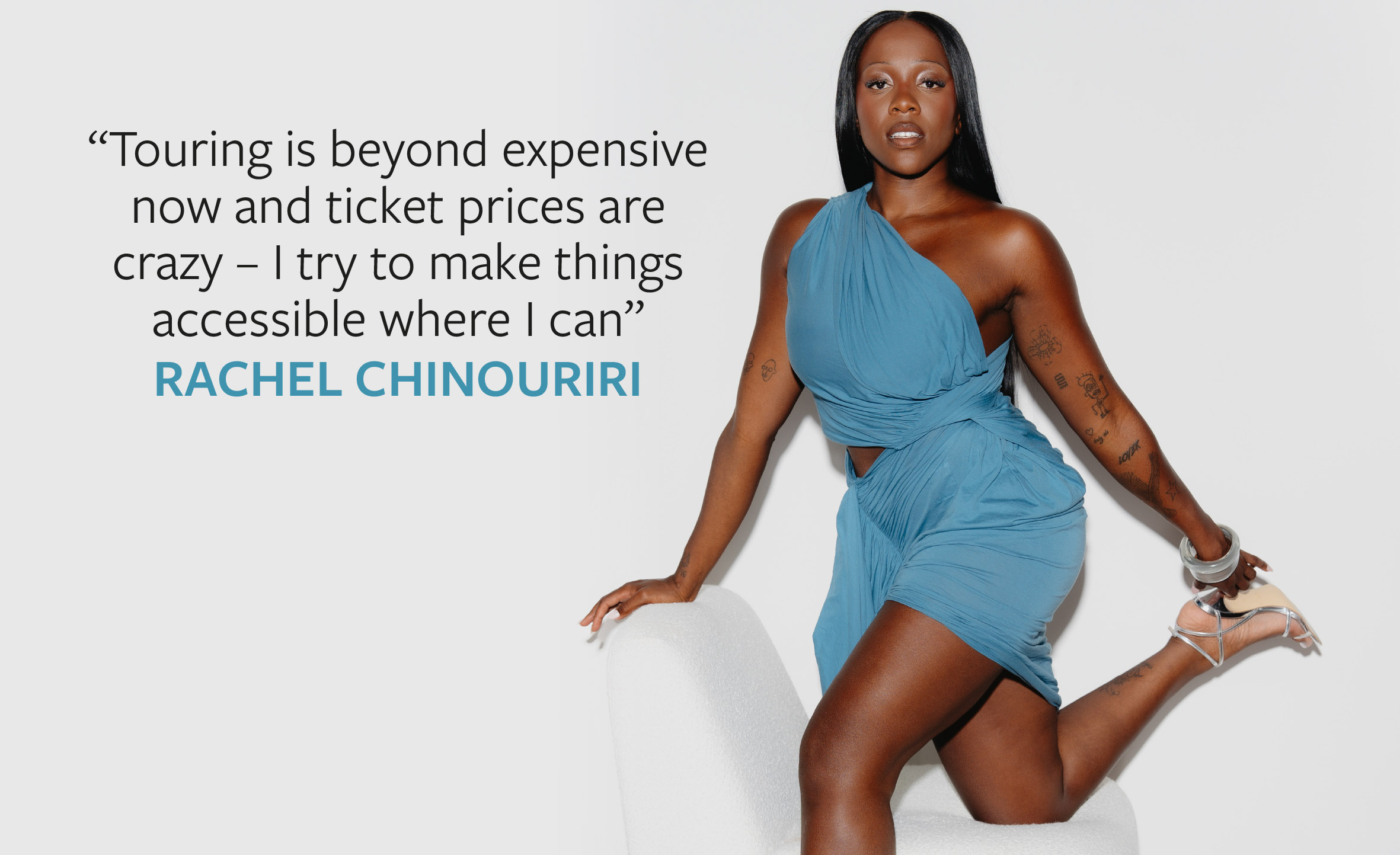
“In writing, I messaged my manager and said, ‘Do not allow AI to touch anything on I Think I Spoke Too Soon,’” she says firmly. “That one I can mostly ignore, because I think it’ll fizzle out in its own way. Touring is the harder one; it’s beyond expensive now, and ticket prices are crazy. I try to make things accessible where I can. I had a party recently where anyone could come for free, get dressed up and hang out. Growing up, having free access to things mattered, so I try to think outside the box for my fans.”
The singer and her team won’t measure success for I Think I Spoke Too Soon via quantifiable metrics like charting and sales. Their longer view stretches much further. But the record’s real success has been achieved in that it has allowed a vital era of growth for her in all aspects.
“I grew into my womanhood making this album,” she explains. “Growing up, and noticing that I’m growing up, has made me a better artist and performer. Now, I just want to represent something bigger for people who look like me.”
Ellis, watching her navigate the current wave of momentum, is unequivocal about where he believes it is heading.
“She’s incredibly ambitious, and we don’t limit that ambition,” he says. “She wants to headline festivals, break America. It’s not for the faint-hearted. You need brilliant music, brilliant art, and then everything else too, if you’re serious about being number one. But I think she can do it. Otherwise, I don’t know what the point would be.”
Ivory says that she has found it incredible to watch the singer build such genuine momentum over the time they have been working together.
“Rachel has evolved her sound without ever losing her authenticity, which is vital and exactly why she connects so deeply with people,” she says. “She has those strong alt-pop roots, but she’s always had an innate talent for writing brilliant hooks and melodies, which we’re seeing come to full fruition now. Our aspirations are completely boundless – we see her becoming a global star and a future festival headliner.”
At the café, her matcha latte long finished, Chinouriri glances at her phone to see a message from her team, another piece of the machine turning in the background of a life that increasingly resembles the pop world she is now being invited into as an equal. Two albums in, flanked by a manager who has believed in her since she was 17 and a label matching her ambition with its own, she is excited by the scale of what’s coming.
“I just want to keep running this ship and pushing the agenda that I’m here,” she says as we part ways. “I’m not defined by how the industry or the world perceive me, and I’m going to use that to my advantage.”
 FOLLOW