Tamber has unveiled the launch of Tamber v2.0, a major expansion of the music creation platform that features enhanced creative tools, new functionality and native Windows support.
As part of the update, Tamber’s five core tools – Gestures, Tamby, Librarian, City Packs and Sonic Atlas – now operate as dedicated apps within one connected suite, allowing artists to open the tool they need directly and move seamlessly between them as required.
The company is backed by funding from Adobe Ventures, M13, Rackhouse Venture Capital and a network of artist-investors.
The company was founded by musician, technologist and entrepreneur Zoe Wrenn, who wanted to create tools to make the creative process more intuitive without diminishing the artist’s role. Here, Tamber’s CEO reveals her plans for the sonic intelligence platform…
What was your vision for Tamber? Who is the audience you are targeting?
“Tamber started because I wanted music technology to feel magical again. The best technology should feel almost impossible the first time you touch it – like it understands what you're trying to create before you can explain it. So much of what's out there right now feels sterile or like it's trying to replace the artist entirely. I wanted to build something that felt alive.
“A huge part of that vision was building systems that think the way artists actually think. I know when I’m in a session, I don’t always describe the sound technically – I describe it through texture, color, memory, weather, the feeling of a room at 2am. So we've spent a lot of time teaching our technology to understand sound the way artists do. Not as data, but as emotion and feeling. The goal is never to generate finished art for people – it’s to build tools that make artists faster, more exploratory, more in flow – without taking away the soul that makes music worth listening to in the first place.
“Our initial audience is the prosumer creator market – producers, artists, and songwriters that are already deep in it. But long term, I want these tools to help anyone who wants to make music and wants to keep their creativity and process intact.”
How does your background as an artist who has made a viral impact helped with the development of Tamber?
“It helped me understand how fragile inspiration can be, how quickly momentum disappears and how much pressure artists feel to constantly create something meaningful or culturally relevant. A lot of Tamber was designed from lived experience – building tools I genuinely wished existed.
“It also made me very protective of the human side of the process. I think that’s a big reason why Tamber has such a strong philosophy around preserving authorship and building tools that support artists instead of replacing them. A huge part of why songs connect is emotion, instinct, timing, identity, culture. Working with the software in my process enforced the fact that I wanted it to keep those things sacred.”
Amid growing concerns about the role of human artistry with the rise of AI, where does Tamber fit in the emerging music-technology landscape?
“In my opinion, the current music-AI landscape is bleak. Most of the software coming out feels obsessed with what machines can do – write a song, clone a voice, spit out a stem - and almost nobody is asking what artists actually need. The whole space is built around removing people, replacing musicians, then acting surprised when artists hate it.
“We start from the opposite end. We don't call what we're making AI music. We call it sonic intelligence, and the distinction is the whole point. Generative tools ask what if a machine could make a song. We ask something completely different – what if technology could understand sound the way artists do, and then get out of their way? One question ends with the artist erased. The other ends with the artist faster, weirder, deeper in flow. That's where Tamber fits. We exist to go against the current landscape.”
Tamber started because I wanted music technology to feel magical again
Zoe Wrenn
How will the recent $5m in funding help you to further develop the company? What do the backers bring in terms of skills and expertise?
“It lets us build with less constraint and allows us to keep investing in the harder, weirder research bets that make Tamber feel different. Sonic intelligence isn't something you can half-build.
“The backers are 100% why this round felt right. Adobe has spent decades figuring out how to build creative tools that artists actually love and trust – that kind of institutional knowledge is rare, and they understand the long arc of what we're building. M13 and Rackhouse bring incredible operational and technical thinking, plus a real point of view on consumer software.
“The through-line across all of them is that they understand we're building a category, not chasing a trend and that matters more than the capital itself.
Are you developing relationships with the music and tech/social media sector? Where will Tamber fit in the ecosystem?
“Yeah, we have some incredible partnerships in the works across both the music and tech sides. Where Tamber fits in the ecosystem is somewhere new. We're not a DAW, we're not a plug-in company, we're not an AI music generator. We like to think of ourselves as the new music OS. The ecosystem hasn't really had a layer like that before, so part of our job is to define what that looks like and make sure Tamber strengthens everything around it instead of competing with it. The best version of Tamber makes your DAW more powerful, makes your samples more useful, and makes your creative process remain yours.”
I want these tools to help anyone who wants to make music and wants to keep their creativity and process intact
Zoe Wrenn
What do you think is particularly exciting about your offer to artists?
“What I'm most excited about is that Tamber actually feels like it was built by people who make music (because it was). Every feature came from a real frustration we had in our own sessions. The question we kept asking was: what would actually change the way I work tomorrow?
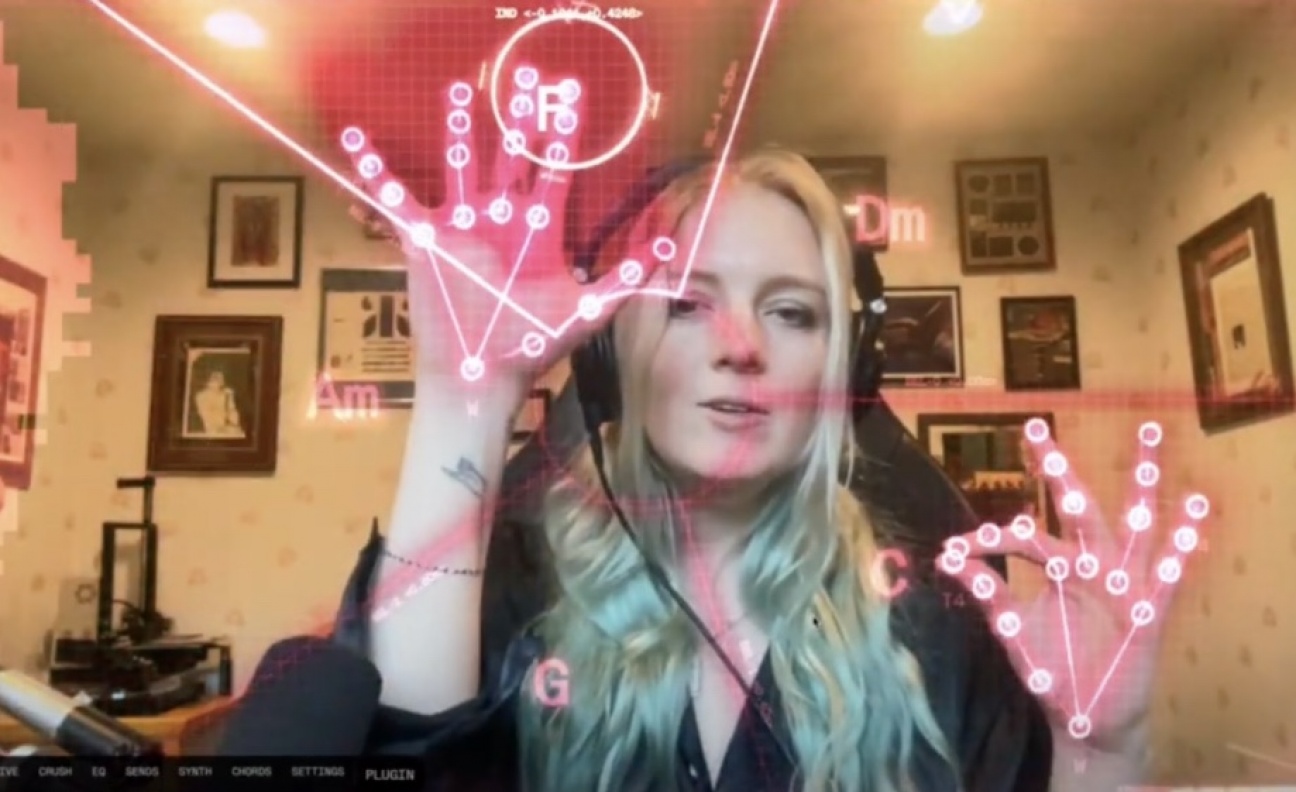
“There are a few things I think artists are going to like immediately. The Librarian makes your sample library searchable by feeling – type ‘warm broken tape loop’ or ‘something that sounds like grief’ and it finds it. It also indexes every audio file on your computer, even the ones you forgot you had. Tamby is a thought partner that lives inside your DAW, not a generator sitting outside of it. Gestures is a whole new way to play music without touching anything – just movement, in space. And the sound library itself is built from real-world field recordings shaped by synesthetic artists, so the output is something really special.
“Tamber is fast, weird, beautiful, and feels like magic to use. It doesn't feel like enterprise software pretending to be creative. It feels like a studio you actually want to be in. That part is the hardest to build and the easiest to feel, and I think artists are going to notice it the second they open it.”
What are the plans for further growth?
“Growth at this stage is about depth. We want people who open Tamber every day and feel excited to use it. The bigger plan is to push sonic intelligence deeper into the parts of music-making that have never had it and really be able to analyse the small frictions that slow down a great moment. We're not asking artists to change their DAW or their workflow. We're just making everything they already do faster, more magical, more creative, more in flow.
“Longer term, I want Tamber to reach beyond the prosumer world and help anyone who wants to make music, without flattening the creative journey to get them there. But honestly, the most important growth is harder to measure – trust with artists, taste in the product, depth in the technology. If we get those three right, everything else falls into place.”
 FOLLOW