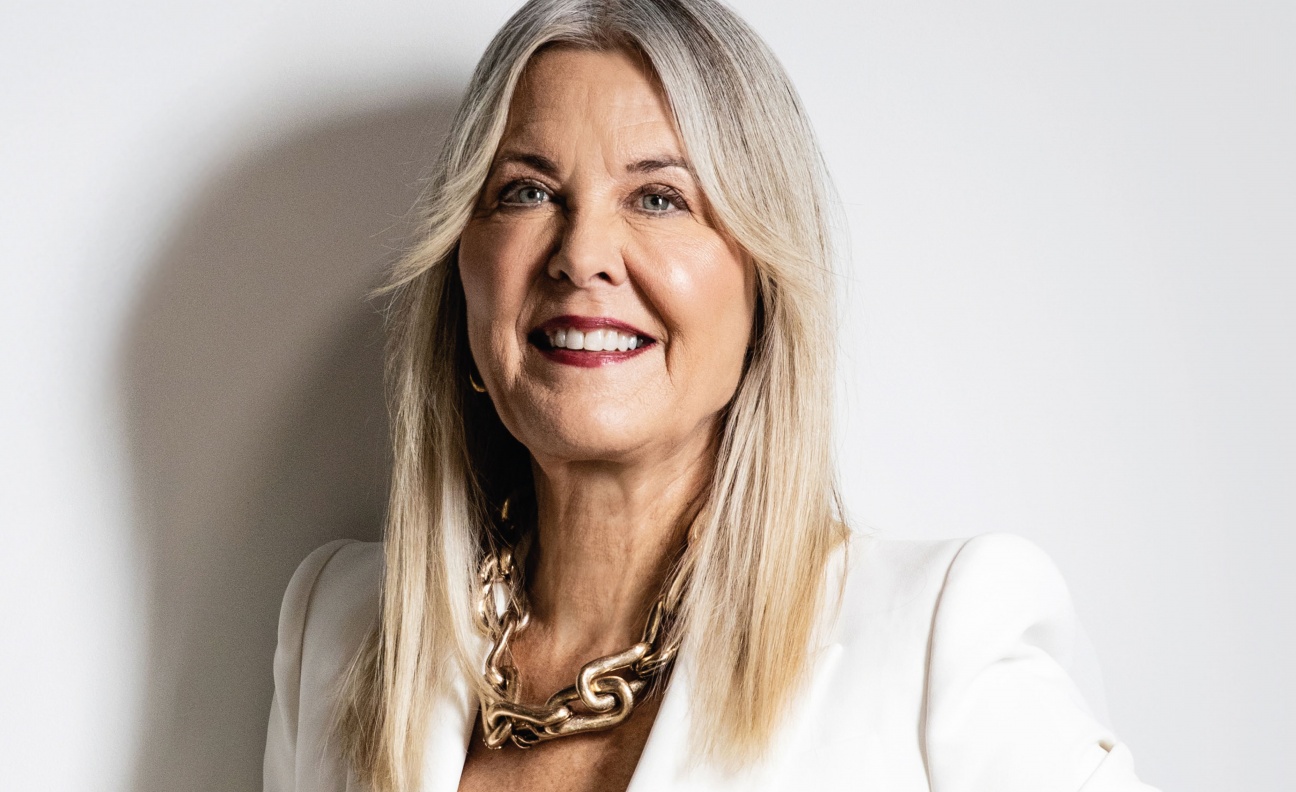
PRS For Music royalty collections have surged past £1 billion in recent years – the latest results for 2025 showed another increase of 7.7% year-on-year to £1.24 billion. Here, chief executive Andrea Czapary Martin reflects on the impact of AI, competition with rival societies and her decision to step down after seven years...
WORDS: Andre Paine
PHOTO: Louise Haywood-Schiefer
Streaming income is still powering ahead for PRS – do you expect the rate of increase to decline?
“Every year we think it’s going to slow down! On the streaming side, it’s our JV ICE that does the licensing; although we’re very involved, we have licences with YouTube, Spotify, Apple – and [11.8%] double-digit growth last year represents that. Our international arm is quite strong. We have made new reciprocal agreements in the last three or four years, and there are markets that are growing in streaming, like Latin America and Asia. We do a good job in making sure that we’re penetrating those markets.”
International revenue distributions dipped in 2025 – is that a concern for PRS?
“The issue was because there were not as many big tours internationally [for PRS members], so that hurt distributions. I was in Parliament last year and people were very surprised to hear from me that [2024] was the first time that UK artists were not in the Top 10 [IFPI global singles and albums]. It’s important that the government supports UK music – we’re the second biggest exporter of music. But if we don’t have artists that are in the [global] Top 10, it does hurt our international division.”
There has been a turnaround for British talent – do you expect that to improve the situation?
“If you look at Lola Young and, in the second half of the year, Olivia Dean and Raye – they are becoming very strong. There is some time lag because we depend on the other societies to send us the money. So some of that success in the latter half of 2025 will probably come through later.”
Is there a bidding war for signing top talent?
“There’s a lot of competition with PROs [Performing Rights Organisations]; they give a lot of advances to acquire members, which we don’t. It’s not a society policy, so it’s very hard to compete against BMI and ASCAP. We just lost a big member because ASCAP gave a substantial advance to acquire them.”
How can PRS compete with that?
“We have brought on some big members, because what we compete on is cost-to-income ratio. So members get more money and better international agreements. We have led with monthly distributions and the Major Live Concert Service [for reporting on major tours]. So we compete on service. We compete on more money going to members [after costs] and really making sure we take care of members. But we don’t do it via big advances to acquire members.”
What about retaining members with advances?
“We are starting to do advances for retention because we can calculate what the risk is. We changed it a little bit at our AGM two years ago to include the calculation for multi-territory online licensing, because it’s so big now. We asked the members to vote on that so we can give advances.”
Do high-profile members get a premium service?
“They have dedicated member services, and they have a hotline. We really treat them as a white-glove service, but we try to treat all our members as special. We’ve got the PRS Foundation that helps emerging talent. For the Mercury Prize in the last eight years, seven winners had PRS Foundation support. So we help all [membership] segments; we are driven to make sure that we are paying out against more works for more members.”
How important is that PRS Foundation funding for nurturing the next generation of talent?
“It’s huge, it’s really important. PRS Foundation is really well run. Joe [Frankland, CEO], the team and the trustees do a really good job in making sure that the money is well spent, and that the artists are mentored. We also have an outreach team that makes sure that emerging talent is taken care of.”
Can you update us on your Nexus data project and other improvements to royalty tracking?
“They work together, and it’s important that we use different types of technology to try to be more and more accurate and get more and more data, especially in public places. So we support music recognition technology, we’re making sure that we trial and explore more technology out there. And the Nexus project is really important, it’s something that will help top-tier members be able to clean up their database and their catalogue.”
Labels are signing AI licensing deals, will PRS be involved with new agreements in this area?
“Yes, we’re also working with the other societies on that. It’s going to be important that our composers and writers, and of course publishers that represent the composers and writers, are fairly paid. We have issued our AI policy to show our red lines. We did a survey and our composers and writers do like AI as a tool. So we aren’t going to say ‘not at all’. As long as there’s a human factor in it, that’s what’s important.”
Why did you decide that the end of this year was the right time to move on as PRS For Music CEO?
“It’s going to be seven years this month. It’s the right moment for change, both for me on a personal basis, but also the organisation; I just think it’s a good time. We are leaving a nice legacy, double-digit revenue and embracing a lot of new ideas. We have led on many new things, like the data project Nexus and being the first [to migrate to] Oracle Cloud. Just now we’re working on really interesting AI projects that are finding revenue sources.”
How can AI help you to bring in more income?
“We actually did a proof of concept using artificial intelligence to find sources of revenue that are not paid to us. I’m very excited about it. There are still a lot of places that play the music of our members, but do not pay us. We also did a proof of concept on set lists [for live income], and we’re finding sources of revenue there. Hopefully by the end of this year, we’ll be able to move to a fully fledged product, bringing in more revenues on the international side.”
Finally, after seven years in the hot seat, do you have any advice for your successor?
“The advice to my successor is to continue innovating and embracing new ideas. Every industry is going to change. I don’t believe that AI is a bubble. So continue being a leader in new ideas. PRS drove a lot of things in the industry and elevated the bar. So I think it’s really important that we continue that.”
 FOLLOW