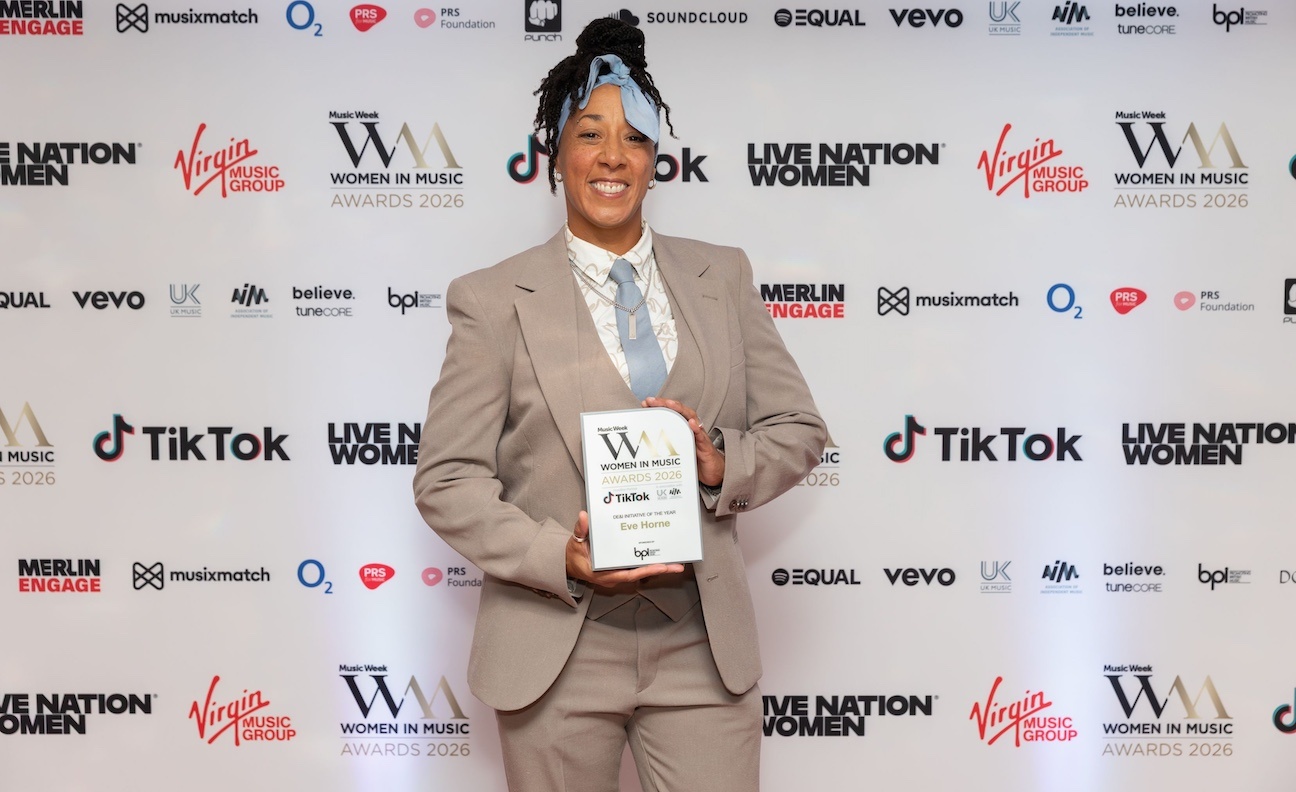
At this year's Women In Music Awards, we celebrated the achievements of game-changing executives and artists as the industry came together to honour their work. Music Week has spoken to the winners in all 14 categories to tell their stories. Here, Eve Horne, winner of our DE&I Initiative Of The Year award, talks about the mission of We Are The Unheard…
Winning this year’s DE&I Initiative Award couldn’t have come at a better time for Eve Horne. For someone who has spent years fighting for greater equality in an industry she knows from multiple perspectives, the recognition carries particular weight. And it arrives at a point of real reflection for the founder of the We Are The Unheard Academy, who was also listed in the 2022 Music Week Women In Music Roll Of Honour. But while the accolades are welcomed, the work is far from done.
Horne’s work is rooted in lived experience. As a mixed-race, gay, neurodivergent single parent who grew up on a council estate, she knows what it means to navigate systems and spaces that were not necessarily built with her in mind. She has also seen the music industry from very different sides – as a performer, recording artist, sound engineer, educator and campaigner.
Like many, Horne dreamed of performing and singing for a living – pressing record on MTV and The Box, imagining a life in music. Then tragically, at 14, her boyfriend was murdered, and around the same time she attended her first anti-racism march, where Reverend Al Sharpton was speaking. It was while attending a Catholic school, she came across the prospectus for The BRIT School and asked her mum if she could apply. It was a big deal, she says, because it wasn’t Catholic. But her mum said yes.
“To this day I say that school helped save my life,” Horne tells us.
The BRIT School was that doorway into a career in music. During her studies, Horne signed to Polydor in a girl group before moving to Copenhagen to join another. But she also began to notice the inequalities that came with being a woman in the industry – from not being allowed to write to being encouraged to flirt with A&R.
An autism and ADHD diagnosis would come much later, but Horne began to struggle with public interactions and hyper focus. Eventually, she returned home depressed and enrolled on a sound engineering course, where she was one of just six women in her year. Her dissertation examined the lack of female sound engineers. After graduating, she and a friend won £20,000 from the Prince’s Trust and used it to build a recording studio near their home to support artists, promote female producers and give disadvantaged young people access to music.
That instinct to create opportunities has stayed with Horne. It’s now at the heart of We Are The Unheard Academy, the CIC she founded to support people who remain underrepresented in music. Supported by funding from Arts Council England and software from Ableton, the Academy runs programmes including Mother’s Write, a songwriting camp designed specifically for mothers in music, and Turn It Up, a four-day sound engineering training camp for global majority women and gender-expansive creatives, in partnership with Black Lives In Music.
Alongside We Are the Unheard, Horne sits on industry boards and advisory groups including the UK Music Diversity Taskforce representing the MPG (Music Producers Guild), and the BPI Equity & Justice Advisory Group. She has also been named a SheSaid.So ALT List Honouree.
For all the recognition, Horne’s work is far from finished. Her motivation comes from both passion and empathy – and from knowing what it feels like to be the person looking for a way in. Now, she is working to make sure more doors are open when the next person comes looking.
How does it feel to win this award after being inducted into the Roll Of Honour in 2022?
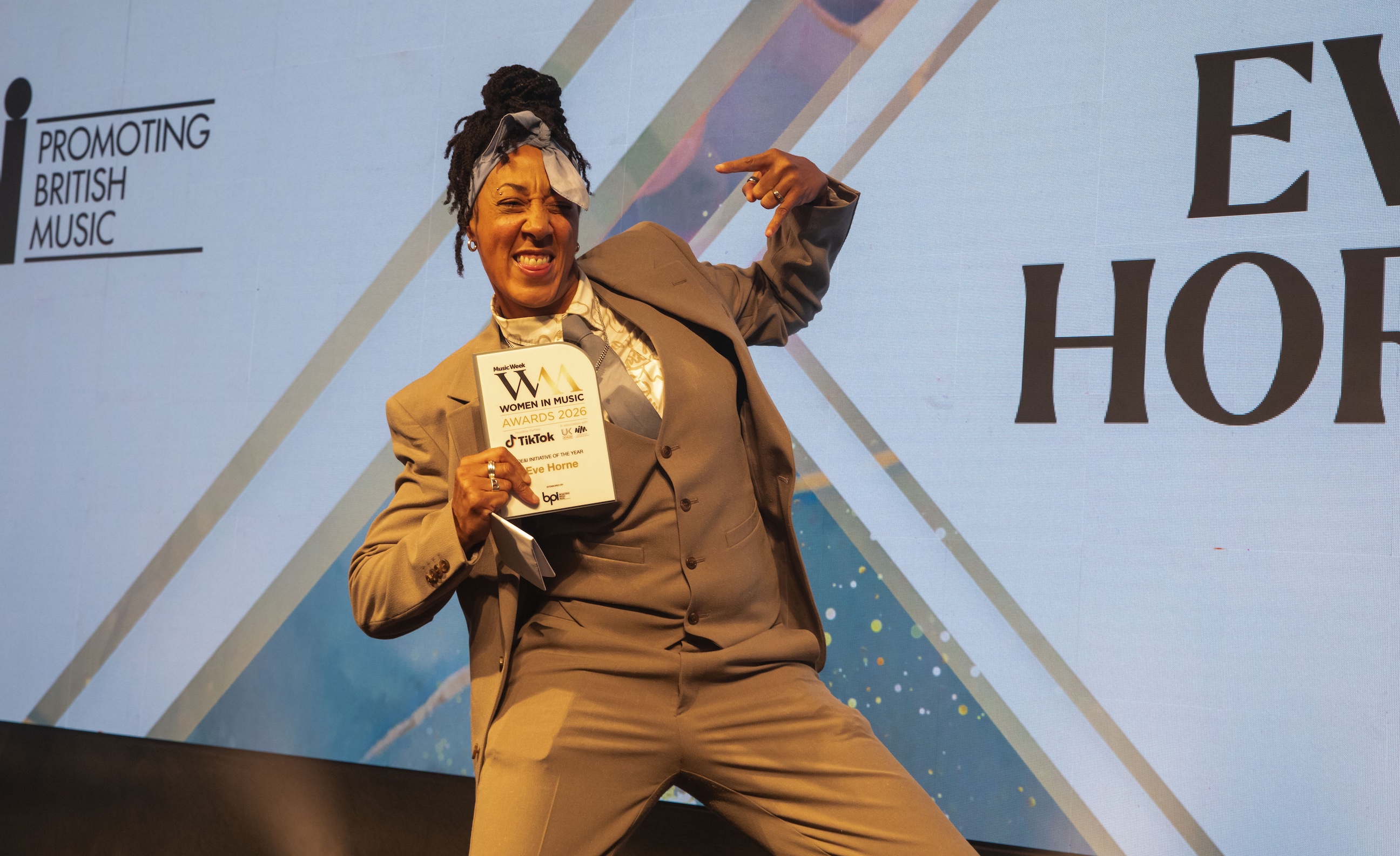
“I'm still in complete shock. It feels phenomenal. When I got the call, I just cried. It's come at a time when I really needed it because, between December and now, I’ve been ready to give up. I spend so much time trying to raise funds, reaching out to organisations to see the importance of the programmes I run to help change lives – and I do it all on my own, from my house. My mum comes over sometimes and helps [doing] one-finger typing on funding applications while I flap around the front room, and it's been hard. I've been in this industry for 30 years, since the BRIT School when I first got signed. I'm 50 this year, so it's the best birthday present I could ever ask for. But it's been tough. I'm just really grateful to finally get some recognition for the years of work that I've given to the industry in every form. I'm a singer, songwriter, producer, sound engineer, coach, mentor, educator, freelancer, public speaker and campaigner. There are so many ways that I give back, and a lot [of what] I do is quiet – it could just be connecting people through emails. I'm a woman of my word: when I say something, I do it. Having this recognition will hopefully ease the load a little bit and help me get some support in the work that I'm doing.”
When you were inducted into the 2022 Roll of Honour, you told us, "For my whole life, I've been told off for standing up for people who might not have the courage to do it for themselves.” Is that still the case now?
“Even more so. I got diagnosed with autism and ADHD at 46, and it made me look at myself, my history, my life and my struggles – from education and family to relationships, friendships, business, and being able to communicate effectively. It's still a huge struggle for me, but this is part of who I am. It's part of my neurodiversity. I feel so intensely, and when I cry, it's more like stuff coming out. It's not because I'm sad, and it's not because I need anyone to ask if I'm okay – it's pure passion. We Are The Unheard was not just born for the sake of it; it was born through my lived experience, and I'm in a position now where I can be the voice for other people. The testimonies and emails I get from people that I'm helping are incredible. We're running the academy again, and I got an email from one of the students. She said that she has two teenage sons who have a really good relationship with her ex-husband, but she doesn't really have a good relationship with them. Since going through the programme and learning Ableton, they've started learning it with her, and they're making songs together now. She was like, ‘You've really changed my life in so many ways.’ Getting on my programme has actually helped improve her relationship with her two teenage boys – that is huge, and that's just one person. So, that's why it means so much.”
Has winning this award made you stop to reflect on everything that you've achieved?
“It definitely has made me stop and think, and it's brought up a lot of emotion. I'm extremely proud of myself. I've had careers that could span multiple lifetimes, but there's still so much more to do. In terms of achievements, it's really hard for me to pick just one thing because there's so much – whether it's teaching people how to write, building long-lasting friendships and relationships, or pushing myself.
“One thing I love is when people can finally start seeing the work that I do. In this industry, everyone's so busy with their own thing that you see them, but they don't always see what you do. I still get people today saying, ‘I didn't know you were a singer,’ and I'm like, ‘What? That's my foundation!’ But I hope this award shows the breadth of what I do – the number of boards I sit on, as well as advisory groups and committees. It's not just what I do as a freelancer and business owner, but as an executive and director, making sure things are correct from the top down as well. It's very important for me.”
There has to be a point where... we look at this industry as human beings first, and make sure that the creative, human, and expressive side starts outweighing the corporate business side again
Eve Horne, We Are The Unheard
What's been the most challenging part of your journey, and how did you overcome it?
“Because I don't fit into a box, I'm just out there on my own. And because I’m always upbeat and smiling, I feel people don't take me as seriously as they should. I've had to have very hard conversations with people because they have disrespected me and taken the piss – excuse my language. People have tried to take my programmes from me. I've watched people take my ideas and, because they have the resources to do it, they'll just implement them when I had actually approached them for a collaboration. That's happened to me a lot. I've had [to get] lawyers. I've had to really push and fight for things that are mine. And getting financial support has been so hard. Most of my time is taken up doing funding bids, and I could really do with having that time freed up – especially because of my neurodiversity. It's something that takes me a lot longer than most people. Because I curate, deliver and immerse myself in all my programmes – which is what makes them what they are – it's exhausting doing it all by myself.”
How encouraged are you by the overall industry now in terms of how inclusive it is?
“I don't feel encouraged at all. I see a lot of people saying stuff, ticking boxes, and doing things because their hand is being pushed. But underneath it, there are real human beings. I see how many people who aren't getting support and are struggling – whether that's having neurodiversity or feeling extremely alone. This affects everyone: men, women, white, Black. I’m a mental health first aider, a vulnerable adult and child safeguard lead, and a Music Minds Matter ally, so I'm very, very passionate about the mental health of the people in this industry. But unfortunately, this industry is still run by white middle-aged men, and I don't want to generalise, but sometimes there are women that can act just as badly, and it's so sad to see. It would be nice if women that got into positions of power would continue to open doors for others and lift people up. I know organisations have their KPIs, but there has to be a point where underneath that we look at this industry as human beings first, and make sure that the creative, human, and expressive side starts outweighing the corporate business side again.”
Where do you want your career to go from here?
“I want the industry to financially support the organisation, so that my programmes can reach more people and change more lives. Personally, I want to start putting more time and energy into writing and producing again – for myself and other artists. I don't want to be an artist, but I still need to express myself. I haven't written in years, but as I approach 50, I'm using this milestone as my rebirth. I'm hoping to carve out time so that I can start fulfilling my goals and dreams as Eve, and getting more creative, because I think that will make me an even better teacher and leader.”
Is there anything in particular that We Are The Unheard or Mother’s Write are working on that you’re excited about or proud of?
“We’ve just launched the Mother’s Write membership this year. We deliver songwriting camps where we pay the mums and provide childcare support and everything. But I looked outside of that and I was like, ‘How can I continue to add value to them?’ Hundreds of people apply, but we can only take about nine to 12 people on a camp. Through the membership, my aim is to connect with publishers and record labels that can provide live briefs. That allows our mums to work on their careers from home instead of having to pay for travel, while giving them ongoing support, development, networking events, and community. We want to give them the foundations for their career to grow. I'm not fond of one-offs that dangle a carrot and then leave people. I want to make sure this is about long-term development. The other thing is my neurodiversity research that I'm trying to do at the moment. We're trying to go for funding – myself and Dr Hayleigh Bosher, who is part of my [We Are The Unheard] advisory board. I went to her with the idea and asked her to help me with it. We're trying to conduct research on women, menopause and neurodiversity in the music industry. It's a big, big piece of work.”
PHOTOS: Louise Haywood-Schiefer/Panni Renner