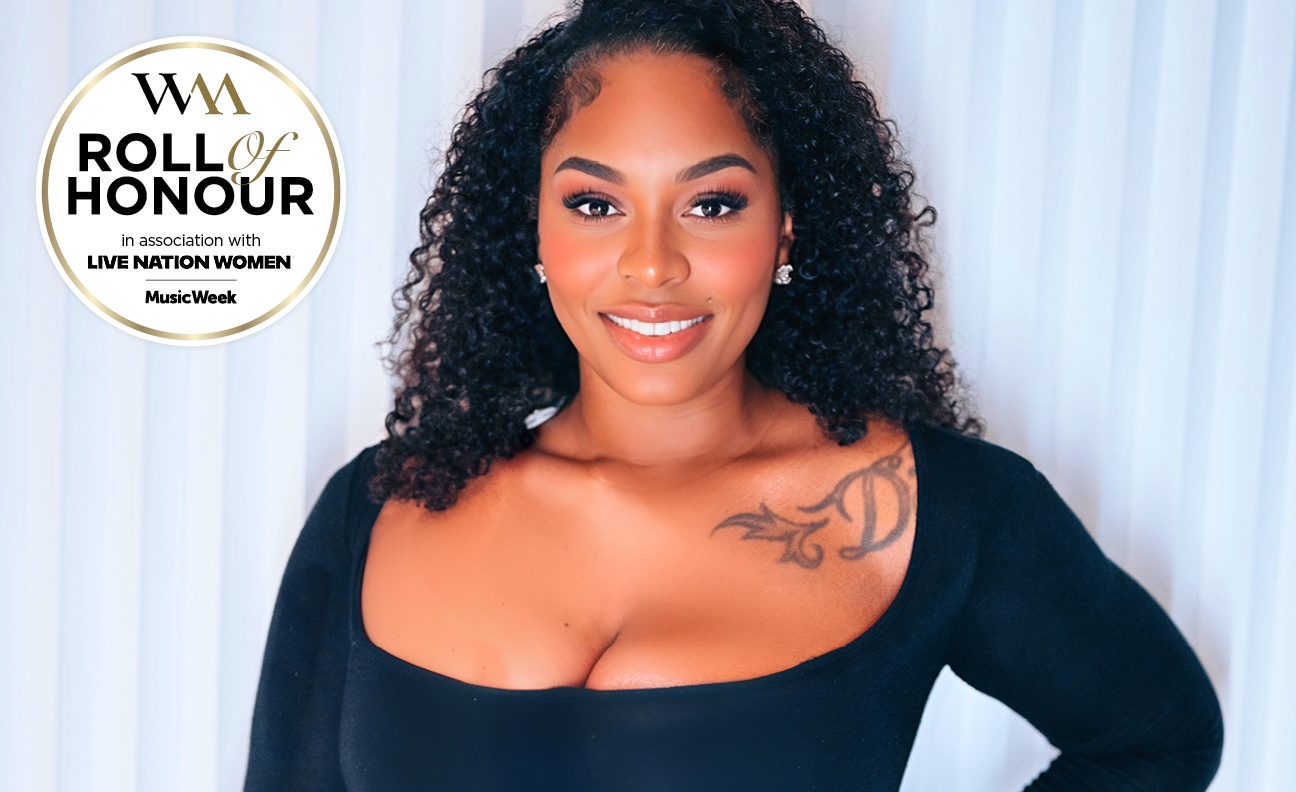
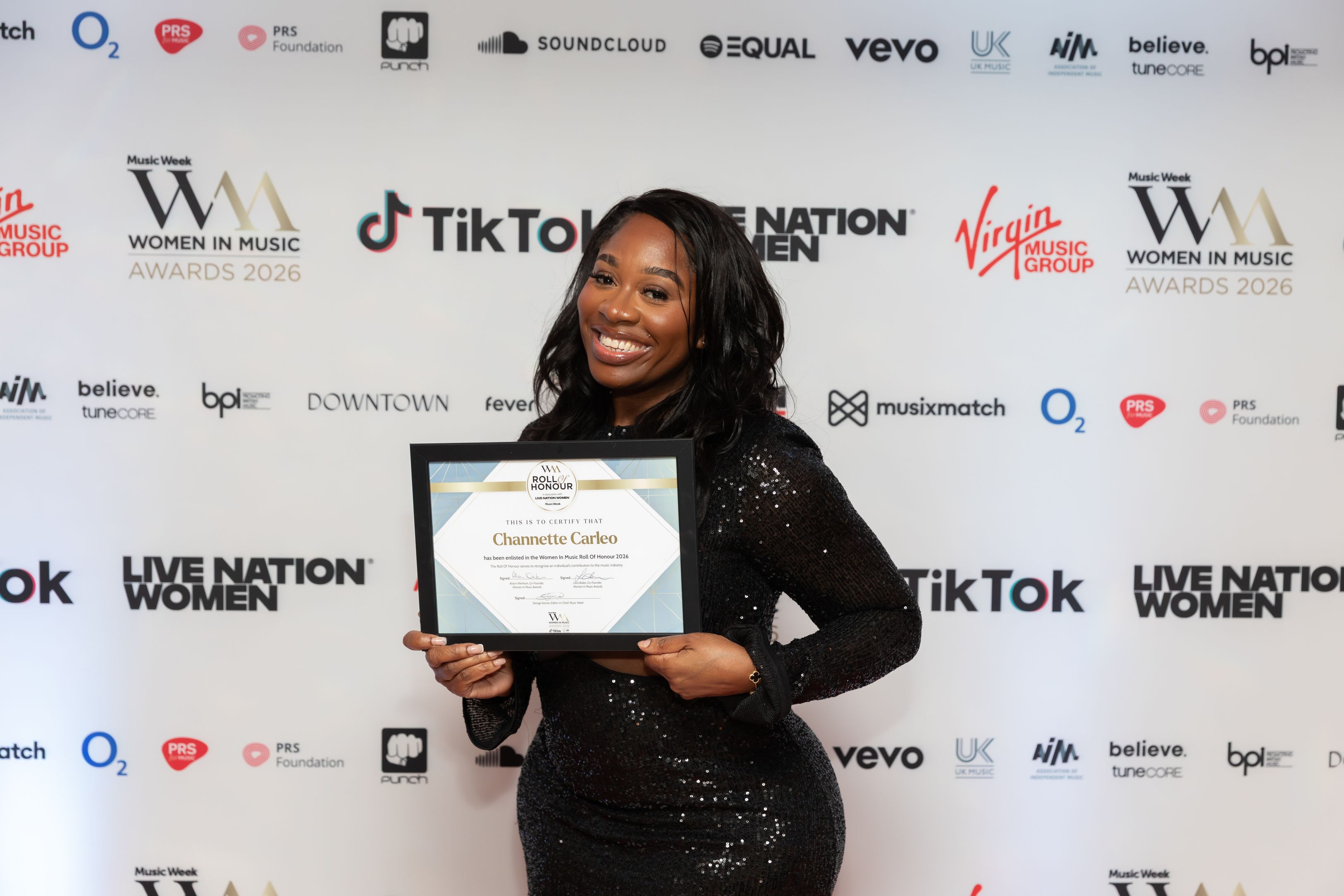
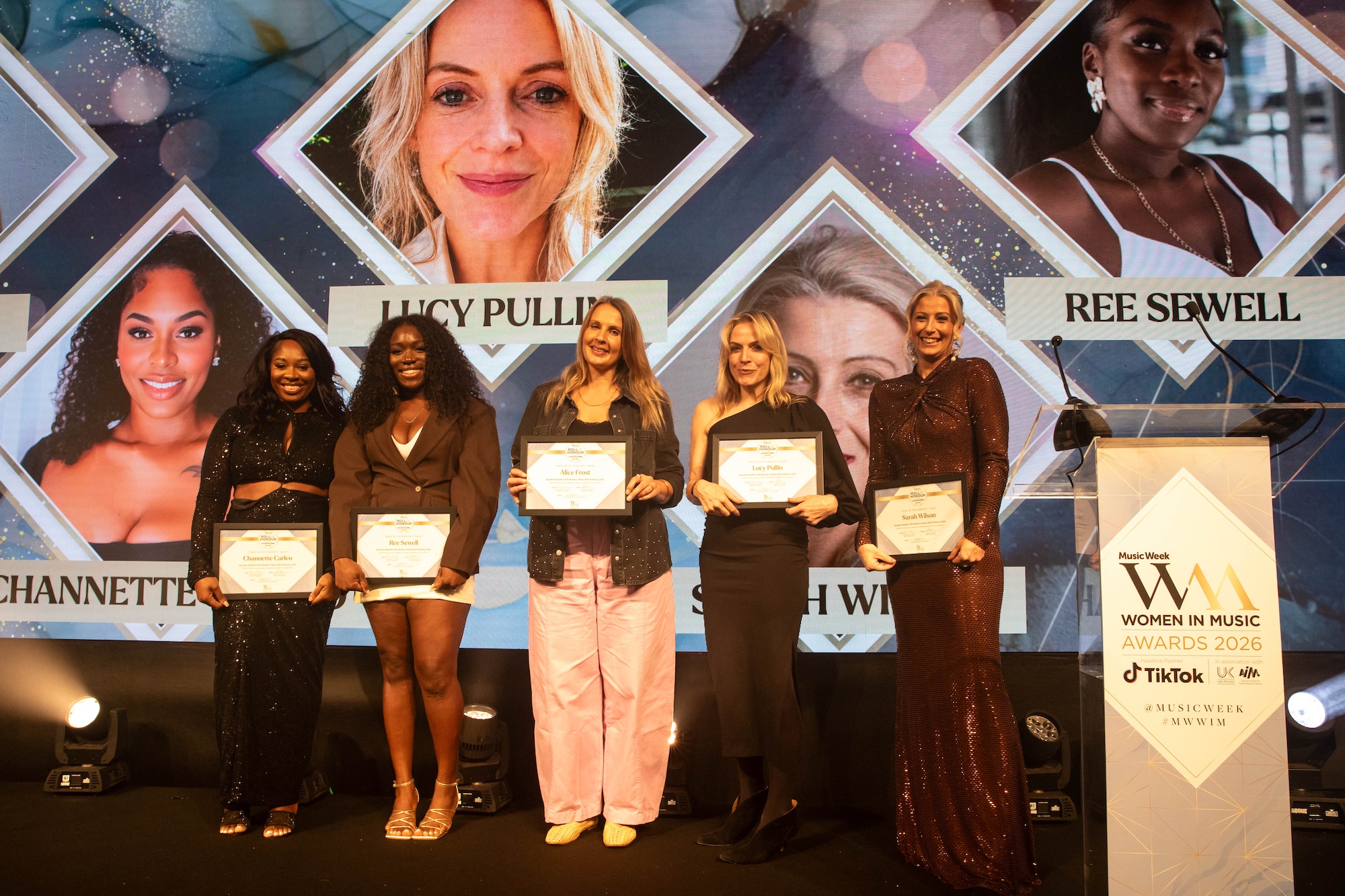
During the Music Week Women In Music Awards 2026, we inducted a host of trailblazing industry executives into the Roll Of Honour, in association with Live Nation Women.
They join a huge list of previous honourees, including some of the leading names from across the business like Kanya King, Emma Banks, Charisse Beaumont, Rebecca Allen, Stacey Tang, Laura Monks, Shani Gonzales and Mary Anne Hobbs, who have been selected since the awards began in 2014. The Roll Of Honour aims to shine a spotlight on the variety of individuals who are leading the charge in the music industry and consistently using their platforms to support women, or focus on empowerment and gender disparity.
Following the Women In Music Awards ceremony, Music Week is running Q&A interviews with all of this year’s Roll Of Honour inductees.
Channette Carleo is the head of content at Kiss, where she leads creative direction, on-air content, and manages the production teams and content strategy across Kiss’ flagship extension brands Kiss Xtra, Kisstory, Kisstory R&B and Kiss Dance.
With a career rooted in on-air production, Carleo has established herself as a respected creative and editorial leader within British radio and music culture. She has been nominated for her radio production twice at Young Music Boss Awards and recognised by the Notting Hill Carnival Committee as one of 60 Caribbean Black Women in the UK making a lasting impact on Black music and culture.
Her broadcasting career spans BBC Newsnight, Capital Xtra, BBC Radio 1, BBC Radio 1Xtra and The Asian Network. Since November 2022, she has led on content for Kiss Xtra, championing Black music and culture through innovative on-air, digital and social content for youth audiences.
In 2026, Carleo’s remit expanded, becoming the creative and editorial spearhead across Kiss Xtra, Kisstory (the UK’s biggest commercial digital radio station), Kisstory R&B and Kiss Dance. In the role, she drives content strategy, creative programming, campaigns and cultural initiatives across the brands to help shape their creative direction and audience proposition.
Carleo has worked with influential names across music and entertainment, including MistaJam, Snoochie Shy, Henrie, Craig Mitch, Ace, B.Simone, CoCo Jones and Stefflon Don.
Her production credits include interviews with Michael B. Jordan, Rio Ferdinand, Will Smith, Burna Boy, Wizkid, Victoria Monét, Latto, Coi Leray, Tems, Tyla, Chlöe Bailey, Ice Spice, Davido and LL Cool J, among many others.
Her work has received recognition across the industry, including the 2019 Audio Production Awards, the 2020 Audio and Radio Industry Awards, and multiple MOBO Best Media Personality nominations for KISS Xtra talent.
A key part of Carleo’s work is her advocacy for Black women and women of colour working behind the scenes in music. In 2023 and 2024, she introduced Black Women In Music: Behind The Scenes, spotlighting Black women across production, radio, management, marketing, PR and events, and celebrating the impact they make on the industry.
Her advocacy extends beyond broadcasting. Carleo is a PRS Foundation Power Up Year 4 awardee, Kindred Uncovered music residency board member, MOBO Awards Voting Academy member and BRIT Awards voting board member. She has also hosted industry panels, including the Urban Development Take Over music panel, championing emerging talent, cultural innovation and greater representation.
Carleo’s career reflects a commitment to using media as a force for cultural impact, celebrating music and culture, creating opportunities, amplifying underrepresented voices, and helping to shape a more inclusive future for the music industry.
How do you feel about joining the Roll Of Honour?
“I feel truly blessed to not only be acknowledged by the Music Week Women In Music Awards, but to be considered alongside so many incredible women of impact and influence who have shaped and continue to shape the UK music industry. Over the years, I’ve watched so many phenomenal women be recognised on the Roll of Honour, and to now be part of that legacy is a truly incredible accomplishment.”
Looking back, how do you reflect on your early years getting into the industry?
“Music has always been my passion, but coming from where I’m from, and without much access to the industry or established relationships at the time, I genuinely never believed that I could build a career within it. That all changed when I was selected for a production internship at the BBC. It was the foot in the door and the proximity I needed to see the industry up close. I saw other women there who looked like me and came from backgrounds similar to mine thriving within the industry. This is the point at which something shifted in my mind. I stopped seeing the industry as something that was out of reach, and started seeing it as somewhere achievable and where I belonged. From that point on, I knew this was the path I wanted to take. I was willing to put in the work, learn, take every opportunity and do whatever it took to make it happen – and so I went to work.”
Did you have a mentor at that stage?
“I’ve been incredibly fortunate when it comes to mentorship throughout my career, and I have to thank Carlene Morlese [ex-BBC; now artist relations, UK, Apple], Tanisha Barnaby [creative outreach project manager, BBC], Rozanna Green [outreach & partnership Lead, BBC] and Sam McAlister [ex-BBC] for being some of the first women to truly embrace me and open doors into the industry when I was just starting out. At a time when I experienced a lot of gatekeeping, they chose to believe in me. They saw potential in me when I had very little experience to my name, and they gave me opportunities, guidance and encouragement that helped shape the foundations of my career. Without them, I genuinely wouldn’t be where I am today. Several years later, I was fortunate enough to gain mentors including Jonty Crowley [Kiss], Ella-Bonai Gordon [head of broadcast, Ditto], Janine Kempadoo [ex-BBC; now co-founder & CCO, Silver Music Entertainment], Rebecca Frank [ex-BBC and Bauer; now client director, Cold Glass Productions] and Paul Gerrard [ex-ITV; now partnerships director, Cold Glass]. Each of them has played such an important role in my development from giving me invaluable advice and teaching me the ropes, to putting me in rooms and positions where I could challenge myself, grow and ultimately thrive. Mentors are incredibly important at every stage of your career. No matter how experienced or established you become, there is always something new to learn, another perspective to gain and someone who can help you see your potential beyond where you currently are.”
You founded Black Women In Music Behind The Scenes in 2023 and were part of the Power Up programme the following year. While radio networks such as Kiss champion Black broadcasting and music talent, how would you like to see representation improve across the radio landscape in terms of those in executive leadership roles? How can this be achieved?
“Representation in radio has made progress, particularly when it comes to the talent we see and hear on air, but I would love to see that progress reflected much more strongly in executive and senior leadership positions. For me, representation can’t just be about having diverse voices on the microphone. It’s about having diverse voices in the rooms where the big decisions are being made around programming, commissioning, budgets, recruitment, strategy and the future direction of our industry. You need people from different backgrounds at those tables, not just because it’s the right thing to do, but because it ultimately makes the industry better. Different lived experiences bring different perspectives, ideas and connections to audiences. One of the biggest barriers is that we can sometimes continue to recruit from the same networks and circles. That’s why creating genuine pathways into leadership is so important.
"We need to identify talented people earlier in their careers, give them access to senior mentors and sponsors, expose them to the business beyond their immediate roles and, importantly, give them opportunities to lead. That’s a big part of why I founded Black Women In Music Behind The Scenes. I wanted to create a space where Black women working behind the scenes could be given well deserved visibility, share experiences, champion one another and see what was possible for their careers. Programmes such as Power Up are also incredibly important because they provide access, development and visibility that can be transformative. But I think the next step is accountability. Organisations need to look beyond entry-level diversity initiatives and ask themselves, ‘Who is being promoted? Who is being given responsibility? Who has access to senior decision-makers? Who is being considered for leadership roles?’ Ultimately, I’d love to see a radio industry where more people are willing to open doors, create opportunities and actively champion talent that may not have traditionally had access to those rooms. This will help ensure underrepresented groups aren’t just represented within the workforce, but are also helping to shape its future. Because representation at the top creates a pipeline for everyone coming behind us.”
Kiss has seen a ratings boost across its portfolio. What do you think is behind that?
“There are a few things coming together, but ultimately it comes down to Kiss becoming even more connected to its audience and being really clear about who it is. The rebrand and refreshed line-up have given the station a renewed sense of energy, while the new Kiss Breakfast show with Tyler West and Chloe Burrows has also brought a lot of personality and cultural relevance. Across the wider portfolio, the strength is also in having distinct brands that serve different audiences and different moments. Kisstory and Kisstory R&B continue to perform incredibly well, while Kiss Xtra is seeing particularly encouraging growth in listening hours. From a content perspective, audiences can tell when a brand genuinely understands them.
"Consistency is also key. It’s about having a clear identity, investing in great talent, creating big cultural moments and making sure you’re showing up for your audience every day. The results across the portfolio now reaching 3.7 million listeners a week suggest that, when you get that combination of brand, talent, music and culture right, audiences respond. And a huge amount of that is driven by the leaders and teams behind the scenes who are constantly thinking about how we evolve, connect with audiences and keep the brands relevant. For me, the exciting thing is that it doesn’t feel like we’re standing still. There’s a real sense that Kiss is listening to its audience, evolving with them and giving them a reason to keep coming back.”
Your work will ultimately speak louder than your doubts
Channette Carleo, Kiss
How do you ensure radio remains relevant to audiences in the digital and streaming era?
“Radio has to see digital and streaming not as a threat, but as an opportunity to extend what radio does best. Our biggest advantage is still human connection. Streaming can give you a song, but it can’t replicate the relationship you build with a presenter, the excitement of discovering something new, or feeling part of a live conversation. For me, staying relevant means understanding how audiences consume content today and making sure radio exists across those touchpoints. The broadcast shouldn’t just live on the airwaves; the conversations, interviews, music discovery and cultural moments should have a life across social, video, podcasts and digital platforms. It’s also about staying genuinely connected to culture and understanding what your audience cares about. Ultimately, the future is radio everywhere! It’s about meeting audiences wherever they choose to consume content, while continuing to offer something that streaming alone can’t: connection, personality and community.”
What’s your biggest achievement so far?
“This year, I was promoted to head of content at Kiss, and that has to be my biggest career achievement so far. To be the first Black woman to take up this role at such a heritage brand – one that I actually grew up listening to – is something that feels incredibly special. Being given the autonomy to creatively lead the content strategy across our Kiss sub brands while keeping culture at the heart of what we do genuinely still feels surreal. It’s a huge responsibility, but one that makes me incredibly proud. I often think about the younger version of myself and how much it would have meant to see a Black woman in a role like this. If I can be that representation for someone else coming through now, then that makes the achievement even more meaningful to me.”
Can you offer some advice to young women about enjoying a successful career in music?
“My biggest piece of advice would be to leave imposter syndrome and your emotions at the door. This is a business and you have to treat it like one. Focus on doing the work, doing it well and building a reputation for being someone people can rely on. Don’t be afraid to bring your own perspective. Your unique experiences, ideas and point of view are your strengths, so don’t feel you have to fit into someone else’s mould to succeed. I’d also say make sure you’re doing it because you genuinely love the industry, not just because you want to be part of it for the perks, access or lifestyle. There will be difficult days, rejection, and moments when things don’t go your way. Your passion for what you do is what will keep you moving forward. And most importantly: be kind to other women and build community. We need to support, champion and open doors for one another. There will be times in this industry when we are all we have, so don’t underestimate the power of having women around you who genuinely want to see you win. Work hard, be reliable, stay curious, keep learning and remember that you deserve to be in the room. Your work will ultimately speak louder than your doubts.”
And what is the best advice you’ve ever had?
“It came from Rebecca Frank, and it was one word: ‘Fly.’ Coming up as a producer, I’d often pitch her my wacky ideas for how we could grow the Kiss Xtra brand. She would always give me positive and constructive advice, but more often than not, she would simply tell me to ‘Fly’. I always took that as: go ahead, make it happen and do it big. I don’t think she ever realised what giving me that freedom, creative space and autonomy helped me to birth as a creative. But whenever she said ‘Fly’, it reminded me that I was capable of more and that I should trust my ideas and my instincts. And I literally did just that. It’s advice I would absolutely carry forward and give to anyone with bold ideas or big dreams. Go out there and make them happen wherever you can, especially when you have an opportunity, a platform and the freedom to create. Don’t be afraid to take it and run with it: fly!”
Is there a young woman you'd like to shout out who you think is a rising star in the industry?
“I’d like to give a huge shout-out to Shanae Brooks, an incredible creative producer and visionary for the culture. Shanae is someone who consistently brings fresh ideas, creativity and purpose to everything she does. She has such a strong understanding of culture and how to translate it into meaningful, impactful creative work. What I really admire about Shanae is her ability to see the bigger picture, push boundaries and create spaces and ideas that genuinely celebrate our culture. She’s a real talent, and I’m excited to see everything she continues to build and contribute to the industry.”
Similarly, is there a young woman artist whose music you're enjoying right now/excited about?
“Chy Cartier is definitely an artist I’m excited about right now. I love the energy she brings and, more importantly, she feels like an artist with a really clear sense of identity and direction. There’s something fresh and authentic about what she’s doing, and she has the potential to really carve out her own space. I’m always excited by young women who aren’t afraid to be themselves, experiment and push things forward, and I think Chy Cartier is one to watch. I’m excited to see how she continues to develop and what the next chapter looks like for her.”
Finally, what’s your biggest lesson from 2026 so far?
“Stepping into the role of head of content has made me realise that you can spend so much of your career proving that you’re capable that you sometimes forget to recognise just how capable you already are. This year has really taught me to trust my creative instincts, my experience, and my ability to lead. It’s also made me realise that the imposter syndrome I’ve often suffered with is just that: imposter syndrome! After 10 years working in music, I’m proud to say I deserve my space in this industry just as much as anyone else. I’ve earned my seat at the table, built relationships and, most importantly, put in the hard work. It’s vital that people like me are in those rooms, shaping ideas, making decisions and creating opportunities for the next generation. I’ve learnt that I don’t have to have every answer, either. Sometimes leadership is about having the confidence to say: ‘I don’t know yet, but I’ll figure it out.’ And, most crucially, I’ve learnt not to make myself smaller to make other people comfortable. If you’re given the opportunity, the platform and the responsibility, step into it fully, trust yourself and fly.”