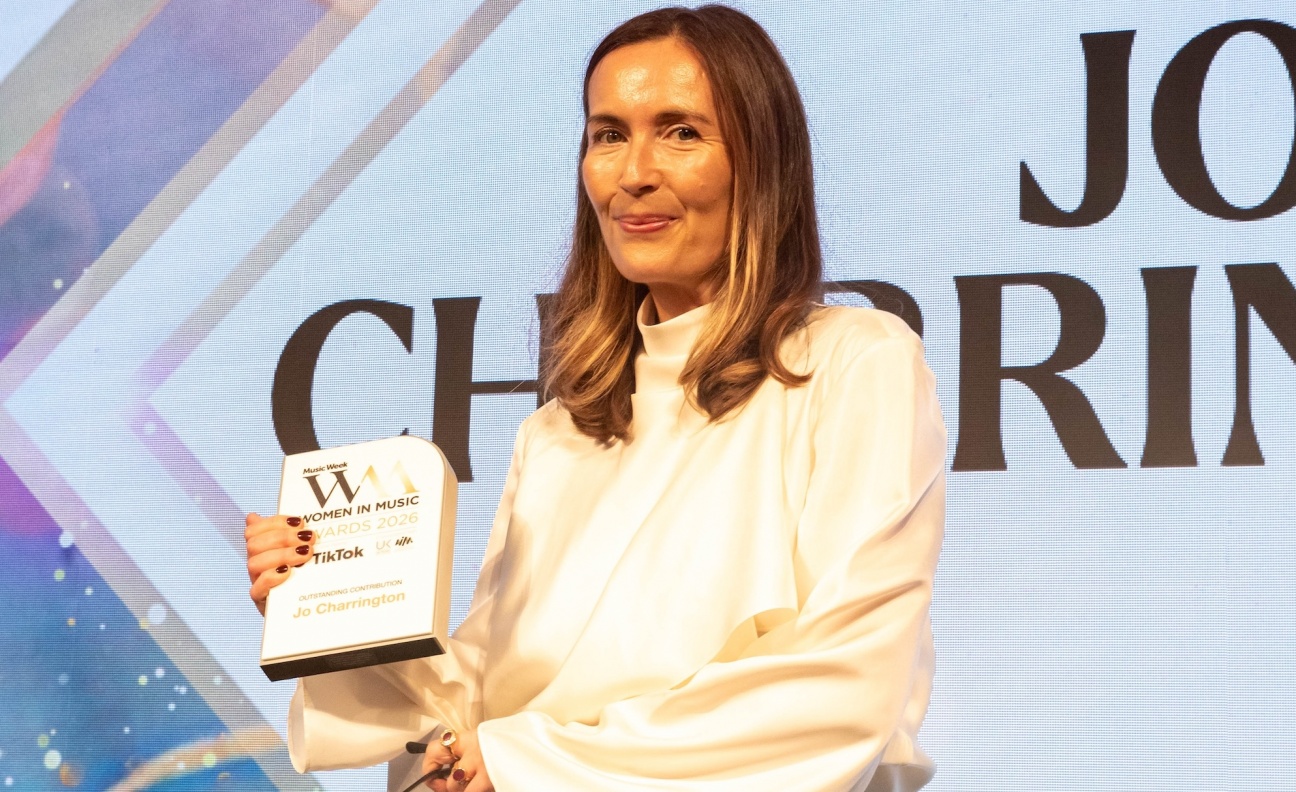
At this year's Music Week Women In Music Awards, we celebrated the achievements of game-changing executives and artists as the industry came together to honour their work. Music Week has spoken to the winners in all 14 categories to tell their stories. Here, Jo Charrington, winner of our Outstanding Contribution award, talks Olivia Dean, Sam Smith and her crusade through the music business...
Olivia Dean may have spent the past year heading towards global superstardom, but behind her is an equally impressive executive, who is, in Dean’s words, “a boss woman, completely in charge and just amazing at what she does”. That “boss woman” is Jo Charrington, president of Capitol Records UK and winner of this year’s Women In Music Outstanding Contribution award.
Charrington has presided over a campaign that proved both the power of Dean as an artist and the brilliance of British music on the international stage. Over the past year, Olivia Dean has become the first British female solo artist ever to have four songs in the Top 10 simultaneously. Rein Me In, Dean’s duet with Sam Fender, spent 19 non-consecutive weeks at No.1, breaking a 73-year-old record. The singer’s second album, The Art Of Loving debuted at No.1, and her current tour is set to take her to almost one million people across the world.
“I told her to remember that a million people will always have that memory of seeing her perform,” says Charrington. “And no one can take that away from them.”
Olivia Dean is not Jo Charrington’s only success – far from it. She started out at London Records, before moving to artist management and then A&R for Epic Records at Sony Music. In 2011, she joined Universal Music as vice-president of A&R – first for London Records, then for Capitol when it was launched as a UK label in 2013. In 2022, she was appointed co-president of EMI Records alongside Rebecca Allen, before becoming president of Capitol in 2024. During her career, she has signed or handled A&R for over 30 platinum or multi-platinum albums and worked with artists who have gone on to win BRITs, Oscars, Grammys and more. Eleven years ago, she picked up an award herself, winning Women In Music’s Businesswoman Of The Year.
“I feel like I’ve had a brilliant decade,” says Charrington. “Especially in the last couple of years with Capitol and Olivia Dean. I think a younger me would have thought about the award and been like, ‘Ooh, but do I deserve it?’ But actually, I’m over the moon. I’m really happy and chuffed to bits.”
At the Women In Music Awards ceremony, industry leaders and artists (along with Charrington’s daughters) paid tribute on video, including Universal Music Group CEO & chairman Sir Lucian Grainge, Universal Music Group UK CEO & chairman Dickon Stainer, Republic’s Monte and Avery Lipman, and artists including Olivia Dean, Lemar, Sam Smith, Olly Murs, Bastille’s Dan Smith, Another Level’s Dane Bowers and Scouting For Girls’ Roy Stride.
“Outstanding contribution, that just about sums it up – very appropriate,” said Sir Lucian. “Thank you for everything you do.”
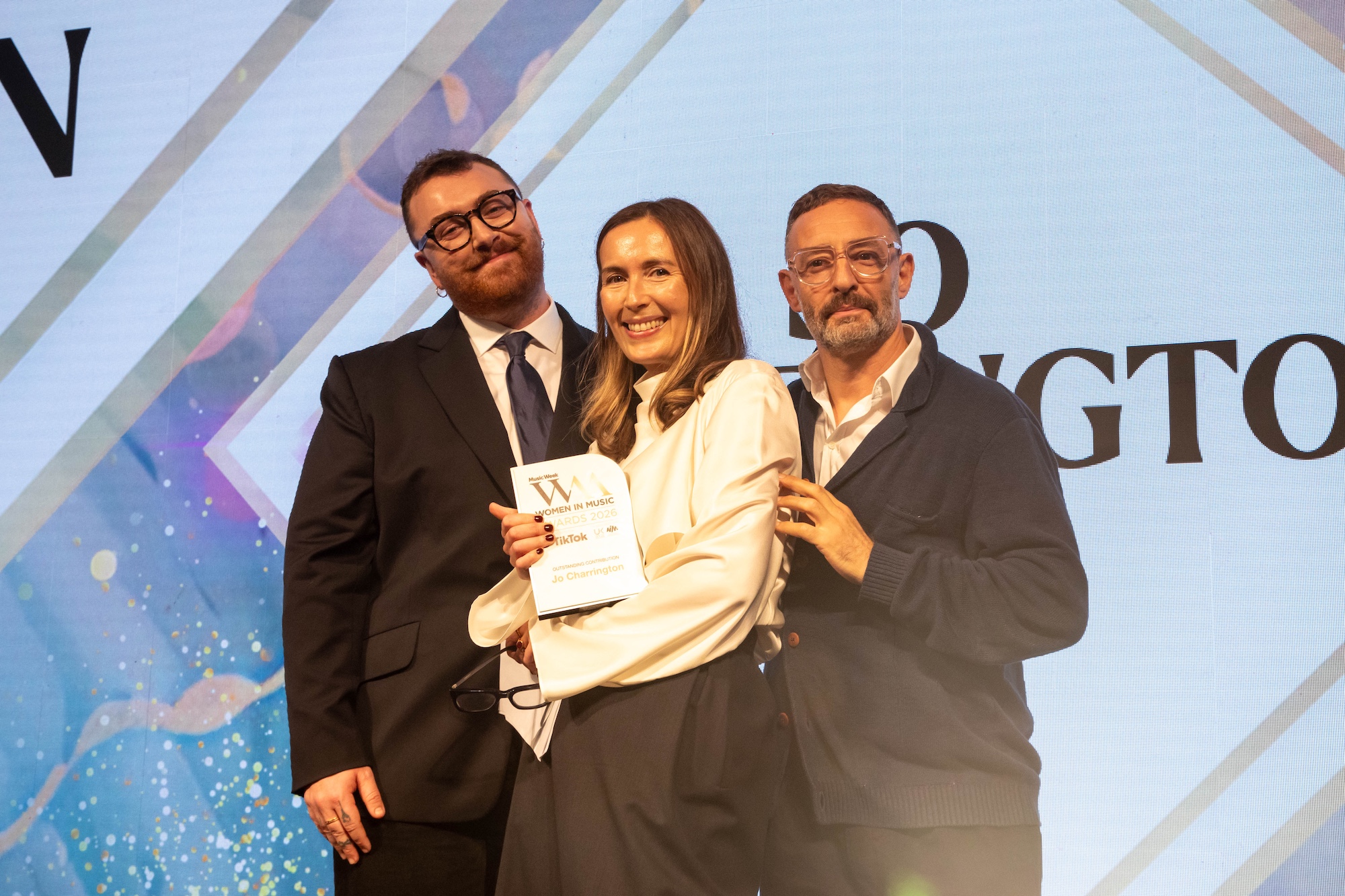
Presenting the award to her at the Women In Music Awards ceremony, Sam Smith described Charrington as both “outstanding” and “inspiring”, noting her dedication to artists. Without further ado, it's time to sit down with the highly-respected executive to reflect on the win and look back on some key moments from her storied career...
It was 11 years ago – before the current brilliant decade you just mentioned – that you won Businesswoman Of The Year at the Women In Music Awards. What do you remember about that time?
“We'd actually just had huge success with Sam Smith's first album, In The Lonely Hour, and I think that was a big part of me winning that award. I can remember it clearly. I can remember my outfit and everything because I took it very seriously. It was very special because we all work really hard and we also have our families and other lives. But then there are these moments where I can invite my mum. My kids were tiny back then, but now I can bring my kids to this award. I can bring my sister and I can celebrate it with friends and work colleagues. It’s nice for my family to see it's all worth it – there are some accolades and it makes them proud.”
What is it specifically that has made this most recent decade brilliant?
“I've been through quite a few changes in the last decade in terms of who I've been working with. I worked with Nick Raphael for 20 years and that came to an end four years ago. It wasn’t our choice – it was one of those things that happen in business. But up until then, my A&R career had been alongside Nick. I always had Nick’s support and I couldn’t have done it without him. He really believed in me, more than I believed in myself. Now I think I’ve reached a point where I believe in myself as much as he did. But in the last four or five years, we've not been working together. I went from running Capitol with him to running it on my own, to then running EMI with Becky Allen for two years, and then back again to Capitol, but in a slightly new iteration and alongside [MD] Tom Paul. So now I can say that I can do this with different people. I can lead. And I’ve evolved, which you have to do in a career if you want to keep on top.”
Did you feel you had to prove this to yourself or to others?
“I think mostly to myself now. Perhaps the difference between women and some men is that we don't realise how good we are. We sometimes have to prove ourselves a little bit more, rather than grabbing things and just believing we can do it, even when we haven't learned to do it yet. So I've proven that we are better than we think we are.
“When I was coming up as a woman in A&R – which was quite male-dominated back then – there was definitely a period where people assumed I was Nick’s PA. That was when I had to prove it to other people. I had to really get my elbows out. But Nick was brilliant because he would always say, ‘No, this is Jo's project. This is Jo's artist.’ Both have happened. Maybe that's why the timing of this award feels right. It sits well with me. I can justify it to myself.”
What do the Women In Music Awards mean to you? And what do you think it means to the industry?
“It's an event to celebrate women, and I think that's really important. I think women are very good at supporting each other. I'd started writing a list of all the women who inspired me when I was coming up, and then a big, big list of all the women who have been around me and, every time something good has happened, they have sent me a nice message. But it’s also a reminder that there's still work to be done – that we deserve to be equals. It's a reminder to myself to keep making an effort to mentor and encourage women, specifically to try and get into A&R. It’s a moment to focus and a celebration.”
Sam Smith – who presented you with your award – and Olivia Dean are both UK artists who have had huge international success. What’s the secret to breaking a British act internationally?
“It starts with the talent of the artist. Obviously, that should go without saying, but sometimes it's important to state the obvious because everything is inspired by the artist and the music. I can't overstate the importance of teamwork. Having everyone sign up to an 18-month strategy is very important, but you can have the best strategy in the world, and without the team to execute it… When we broke Sam globally, streaming was just becoming a force. We had a big story in the UK, and it was able to travel quickly and easily because we weren’t dealing with the scale of streaming that we do now. In terms of UK versus US, it’s harder to make a mark now. Sam just resonated in the US, and we went to America very early on in the campaign – so that's how we broke Sam.
“With Olivia, it was 12 years later and a different environment. The strategy with Olivia was to target more markets earlier on. Even before [first album] Messy came out she was making international visits to Australia and Thailand. Nickie Owen was a big part in that strategy, along with Emily [Braham], Olivia’s manager. It was about picking markets and going back to them time and time again, and building a head of steam.”
For the first time, I really believe in myself and the executive that I am
Jo Charrington, Capitol Records UK
Does the artist’s style play a part in this, too?
“Sam and Olivia are very different artists, but both of them make soulful pop music that has resonated in international markets. Also, neither of them sounds like they’re from the UK – they sound global. If you sound very British, it is definitely harder to make an impact in as many markets. I don't think that's something they consciously did. That's just who they are.”
Olivia has had an amazing 12 months, with the record-breaking success of Rein Me In and The Art Of Loving. Can you put into words how that has felt to be a part of?
“It’s been [just over] a year since The Art Of Loving was released, and she’s already up to nearly seven million albums globally. She's been on a world tour, which is almost finished. She's played 48 arenas since April to over 880,000. By the time she’s played her Australian dates in October, it will be reaching one million. She won a Grammy at the beginning of the year and we expect her to have more Grammy noms. We didn’t take it for granted that her live show would be so successful. It’s perfectly put together: an incredible performance, simple staging and beautiful outfits. And the way she connects with her audience is very human.”
From an A&R perspective, what does Olivia’s success mean for other UK acts?
“Hopefully, it gives some confidence. It shows you what you can do if you work hard and you find your people, particularly as a female artist. I'm incredibly proud to have been involved in helping a British female artist become a global superstar. We all have our moments where we doubt ourselves, but Olivia knows how brilliant she can be. It’s wonderful to be around a woman who can own that success. So I think she sets a fantastic example for young women everywhere and for the next generation of female artists.”
What does it mean for you to be at the top of Capitol? Are you reshaping it?
“I’m very proud and I love my job. Things have changed, though. When I was running Capitol four or five years ago, I was doing it alongside Nick and change can be daunting. I’m working alongside Tom – we worked together with Nick and have worked together for 18 years – and having Olivia through this period gave us a North Star. I'm really enjoying being at the helm. I feel like I've gone through that transition and now I can really own the fact that I can run something on my own. I do get a lot of young women saying they are inspired by the fact I'm one of the only women in a senior label position, particularly from an A&R background. I'm conscious that that's important.”
What has shaped you as an executive?
“Back in the day, my mum – who told me it’s important to be independent – and boarding school. I was always in bands; I sang and loved music, but I also loved business. I started a business studies degree, which I dropped out of. I’m a creative executive, sitting between both sides. I also did management in my 20s, which I think has helped me to understand things from an artist’s perspective.”
Has there been a point where you've thought, ‘Okay, now I'm a music executive’?
“Quite recently, when Olivia started breaking this year. I was able to think, ‘I’ve done it.’ Dickon [Stainer, Chairman/CEO of UMG UK & Ireland] was backing me and saying, ‘Whatever you need.’ There was that confidence from the company. For the first time, I really believe in myself and the executive that I am.”
As you said, you are still one of the very few female presidents at a major. What has been the key to succeeding?
“Having an advocate – someone who believed in me – and then having the support from the chairman at Universal, first for the EMI job and now back to Capitol. But it's not for the faint-hearted. It's hard work, and you've got to have a supportive family. It’s a choice. I'd love to play a part in bringing some other women through. I think they need someone to advocate for them, too.”
What’s been your biggest mistake and how did you overcome it?
“The way I function, and the reason I think I’m still here after 30 years, is that anything that happens, I turn it into something that I can work with and move forward with. When I was at Sony I passed on Mika, Natasha Bedingfield and Sugababes. But every time I passed and they went on to be successful, I thought, ‘Okay, my instincts were right, but I didn’t have the confidence.’ I also think it probably wouldn't have worked as well if I had signed them – it worked because of the team that they were with. It’s a survival skill I’ve developed.”
What have been your toughest challenges?
“Keeping my head up when things aren't going well. Reminding myself that I do know what I’m doing. It’s about putting your game face on in a big meeting when your confidence is low. That's the hardest thing, because it's an inconsistent business. You can be super hot and flying, and then another artist who you spent as much time and money on is, for some reason, just not connecting. Between us, Tom and I have a lot of awards. I went through a stage of being humble and just putting them on the floor, not looking at them. But when we started Capitol 2.0, I decided that we would have a really lovely cabinet with all the things we’ve achieved with our artists and our team. And when we’re feeling low, we can look at it and remind ourselves that we have done it – not once, not twice, but quite a few times.”
What's the most unbelievable situation you've been in during your career?
“The Oscars with Sam Smith, when Sam won an Oscar for Writing’s On The Wall, the James Bond theme to Spectre. It was the most unbelievable red carpet. I remember getting a picture with Mark Rylance. Sam was performing. I ended up blagging my way backstage without a pass because I'd had my hair done at the hotel and it was really bad. Paul Edmonds, who does Sam's hair, was backstage. I was so desperate to get my hair done that I managed to blag it. I went back and there was this bar backstage with Scarlett Johansson and Michael Keaton just standing around, the coolest cucumbers. I recommend winning Oscars to anybody.”
What would you like your legacy to be?
“I really don't think about legacy at all. But I'd love to bring through a couple of A&Rs that go on to have long careers. I’d like people to say that I gave them a good little tip. I’d like people to speak well of me.”
In terms of one thing you’d like people to take away from your story, what advice would you give younger women?
“You’re better than you think you are.”