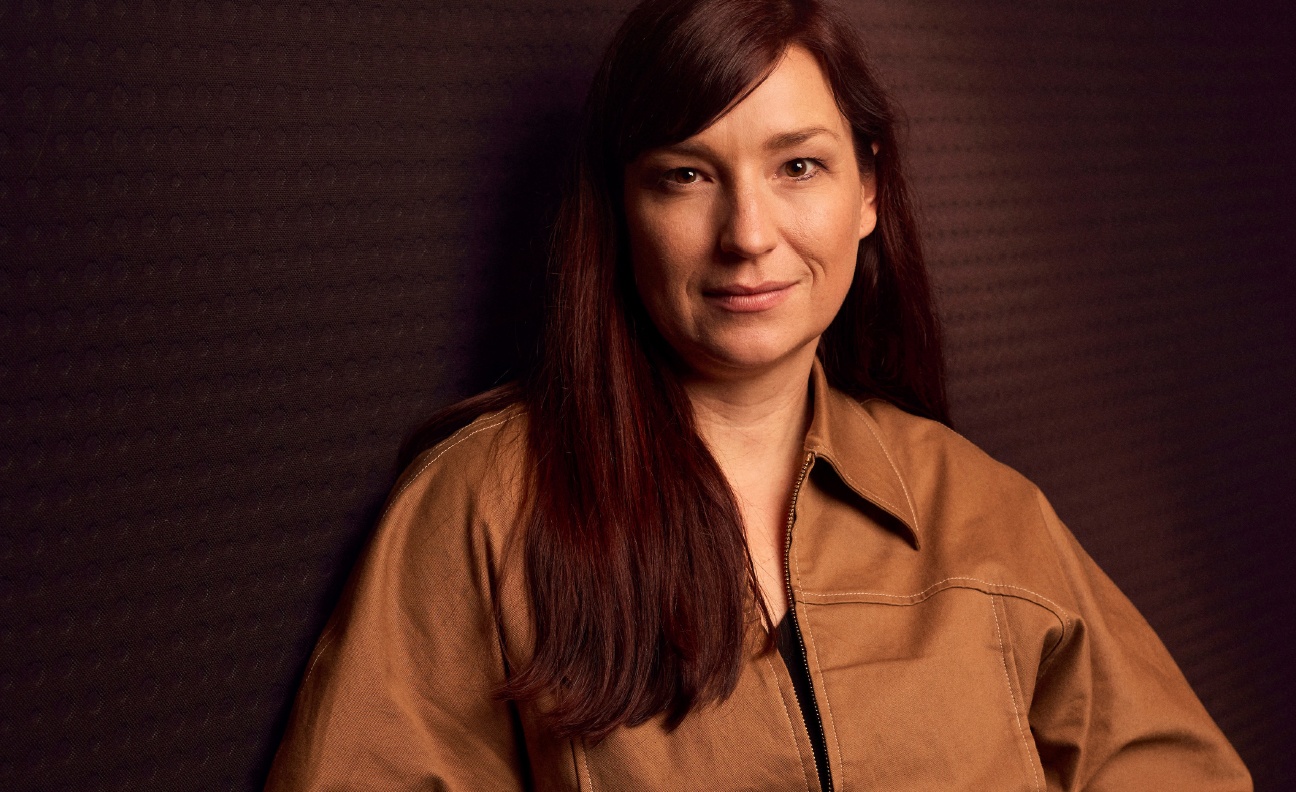
Winner of the Live Music Inspiration Award at the 2025 Music Week Women In Music Awards, Anna-Sophie Mertens is a totem of the British live business. As SVP, touring at Live Nation UK, she works with an array of talent including Olivia Rodrigo, Ariana Grande, Lewis Capaldi, Myles Smith, Chris Stapleton and more. A member of the Country Music Association board, she also launched Highways Festival in the UK. Here, she reflects on her rise – which began with a Live Nation internship – and tackles the sector’s biggest issues…
WORDS: ANNA FIELDING
PHOTOS: GARY MORRISROE
Ray Charles, at the age of six, in Hamburg. That was Anna-Sophie Mertens’ first gig. It’s an impressively cool start to a life in music and set Mertens on a trajectory that has landed her in the position of senior vice president, touring at Live Nation UK. In her 15 years at the juggernaut company, she has championed new talent, worked with some of the biggest names in music and is the driving force behind the Highways Festival, the country music and Americana event held each year at the Royal Albert Hall.
Today, sitting with Music Week in Live Nation’s offices in Clerkenwell, central London, a quirk of the meeting room’s seating has placed her directly under a ceiling light.
“So I’m in the spotlight today,” she begins, with a laugh.
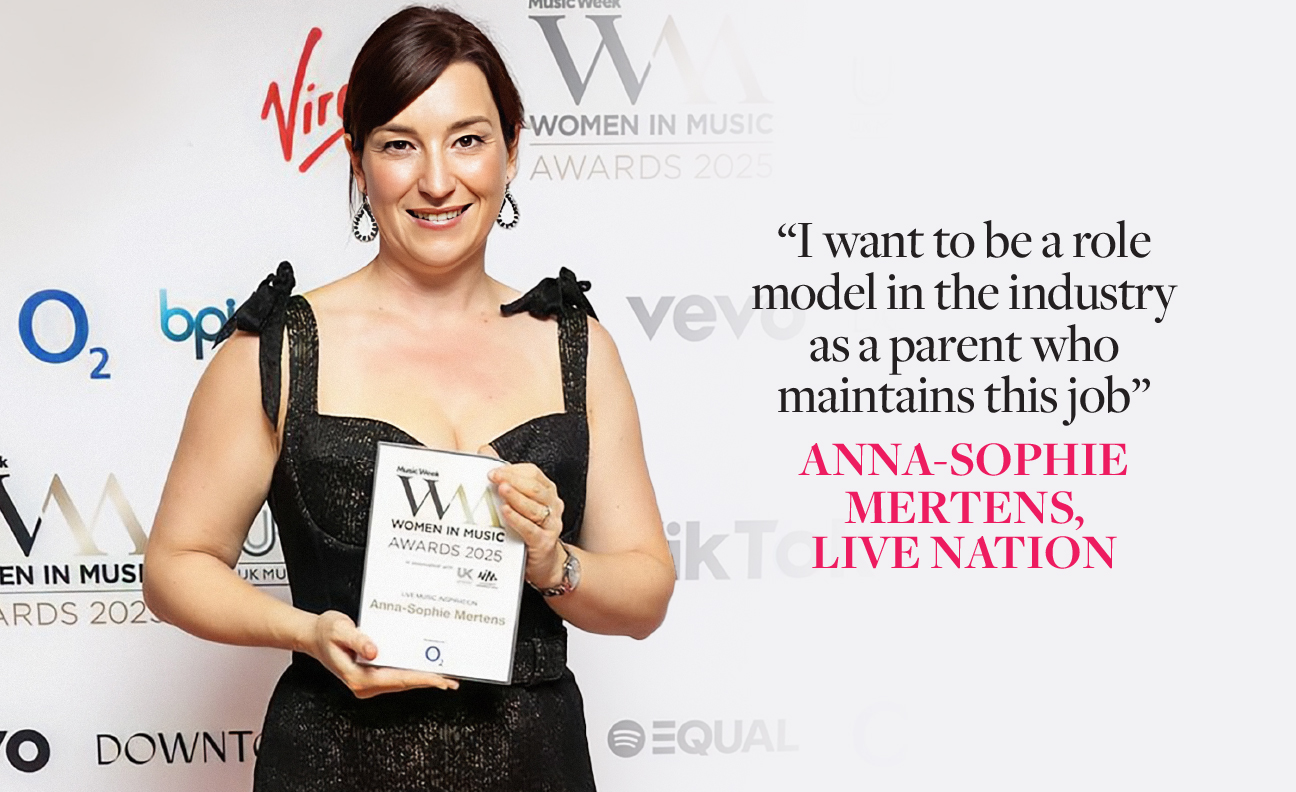
It’s not a position the German executive frequently finds herself in, usually preferring to yield it to artists such as Rihanna and Olivia Rodrigo. The last time she found herself centre stage was at the 2025 Music Week Women In Music Awards, where she picked up the Live Music Inspiration trophy.
“Like many others, I have a tendency not to celebrate myself,” she reflects. “So it was a nice opportunity to think about the things I have contributed so far – to think, ‘What have I done? Where do I stand?’ And being recognised for my work is also really fantastic.”
Mertens, who spoke movingly about raising her young family during her acceptance speech, keeps the award in her home office where it shares shelf space with another award from the Country Music Association and a tour manager Barbie. Mertens bought five of the tour manager-and-rockstar Barbie doll sets and gave them out to other female friends in the industry.
“It’s quite realistic,” she nods. “With her all-areas pass and a walkie-talkie.”
Mertens has been with Live Nation for 15 years, starting out as an intern.
“It’s always been my mantra to get your foot in [the door] and then pay attention, learn and deliver,” she says. “And if people know they can rely on you, they will give you more opportunities.”
One of those people was Live Nation’s Andy Copping, who Mertens counts as both a mentor and an influence.
“When it came to actually promoting, he was there saying, ‘You’re ready for it.’ I’m forever grateful for his advice and belief,” she says.
Even before she got her break, Mertens had been paying attention to the live industry for quite some time, telling us that she “knew pretty early on in life what direction I wanted to head in”.
Her father managed the German comedian Otto, who, says Mertens, “is someone you know instantly if you are German and probably not if you are from elsewhere, but he made comedy, music and movies.”
Now, Mertens reflects positively on that early exposure.
“One of the benefits of growing up close to the industry was seeing the good and the bad,” she nods. “It’s not all glamorous backstage areas; it’s also late nights and long periods on the road.”
After a childhood of observation and some teenage internships, Mertens left Germany at the age of 19 to study management at the Liverpool Institute for Performing Arts. Many more steps followed, working various jobs in live, including an early ticketing role at Live Nation and work for Download.
“I learned across the board and it’s given me a really great skill set,” she notes.
To find out more, Music Week sits down with Mertens to track the evolution of her career, discuss where she is now and what she’s planning for the future...
When you hit a milestone like the Women In Music Awards win last year, does it also make you stop to think about what the job means to you?
“It’s a real pleasure, because you get to see and work with people at the top of their game – from artists to tour managers, production managers, accountants… the whole touring crew. Being exposed to, and working with, that level of professionalism is always a great joy. Throughout my career, I’ve always been focused on building my skills, wanting to deliver, and doing a good job, so it’s great to be there and think that this is where I belong. I also know my team will deliver with top professionalism, just as the artists do.”
What’s your ethos as a promoter?
“I don’t think it’s specifically a philosophy of promotion, but I do think the key to everything is about just showing up, delivering, and sticking to your word. And if you can’t, then be transparent. If you have something that needs to be delivered by Thursday, but for whatever reason you can’t do that, then hold your hand up, explain why, and that you’ll get it to them for Friday. As long as you stick to your word and people can trust you with responsibility, it’s always going to lead to more, bigger, and better things. As I said before, that is my number one mantra – it’s what I’ve always worked to and what I pass on to anyone I am mentoring or when I talk to students. And it’s not just for business; it works in the rest of life too.”
Can you sum up the role that promoters play in the wider industry?
“Live has become such an important part, right? So much has changed over the last 10 to 15 years and live has become really important in terms of directly connecting to fans. What we’ve also seen is that it’s really become an overall experience, and some of the great artists really take it as a huge opportunity to showcase their talent, their desires, the things that are important to them. A great example is Billie Eilish. If you go to one of her shows, it’s not just that you get to see Billie Eilish. There are a lot of things that she really cares about that she brings to her fans. For instance, there’s a huge campaign of pre-comms that she does about using public transport to get to the show. Her shows finish a bit earlier than usual to allow people to be able to take public transport comfortably, because it’s important to her in terms of climate change. And then there’s vegan food at the venue. She also chooses local charities she loves working with, and they all get a chance to do activations at her shows. It’s really interesting because it makes it more than just a gig. All of that is now really important for the promoter. We are the central command when it comes to anything live. We’ll interact with our marketing, ticketing, production and accounting teams, and all those things come together with the promoter, who will then make the final decisions.”
Is there anything you think promoters should be doing that they aren’t?
“We’re all such varied characters. I look at my colleagues and we’re all so different. We all have very different strengths, which is quite interesting to see. So I don’t really know what we should be doing, or what promoters should be doing more of. I think a lot of it is actually just being true to yourself and continuing to do what you’re doing.”
Some in the live industry have expressed the view that labels seem to value streaming over live. Is that something you agree with?
“To be honest, apart from an internship at a label many, many, many years ago, I’ve not really been in that environment, so I’m not sure I can comment on what they should or shouldn’t be doing. All I do know is that all these different aspects are really important to the artists – their careers and their brand – whether that’s streaming, the recorded side, merchandise, endorsements, or live. So I think we all just have a place in the ecosystem.”
From new headliners to huge stadium shows and festivals, last year was a landmark one for live music in the UK. Why do you think that was?
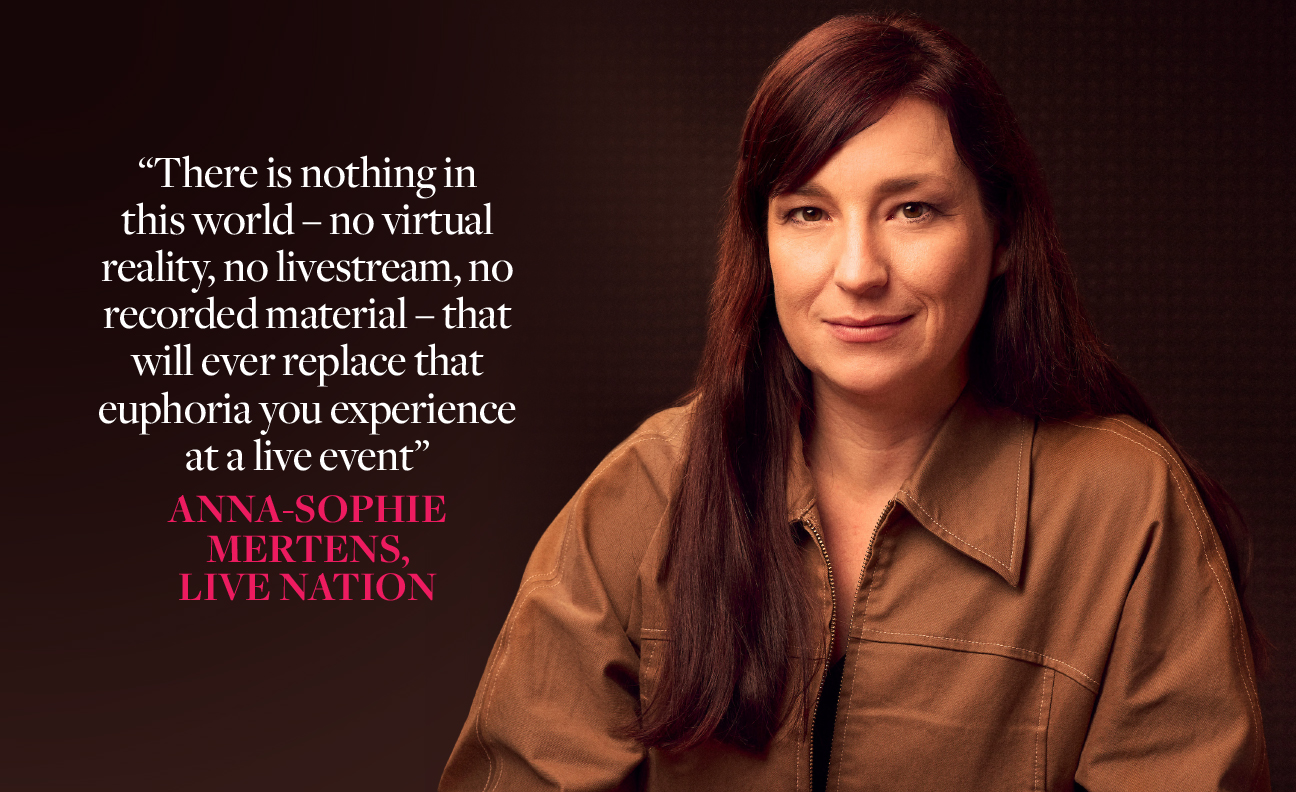
“People have really come to value the live experience. Covid was quite a few years ago now, but I think it showed us that the live experience cannot be replaced. There is nothing in this world – no virtual reality, no livestream, no recorded material – that will ever replace that euphoria you experience at a live event. I think that’s the main factor, combined with artists and festivals being even more intentional about the experience in terms of production values. Coldplay have been doing that for a long time when they first brought in the flashing wristbands. That’s a huge thing, and it takes your breath away. Then there’s how artists design the show. Not everyone needs a huge stage or a major production. It’s about designing the flow of the show, the video screens, the lighting, the staging elements, the B stage, but also thinking about doing a bit with a full band and then doing an acoustic thing. Gracie Abrams did this great thing where she had a stage set up like a bedroom, and she would go onto that for a couple of songs and it completely changed the mood for a minute. Then there’s pre-show messaging. Again, with Gracie, that meant everyone turning up with white bows in their hair, because that’s what you do if you’re a Gracie Abrams fan. It makes the fans feel more connected; it makes you feel like you’re part of something. And I think that’s what’s shining through and making fans want to go to events, because you know you’re going to get something really fantastic.”
On a personal level, what did you learn from last year?
“That the level of work required on a lot of the big shows has increased because artists are much more specific about what they want. We’re just going to see more of that. So for us, it’s about being set up as a company, as a team, to deliver at that level. Live Nation is such a great place to be because we have so many fantastic people that have been here for a long time, whether that’s in terms of marketing, production or ticketing, all the different fields that come together to work on shows. We do have the best people in the business, and they all have a huge passion for it.”
Seeing your client Olivia Rodrigo bring out Robert Smith during a headline set at Glastonbury must have been a highlight of 2025…
“I can’t take any credit for that, but do you know what? What’s fantastic about Olivia is that she continues to surprise you with these amazing things that have inspired her. And that will now inspire a whole new generation to get into The Cure and all of these other artists that she loves. How amazing of them to collaborate as well – it’s a win for everyone: for Olivia, The Cure, and the fans.”
Staying with Glastonbury, how did it feel seeing Lewis Capaldi make his comeback last year?
“From where I sit, Lewis is extremely passionate, smart, funny and talented. He’s very driven, and kudos to him for taking the time he needed before returning to the stage that nearly broke him. There are not a lot of people in this world who would be able to do that. It’s just incredible and then, when he did it, when he walked out on that stage, he just owned it… I think it was awesome.”
How do you balance the fact that consistent touring can be instrumental in breaking through with the need to protect the physical and mental wellbeing of the acts you work with, particularly emerging ones?
“It’s always a conversation point for us, for anyone involved with an artist. And if it isn’t, it should be. It’s about making sure there is a touring cycle, a routine, and a worldwide plan that is adequate to the artist – what they want to do and what they can do. We have to be realistic and know that they can’t play 10 shows in a row – not that we would ever ask that. You have to pay attention to their wellbeing, and that is much more of a conversation point now than it has ever been. And that’s fantastic; it’s really important to me as well. With Myles Smith, he’s blowing up all around the world right now, all at the same time. It really has been quite stellar. His show at The Slaughtered Lamb was in January 2024; it was 100-capacity and his first London show. So it’s been very fast. I can’t reveal our plans for him just yet, but we have been very, very careful in thinking about them. We think he might be better playing slightly fewer shows, but we also need to consider capacity and ensure it’s adequate. It’s important to him – he wants to work hard but doesn’t want to burn out.”
Can you shed any more light on the processes that go into looking after artists in that way?
“It always starts with what’s right for the artist. What everyone in this business should be doing – and most of them are – is what is right for the artist. How many shows? How do we reach the right fans? If they want to do a residency somewhere because that’s what they feel comfortable with, then we look at that. Or perhaps it’s reacting when they say, ‘I want to reach as many fans as possible, I want to go to the regions, I want to go and play venues that don’t get played very often.’”
Let’s talk about another artist reaching different audiences. It took you several years to get Chris Stapleton to the UK for his first show in 2016. How did it feel to pull that off?
“It’s the most joyful thing. He’s just one of those artists where his music is so, so good, and then you see him live and it’s just magical. It’s him and his wife and they sing to one another for two-and-a-half hours with these incredible musicians on stage and it’s phenomenal. I had the chance to see him a few times, mostly in America, but I was like, ‘You have to come over. You just have to come over. The fans are dying to see you.’ And then finally he did… The shows were just incredible. It was so important to me that they had a good time while they were over here, as they had never been before and had been hesitant to travel very much. He played all these extra encore tracks at all of the shows. I spoke to his team, and they told me that means he’s having a really good time. He played a song he doesn’t play very often, one he only ever plays when he’s having a really good time. So the UK got a good experience, and the fans were fantastic as well because they really gave back to him. I think they realised it was quite a special thing to be in that room.”
Looking at country as a genre, where do you think it sits in the UK right now, and where can it go?
“I sit on the Country Music Association’s board of directors in the US, which is a huge deal, and sometimes some people outside of country music don’t necessarily understand. There’s 60 or 70 of us and it’s all the top label heads, people from streaming services, from live, from touring and production. We all sit in a room together three or four times a year, and we talk about how to move country music forward in the US, but also internationally. We leave our professional hats at the door and we literally come together for the greater cause that is advancing country music. They do a huge amount of research, and the streaming growth is far higher for country music than for all other genres. That shows us there are a lot of fans out there who are only just discovering country music and starting to get into it. There’s huge potential for the genre. But there are still challenges with playlisting, and radio or streaming can be more difficult. Radio 2 has always been a great supporter, but we’re also starting to see Radio 1 getting interested in certain artists. There still are a huge number of misconceptions around the genre; people might just think it’s all country and western, boots and hats – but it isn’t. It’s filling a gap where there might have been soft rock or folk music.”
Are there any more plans in the offing for the genre in the UK?
“There’s a new festival we’re launching, State Fayre, in June in Chelmsford. It will be a place for rock music, Americana, and country, and we’re really pleased we’re doing it. We’ve got Kings Of Leon, Alanis Morrissette and The Lumineers, and then this incredible undercard of rock, country, and folk artists. Then there’s this female artist called Sierra Ferrell, who I’ve been working with for many years and who is just incredible. She’s having a bit of a moment right now, because Mumford & Sons took her out as a support in the US and the UK. So again, I think there will be fans that will be exposed to Sierra. Another fantastic thing – what we call our fourth headliner – is a barbecue and food element. We’ve partnered with Fume, who are a big barbecue festival [brand], and who will have their own food pit on site. It’s all about creating huge and incredible experiences for the fans.”
You were also behind the launch of Highways – how do you reflect on its evolution?
“Oh, Highways, my first baby! It’s become a real staple in the calendar for country and Americana. This year will be the first time we’re running for three nights, and we have the legendary Emmylou Harris closing on Sunday. She is apparently doing a farewell tour, so we probably won’t get to see her again – it’s really special to be a part of that. Highways is a standout moment in the calendar, and in my opinion, the Royal Albert Hall is the most beautiful and iconic stage in the whole world. When artists play there, they suddenly realise just how special it is.”
We’ve talked about how well festivals and arena shows are doing, but how does that affect the grassroots circuit?
“I can say that we put a huge amount of shows into small venues. We continue to deliver on that pipeline in terms of working with grassroots venues and with artists from their very early days. I think it’s just the wider economic landscape that is probably tricky for them. I’ve never run a small venue, so I can’t specifically speak to those aspects. However, I’m sure that, in terms of the cost of living, energy bills, and all of those things rising, that’s going to be the biggest challenge for them. But they are a hugely important part of the ecosystem, and it’s crucial to have them with us.”
Is there anything Live Nation can do to support grassroots venues?
“That’s quite a big question and I think we’re all looking for the right answers on how we can do that. I think, as an industry, we’ll see how we can come together.”
Finally, in terms of your own career, how do you see the future?
“I’m very happy to be here. The company has been very good to me, and hopefully that will continue. What’s next for me is to continue doing what I’m doing, while being a role model in the industry as a parent who maintains this job. Supporting the younger generation is also very important to me. We’ve got some really great promoters coming through, especially some of my female colleagues including Maddie Arnold, Alexandra Ampofo and Phoebe Hagan. And then I’ve got a huge 2027 coming up, and I’m already planning 2028. With new headliners coming through and existing huge artists coming up with great stuff, the future is looking incredibly bright!”