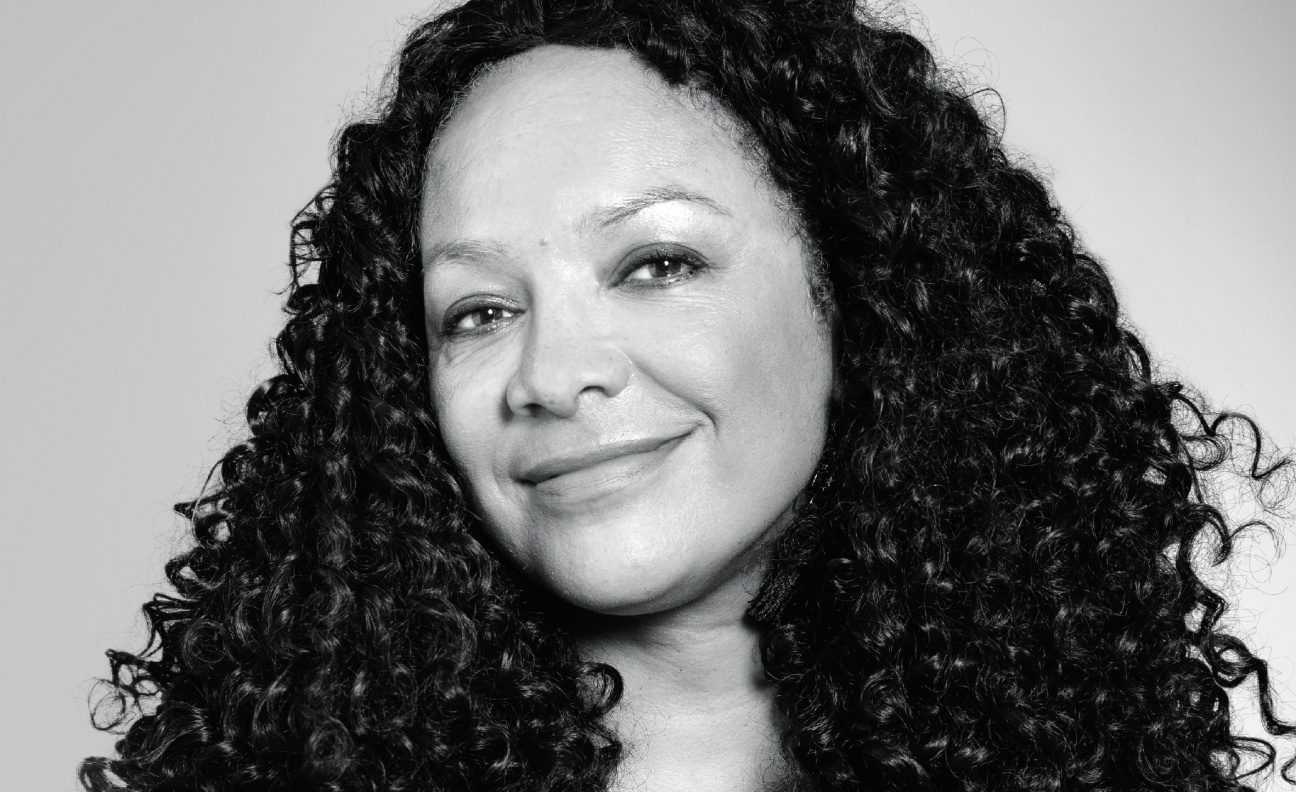
On June 3 this year, the UK music industry lost one of its foremost figures when Kanya King CBE passed away after a battle with cancer. A regular in our pages throughout her ground-breaking career, the MOBO Awards founder was the recipient of The Strat at the Music Week Awards in 2021. Of course, winning the highest honour at that ceremony is just one of many highlights of her time in the business, as the special tribute feature in our August edition illustrates. Here, Music Week looks back on the life and times of Kanya King in our obituary...
WORDS: Yemi Abiade
PHOTOS: Louise Haywood-Schiefer, MOBO
Kanya King altered the course of Black British music forever. In the 30 years since the first MOBO Awards took place, her presence has given voice and visibility to legions of would-be superstars attempting to make their mark. King built the infrastructure to guide them, the opportunities to empower them and the ceremony to celebrate them.
MOBO’s founder and CEO passed away peacefully on June 3, aged 57, after what the MOBO Organisation described as a “courageous and characteristically determined battle with colon cancer”, surrounded by her family and the people who loved her most.
“What Kanya created was never simply an awards ceremony,” read a MOBO statement. “It was an act of cultural justice. MOBO did not just celebrate Black music; it legitimised it, amplified it, and demonstrated its commercial and creative power to a world that had too often chosen not to see it.”
Her family, meanwhile, remembered their “mother, sister and heart”, who “faced every moment of her illness as she faced every moment of her life: with courage, with faith, with humour and with an absolute refusal to be diminished.”
‘Fighter’ would be the opportune word to describe King, who faced adversity head-on to climb to the top of the mountain.
Her story began in Kilburn, North London, where she was born in 1969 to a Ghanaian father and an Irish mother. The youngest of nine children, she witnessed prejudice levelled at both her parents as a child, an experience that would offer the foundation of her life’s work.
“I witnessed so many inequalities,” she told Music Week in 2021, in a cover interview celebrating her Strat win. “My father had a strong African accent, he struggled to get a job. There was no kind of pride, you’d watch things at Christmas time, like Zulu, and the images of Africans were of savages – the very opposite [of reality].”
After the death of her father when she was 13 and giving birth at the age of 16, King worked odd jobs before channelling her formidable will into a place at Goldsmiths, University Of London, where she studied English Literature. At this time, her first foray into music commenced as she became a promoter for R&B and reggae concerts, using her earnings to attempt a fleeting MOBO-prototype – the Black Music Awards – in 1992. The next stage of her early career was spent in television working as a researcher for Carlton TV.
As she rose through the ranks, King often found herself the only person of colour in the room: in boardrooms, meetings and in the spaces where the top decisions were made.
“I felt very much an outsider,” she admitted to Music Week. “It felt at times like a hostile environment.”
Rather than fold into that discomfort, she refused to compromise who she was to fit in, even when advised to wear her hair in a bun and avoid make-up so as to be considered more of an ‘industry person’.
“I just needed to be myself,” she told Music Week.
That same instinct for authenticity ran through everything she built in music, and through her support of the wider community of women and people of colour pushing for change across the business.
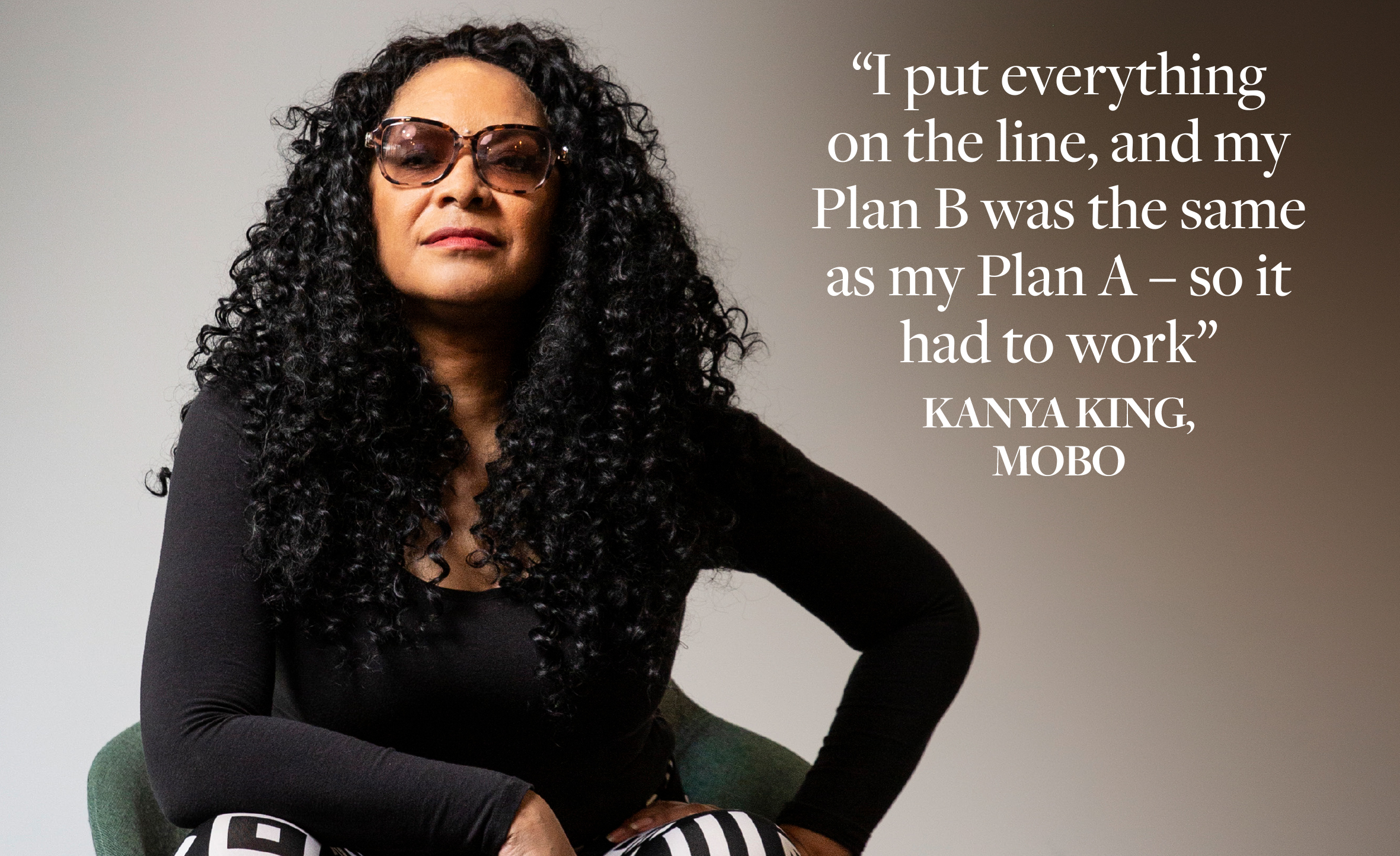
It was in 1996 that King refocused on the gap she’d attempted to address just four years earlier – one that nobody else seemed willing to. There was no major platform built to recognise and celebrate Black music in Britain. Rather than wait for permission, she built one herself. Working with no institutional backing or industry support, she remortgaged her home to raise the funds, risking it all for an idea.
“I put everything on the line, and my Plan B was the same as my Plan A,” she reflected to Music Week earlier this year. “It had to work.”
In November 1996, the first MOBO Awards took place at London’s Grand Connaught Rooms and was broadcast live on ITV. With Tina Turner, Lionel Richie and future UK Prime Minister Tony Blair in attendance, King’s gamble paid off handsomely, and nothing in British music was ever the same again.
King was told, repeatedly, that Black music was too niche, that there was no commercial case for it, that the industry simply wasn’t interested. But she blocked out the noise and continued to build anyway, unflinching and determined as ever. In the years that followed, she recalled being told her event was “a fluke” and would never return, and senior figures discussing how to get rid of MOBO altogether at industry level. She kept going regardless. “Rejection, to me, became normalised,” she told Music Week.
What King had built proved anything but a fluke. Across 30 years, the MOBO Awards has grown into a genuine institution, one of the key fixtures of awards season in the UK and a runaway commercial and financial success. It’s been broadcast on ITV, the BBC and Channel 4 and in countries around the world, and staged in London, Glasgow, Liverpool, Leeds, Coventry, Sheffield, Newcastle and, in its 30th anniversary year, Manchester.
The MOBOs has, of course, also welcomed a who’s who of legendary music talent. Diana Ross, Sade, Jay-Z, Destiny’s Child, Beyoncé, Rihanna, Lauryn Hill, Janet Jackson, Amy Winehouse and Usher have all featured across the decades, alongside the homegrown talent the show was built to champion: Craig David, Soul II Soul, Ms. Dynamite, So Solid Crew, Kano, Krept & Konan, Stormzy, Little Simz, Raye, Central Cee, FLO and Olivia Dean among them. For so many of these artists, a MOBO stage was the first that saw and acknowledged them on such a scale.
King took enormous pride in hearing directly from the artists whose careers MOBO had changed. Talking to Music Week five years ago, she pointed to Krept & Konan’s account of how performing at the awards transformed their trajectory, and to the African artists who told her that the commercial deals which followed a MOBO win had been transformative.
King’s ambitions for MOBO always reached beyond one night a year. She engineered an entire ecosystem around the awards in her image. All with the aim of empowering creative individuals of all backgrounds. The MOBO Trust, launched in 2016, supports emerging talent through funding, mentoring and business support; MOBO Unsung, established in 2012, is a platform for developing artists; MOBOLISE, a 2020 creation, connects Black creative and tech talent with career pathways and leadership opportunities. Most recently, House Of MOBO, a physical cultural space for artists, entrepreneurs and fans to connect, opened its doors in South London in 2025.
The scale of what she helped build is reflected in UK Music’s 2026 Black Music Means Business report, which found that Black music accounted for around 80% of the UK’s recorded music market, contributing £24.5 billion of the sector’s £30 billion revenue over a 30-year period. This would not be possible without King’s blueprint, putting the future of UK Black music on her shoulders.
MOBO’s reach also extends beyond music: King forged partnerships with organisations including the NHS, using the platform’s voice to raise awareness of blood donation in Black and Asian communities, and she remained a vocal advocate for health equity even as her own health declined.
“Sometimes I get emails out of the blue from executives who say, ‘Thank you for giving me my first opportunity,’” she said in her 2021 Music Week interview. It was, for King, the truest measure of what she had achieved.
King’s honours stacked up as her career gained more layers: an MBE in 1999, elevated to a CBE in 2018; as well as honorary fellowships and doctorates from Goldsmiths, London Metropolitan University and Leeds Metropolitan University. Remarkably, it was only in 2016 that King was finally presented with her first-ever music industry award: the Media Pioneer honour at the Music Week Women In Music Awards. In 2021, to mark 25 years of the MOBOs, King was the recipient of The Strat at the Music Week Awards, which was handed to her on stage by Craig David (see p31). She was the first woman of colour to receive the honour.
“I feel like I’m here on behalf of all those who have gone before me, who should have been recognised and celebrated, but are not,” she said on the night. “These moments in life are bigger than ourselves.”
That same year, King appeared on the cover of Music Week’s monthly print magazine. Five years on, as the MOBOs turned 30, we returned to King for a digital cover story, finding her as driven as ever.
In 2025, an Ivors Academy Honour recognised her work championing songwriters and composers. True to form, she accepted that honour in the middle of what she described as “a difficult week health-wise” – and still managed to inspire everyone in the room.
That health journey had begun in December 2024, when King revealed she had been diagnosed with stage four bowel cancer.
“This isn’t the end of my story,” she said. “It’s a chance to inspire resilience, raise awareness, and amplify the message of early detection.”
In the months that followed, she spoke often about wanting to use her platform to highlight health inequity, determined that her illness should serve a wider purpose. In 2025, she received the Lifetime Achievement Award at the British Diversity Awards and was also taken by surprise when she was presented with the Paving The Way Award at the MOBOs.
“I never allowed someone to define my limits,” she rallied to the audience. “Not in life. Not in business. And I’m certainly not going to have that happen now.”
King continued to lead MOBO from the front through its landmark 30th anniversary year, overseeing the organisation’s biggest and most ambitious show yet at Manchester’s Co-Op Live in March, complete with a new Global Songwriter Award – awarded to Pharrell Williams – and performances from Olivia Dean, Estelle, FLO, Slick Rick and more. Even then, with her own health far from certain, she remained energised by what she saw coming through the ranks behind her.
“Artists have more ways than ever to reach audiences, build communities and express themselves,” she told us before the ceremony.
As ever, she remained focused not on her own achievements but on what came next.
“When I think about the future, I don’t just see the next chapter of MOBO,” she explained. “I see the thousands of young people, artists and creatives who will shape the next chapter of British culture, and if we’ve played a small part in helping that happen, then that’s a legacy worth celebrating.”
As for her own legacy, King said, “I hope it’s about opening doors that previously didn’t exist,” suggesting that she aspired to be remembered as she was: an individual who broke down barriers, so that the next generation could step into their potential with more confidence than she had been afforded.
King is survived by her son, along with the family, friends and enormous MOBO community who loved her. In the days following her death, tributes poured in, from London Mayor Sadiq Khan and Culture Secretary Lisa Nandy to Craig David, Stormzy, Ayra Starr, Mahalia and more – a true testament to the breadth of a legacy that reached far beyond the music industry.
The world was a profoundly better place with Kanya King in it. She never asked for permission, never accepted that ‘no’ was the final word, and never stopped building, right to the end. Music Week joins the entire industry in saying farewell to one of the true greats of British music.
 FOLLOW