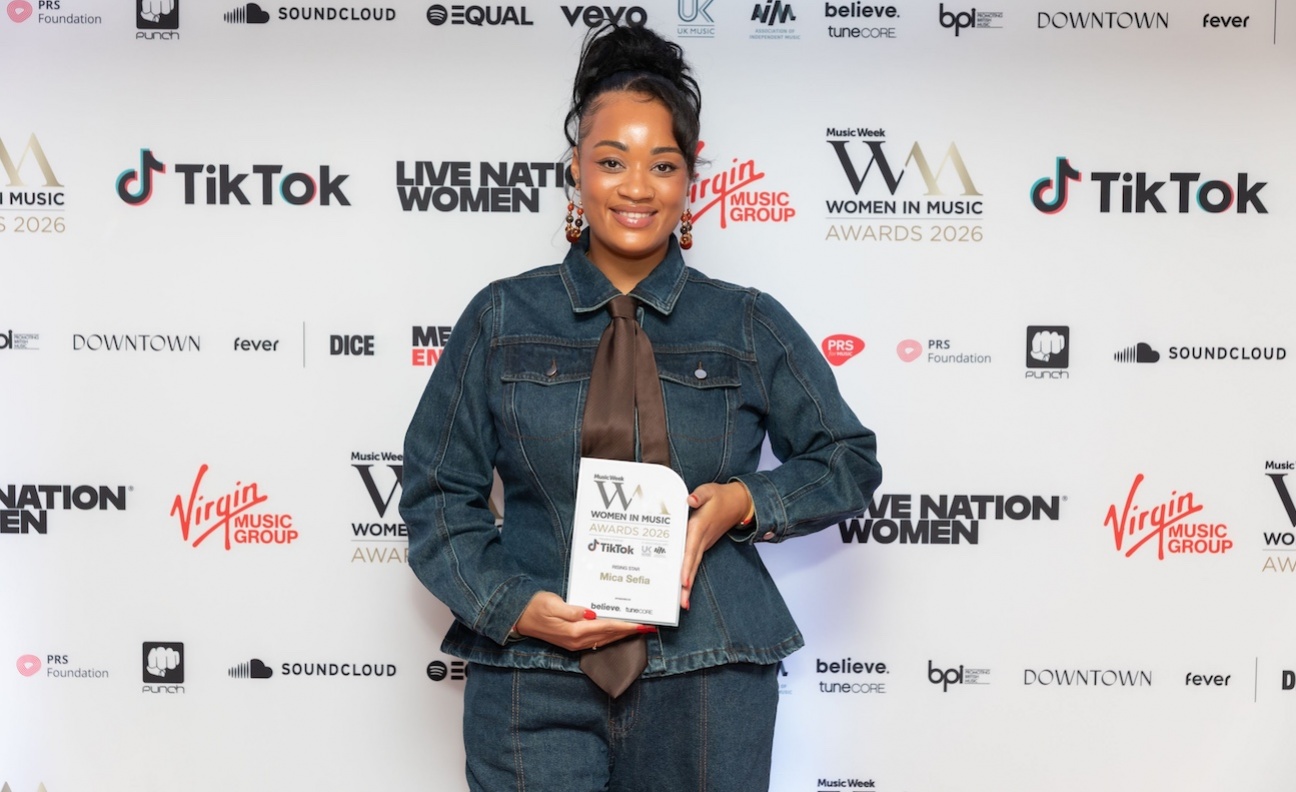
At this year's Women In Music Awards, we celebrated the achievements of game-changing executives and artists as the industry came together to honour their work. Music Week has spoken to the winners in all 14 categories to tell their stories. Here, Mica Sefia, winner of our Rising Star award, opens up about her path into the industry and her ultimate goals…
Winning Rising Star at the Music Week Women In Music Awards is a fitting recognition for Mica Sefia: an artist, advocate and project leader whose work is already widening access to the music business for the people it has too often overlooked. For Sefia – who attended the awards two years earlier and remembers being struck by the room’s sense of connection – the honour carries real emotional weight. “It feels very surreal for me,” she says. “The work that I’m doing, I do it because I love it, but for it to be recognised, it always brings an extra layer of emotion to the work.”
The Liverpool-born artist has loved music for as long as she can remember, beginning to write her own songs at 14. Today, she makes what she calls ‘rock soul’, describing it as “music that makes you feel something,” created “for the purpose of connection and for people to enjoy and just to be on a journey”.
But her route into the industry has not always felt straightforward. Growing up in Liverpool, she struggled to see people who looked like her or made the kind of music she wanted to make reflected in the business. That experience – alongside navigating the industry as a queer woman – has given her a clear understanding of why representation, community, and trusted support networks matter.
It also informs her work as a project manager at Black Lives In Music. Sefia first joined the organisation as an ambassador while at university, after [BLIM co-founder] Roger Wilson came to speak to her African And Caribbean Society. She went on to take up a full-time role in project coordination before progressing to project management. “If it wasn’t for Black Lives In Music, I wouldn’t have a career in helping people and just giving people basically the bare minimum of equity within the industry,” she says.
Now, Sefia is a driving force behind practical programmes designed to turn that ambition into opportunity. She leads and designs Turn It Up, BLIM’s pioneering initiative with We Are The Unheard, which offers hands-on training in live in an area of the business where representation remains low.
In 2025, Sefia spearheaded a landmark partnership between Turn It Up and Glastonbury Festival’s Worthy Rise initiative, creating paid placements and mentoring opportunities for women audio professionals working across major festival stages. The programme’s success has already secured its return in 2027. She also leads Equaliser, BLIM’s mentoring programme with Serious, which supports Black and global majority talent into technical and backstage roles. In addition, she oversees BLIM Connect, a four-month programme that has supported 50 early-career creatives from marginalised communities through tailored mentoring, career advice and industry connections.
For Sefia, the point is not simply to help people enter the industry, but to ensure they can imagine a future in it. “I want people to feel seen and to feel heard, and to know that they can be and do whatever it is that they want to be able to do,” she says.
Her Rising Star win recognises the scale of that contribution, as well as the promise of what is still to come. “It gives me hope that there’s room for progression, movement and change,” she explains. Through her work at BLIM and her own career as an artist, Mica Sefia is helping to make that change feel tangible. We caught up with her on the eve of the awards to talk about her journey as an artist and advocate, the programmes creating new routes into music, and her hopes for a more equitable industry.
Can you tell us how you feel to have won?
“It feels very surreal for me because I went to the Women In Music Awards two years ago, and I remember just being in a room with so many empowering women and everybody feeling so connected – it was such a beautiful place to be. And then to win an award two years later, it just feels surreal to me. The work that I'm doing, I do it because I love it, but I think for it to be recognised always brings an extra layer of emotion to the work.”
What does it mean for you to be a rising star within the music business?
“Having been in the industry for such a short amount of time, it's just a really nice moment of recognition. In addition to that, I work with such a beautiful team – people who've been in the industry for years, who help you believe in yourself, and trust that you're on the right path to be doing the things that you're doing.”
What motivated you to work in this particular space?
“I was an ambassador for Black Lives In Music while I was at university, and Roger Wilson came to do a talk with our African And Caribbean Society, and from there we just started to build a relationship. That led to him asking me to do panel events, to speak about my experience within the university. It was clear he was open to a new perspective, which was so welcoming.
"So, I worked for Black Lives In Music for about three years before being offered a full-time position to do project coordination, later advancing to project manager. Being given the opportunity to look at the industry and ask, 'When you were 16, what would you have wanted? What would you have needed?' I think that is such an incredible thing.”
Did you face any obstacles getting into the industry?
“Yeah, it was difficult. Being from Liverpool, people have always assumed I'm from London because of what I look like. Also, where I grew up in Liverpool was quite racist, so it was hard for me to see myself in the industry. When you think about creatives in the industry – specifically Black women from Liverpool – the last person that had recognition was Rebecca Ferguson. I don't think there’s as much space for people who look like me and make the type of music I make in somewhere like Liverpool.
“So, I felt like I had to venture out or I was going to get put into a box of, like, R&B. It took me a long time to find my place and recognise that I can make whatever type of music I want, regardless of what I look like. Or, even trying to navigate the industry as a queer person and being able to express that in an industry that is very heavily male dominated with a lot of sexism and misconduct. But ultimately, I think it's about finding community and finding people that you can actually trust.”
I felt like I had to venture out or I was going to get put into a box... It took me a long time to find my place and recognise that I can make whatever type of music I want
Mica Sefia
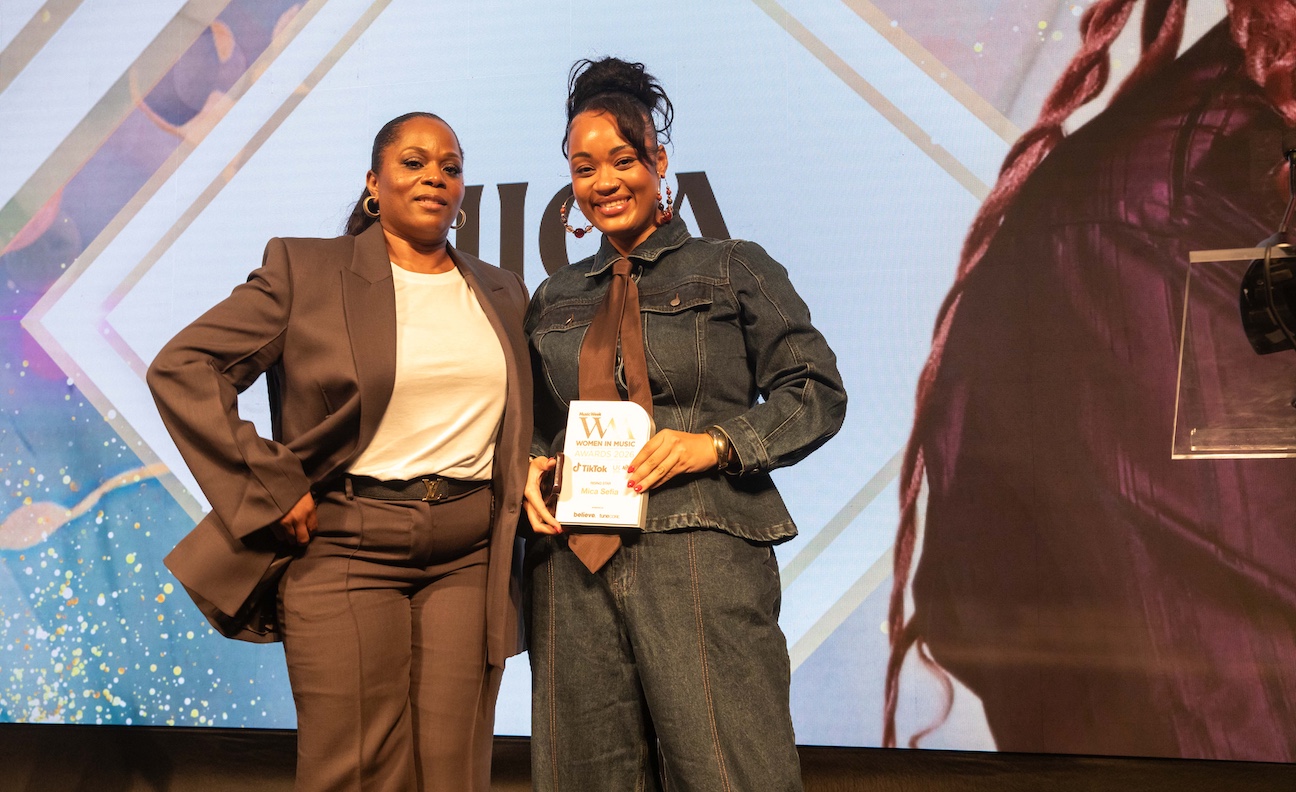
What is it like working with Charisse Beaumont, the CEO of Black Lives In Music, and a memorable recent winner at Women In Music?
“When you work in an organisation like ours that’s so small, everybody really becomes family, and she’s been absolutely amazing. She pushes me to be the best version of myself – not just the comfortable version – which I think is so necessary in an industry like this. We get the best of both worlds working with her because she’s our biggest cheerleader, and someone who will tell us when we’re not doing what we should be doing. But she’s always willing to listen and to grow, which I think is important.”
You work on Turn It Up. Can you talk about the impact of the project and the landscape in terms of diversity in technical and studio roles?
“The initiative directly challenges the statistic that only 3% of producers credited in the UK’s Top 100 airplay chart are women. We want to see this change across the industry, and that’s why programmes like Turn It Up are so important. There isn’t just a desire for change; there’s a real need for it across the industry. I've seen Turn It Up do exactly that. Even the things shared in this space are experiences that people wouldn't understand unless they've been through them, so giving people the chance to be involved in the conversation is probably the biggest impact of it all. And then obviously, being able to move the project forward advancing people into paid work, and working with such big festivals shows there is a real need for it.”
Can you sum up what inspired the design of the programme?
“It was really just a question of what people needed or wanted. We wanted to create a space where, along with learning skills, it was also necessary for them to have conversations. Piecing it together, we had to be open to failure – or to people telling us something was too much or too little – because you can only build a project when you have an understanding of people's journeys and experiences.
“We wanted to curate a space that was open to being moulded and open to people learning while feeling comfortable, and Turn It Up has actually been able to create that. Something people will always take away from Turn It Up is a level of friendship, companionship, compassion, communication and understanding – that was really what we wanted people to get out of it.”
Where does BLIM Connect fit into your story?
“BLIM Connect is a mentorship programme that spans four months. When I started, I think there were about seven people on the cohort, then we advanced to 20, and this year it's increased to 25. It is one of my favourite programmes because I get to connect with every single person. I'm in constant communication with 25 mentees and 25 mentors, hearing about their aspirations, and then looking at the resources we have at BLIM thinking, ‘Okay, what can we do to help these people?’ The spectrum of people on the programme ranges from those who want to get into the publishing side of things all the way to legal. We cover so many different aspects, making it such an open box of creativity and a beautiful community, with everyone creating with each other. For example, someone will say, ‘Oh, I really want to work with a producer,’ and then we'll find a producer, connect them, and then get to see that relationship flourish in real-time, which is a beautiful thing.”
How do you see the landscape more generally across the business now in terms of representation and the fight against discrimination?
“I think it was going as well as it could after the Black Lives Matter movement in 2020, but the world has moved on from the issue, and people don't see it as much of a problem anymore. Retention still plays a huge part in the way people hire and what businesses look like. We saw so many diversity hires between 2020 and 2022, but when you look now, how many of those people actually remain in those roles?
“People were looking at organisations and saying, ‘Oh, we need to diversify,’ but they weren't saying, 'Okay, what do we need to do to make sure people who've never been in this space feel comfortable to be here?’ At the end of the day, it's not just a passing movement. It is very much ingrained within the industry and the world, so it's definitely something that still needs to be spoken about and fought against.”
And, finally, what is next for you?
“I am going to start releasing music again in October, which is going to be amazing. I took about a year and a half off because I wanted to write and reconnect with what my music means to me. So yes, stepping back into it this October is going to be really fun.”
PHOTOS: Louise Haywood-Schiefer/Panni Renner