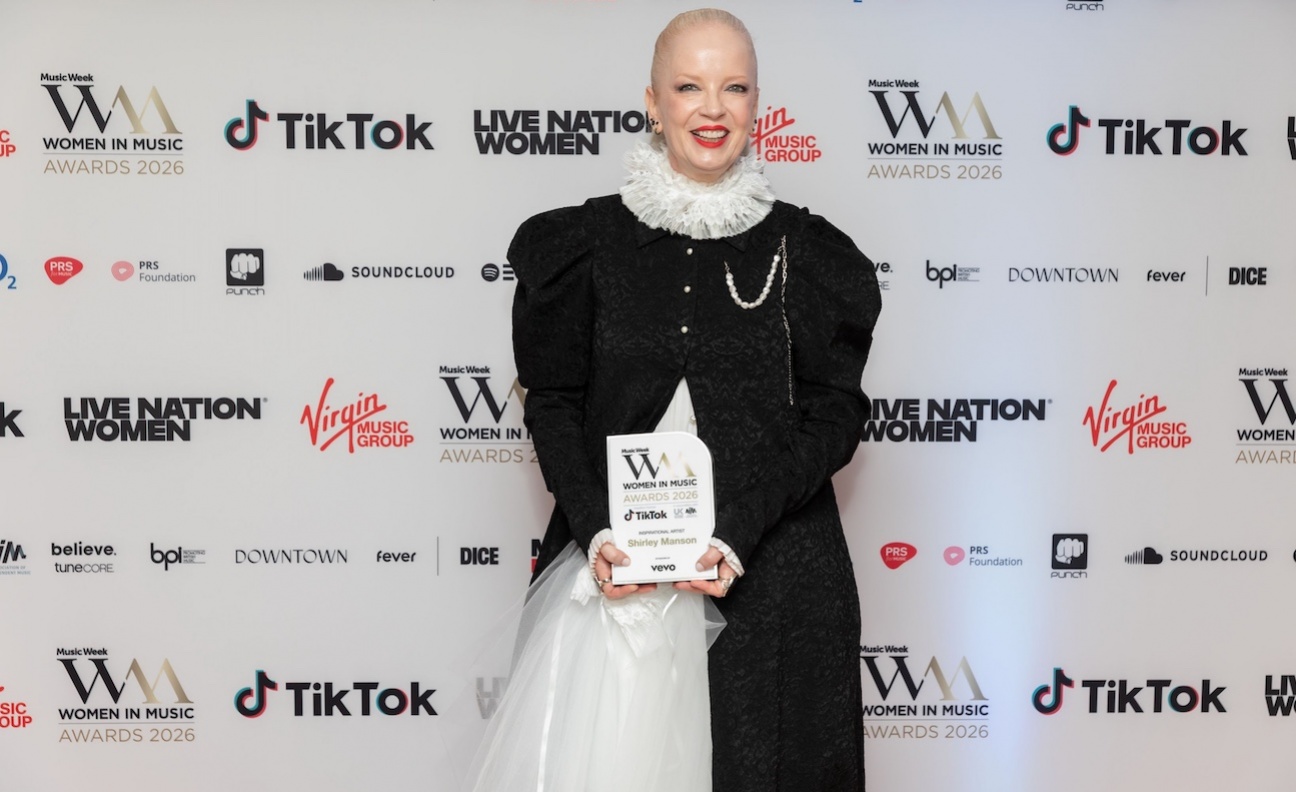
At this year's Women In Music Awards, we celebrated the achievements of game-changing executives and artists as the industry came together to honour their work. Music Week has spoken to the winners in all 14 categories to tell their stories. Here, Shirley Manson, winner of our Inspirational Artist award, discusses her life lessons, representation for songwriters and her future plans…
“We’re a stateless band in many respects,” says Garbage’s Shirley Manson. She’s speaking lightly (“I’m being dramatic, I love the poetry of it”), but the point she’s making is real. “In some ways, my identity has been swallowed up… but of course I've never seen Garbage as an American band because I'm not American. We exist in a kind of no-man’s land.”
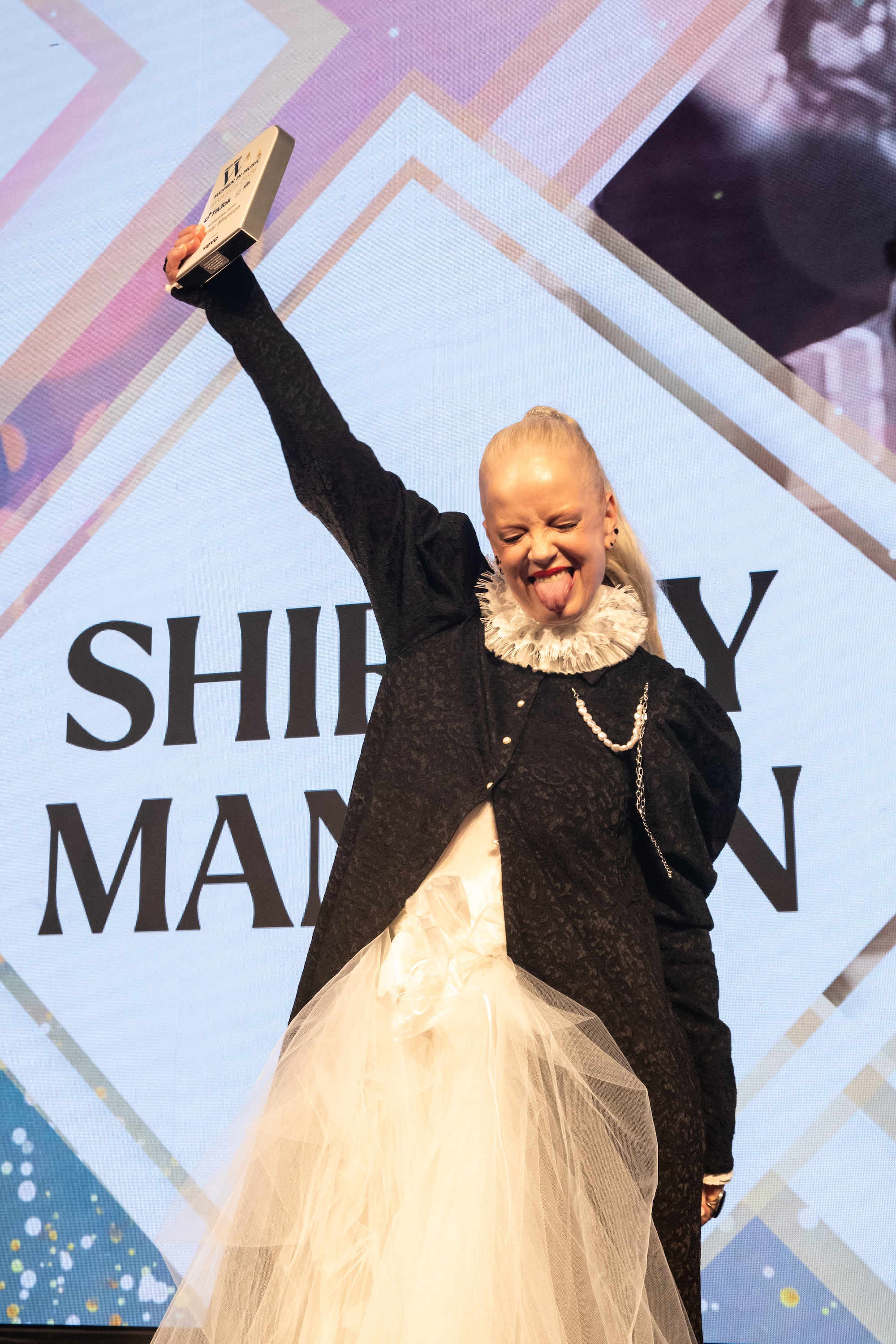
The fact that she “has never really been seen as a British artist” is why winning the Inspirational Artist honour at this year’s Women In Music Awards left Manson both “really surprised” and feeling “that it’s very nice to be acknowledged by the British music industry. It means a lot because it’s in the UK, it’s my country, my place of birth”.
Manson has been inspirational to millions since she first appeared promising, with measured, meaningful intensity, to 'tear your little world apart' in Vow, Garbage’s debut 1995 single. And she did make a tear in the world, ripping into preconceptions of what a woman in popular music should be. She does not deal in rock screaming or showy pop melisma. Instead, her singing voice is a low force, with the steady power of building water. Her sense of ice burns sharp and she’s willing, perhaps internally compelled, to speak up. Shirley Manson is often described as outspoken, but this is belittling: there’s nothing scattershot, and no lazy attempts at generating controversy. Her opinions are thought-out, clearly articulated and strongly held.
She joined Garbage in 1994, leaving her home in Edinburgh to move to Wisconsin and join a trio of musicians. Duke Erikson, Steve Marker and Butch Vig – then best known for his production work with Nirvana, Smashing Pumpkins and more – had been searching for the right kind of singer. They spotted Shirley Manson on an alt-music video show, fronting her then-band Angelfish. By 1995, they released their debut album, also called Garbage. It was a critical hit and sold over four million copies worldwide, going double platinum in a number of countries.
Over the years, the band have experienced fantastic highs – multiple awards, sell-out tours, creating the theme song for the Bond film The World Is Not Enough – and some lows, around ill-health, ill-temper and record label indifference. Right now, they are riding high. Multiple tours, album reissues and greatest hits packages paved the way for their eighth studio album Let All That We Imagine Be The Light, which came out last year.
Personally, Manson is also in a place of change. “I turned 60 a couple of weeks ago,” she says. “It feels very profound to me, turning 60. It's unlike any other age that I've ever crossed. I don't know if it's something to do with having lost my father, my last parent, the last of my OG family… but when I hear about young people crowd-surfing at Garbage shows in the mid-’90s, it feels like a different time. It’s been a wild, wild life.”
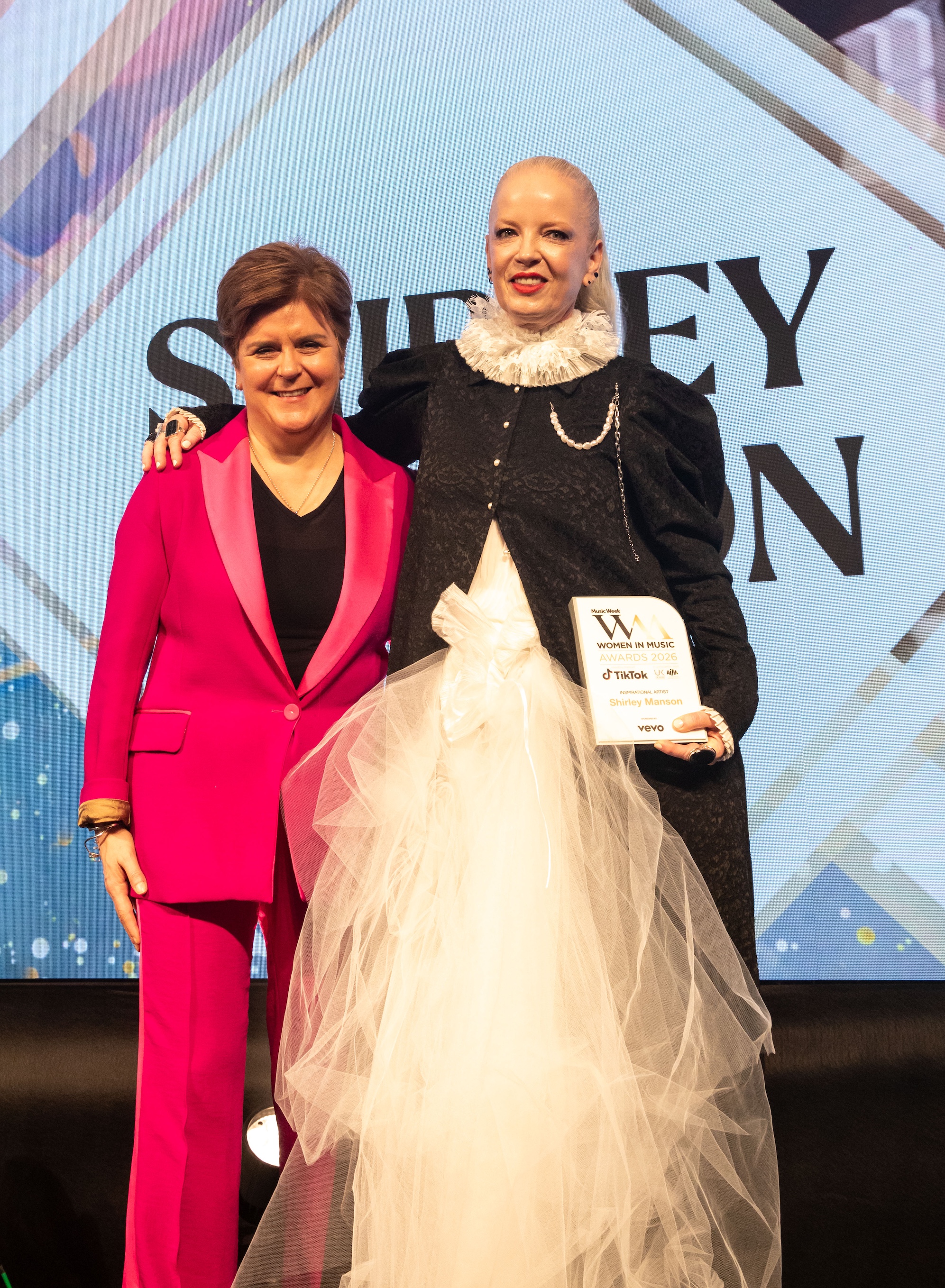
Fresh from her win – which was presented to her by former first minister of Scotland Nicola Sturgeon – Music Week asked Shirley Manson about her wild, wild life and the wild, wild career that has been such a huge part of it...
Congratulations on your award. If you were on the judging panel, who would you choose to give the Inspirational Artist award to?
“Almost any artist who has enjoyed a long career is deserving of some form of recognition because the industry itself is very difficult to navigate. It's very cutthroat, very cruel. Any artist who's willing to expose themselves by giving everything a try over and over again is worthy of recognition for that effort. Often there are times when artists are revered, but that's rarely a steady and ongoing luxury.”
Who are the female artists who've inspired you along the way?
“I talk a lot about Patti Smith. You fall in love with musical artists when you're young and they don't always hold you as you age. But Patti Smith has certainly been one of those artists who has worn very well in my life. And I've made no secret of my obsession with Siouxsie Sioux from Siouxsie And The Banshees. Other artists that come to mind are Chrissie Hynde and Debbie Harry.”
You said that you've met every one of your heroes, is that true?
“I never got to meet Billie Holiday or Nina Simone or Peggy Lee, the super-old guard my mother exposed me to when I was growing up. I have met most of my heroes. And they've remained heroes, which I think speaks to my tremendous good taste when I was young. It’s very gratifying, as the women I mentioned were outlier choices, societally speaking, when I was a teenager. These women have garnered more and more cultural recognition and admiration. It's really gratifying to watch their careers continue to build – some of them are now close to their 80s. They are the first wave of women who have cultural cachet and agency into their eighth decade. It's tremendously exciting and very empowering.”
You've often cited your mum as the model for your route into music. How did you become a listener and then a performer?
“My mum was a singer, but she didn't do it professionally. She loved playing music all the time in the house; the radio was always on. She was always putting vinyl on the record player. One of my earliest and most vivid memories is watching my mum perform on stage at our church. She was performing On A Clear Day (You Can See Forever). I was under the age of five and I remember being transported by my mother's performance and understanding, at some cellular level, that performance could completely change somebody and augment somebody or transform somebody.”
You say you’ve always seen Garbage as outsiders. Does that still hold?
“I mentioned that we were stateless. That’s part of it. We’ve never belonged to anyone or anything. We've never been part of any scene. Even now, we're very much one of one. We don't sound like anybody. We don't look like anybody. We don't act like anybody else. For a long time we were releasing records on our own label and had very little to do with the industry at large. We have been this bizarre outlier who have slowly started to thrive again after disappearing in the mid-2000s. Much to everybody's surprise, we played Wembley Arena two years ago, which was the biggest show we've played since the ’90s.”
What's allowed you to occupy this position?
“We've made really good records, which helps. But none of us are naive. We all know the success of a band is rarely solely dependent on their musical output. A lot of it has to do with good fortune. We were lucky to get such a huge launch in the ’90s and a lot of that was to do with the faith the industry had in Butch Vig. People were curious because of his work with Nirvana, Smashing Pumpkins and Sonic Youth. I was the right kind of frontperson for that very specific era in music. If we came out now, I would have been way too outspoken, way too disobedient.”
Coming through in the ’90s had the obvious advantages that you talked about. But the flipside for many women who achieved success was that they ended up being celebrated for how they looked in a bikini.
“Recently, somebody sent me a bunch of clippings from our career in the ’90s. The tabloid headlines. The rather outrageous photographs. The comments on my looks, my sexuality, my fuckability. It was humiliating at the time and, in retrospect, I realised that was the very intention. The intention is to disempower women by objectifying them. It works like a charm to this very day. So, now I don’t allow that kind of thing to ruin my day. Back when I was a young woman, it was harder. I was unsure of my place. We were at the very epicentre of culture, but when you’re experiencing it, you don’t feel it.”
If we came out now, I would have been way too outspoken, way too disobedient
Shirley Manson, Garbage
Let’s talk about another photograph, the recent one of you with Karen O and Kim Deal…
“That was taken backstage at Ohana Festival, which is Eddie Vedder’s festival. I know Karen pretty well, we’re good buddies. She is one of the few women in rock who emerged after the ’90s and who has stuck with me, stayed with me and inspired me. I can’t speak of her highly enough. Then there was Kim, who I am a huge, huge fan of, who has achieved so much. We had our photograph taken and it felt like a moment – the people around us could feel it too – witnessing this meeting of minds, or meeting of vaginas. Then about a week later a music publication posted it and underneath it said something like ‘three girlies at a music festival’. I was aghast. Karen was fuming. You can navigate a long and healthy career and still be spoken about with this diminishing terminology. How do we have to prove ourselves? Look at Debbie Harry: she’s only just getting her proper flowers. They wait and they wait until you are so far past what they consider to be culturally relevant. Only then will they start to admire you.”
If you take it on a continuum from Debbie Harry to now, do you think things have improved for women? Or do you think things have got worse?
“I think things improved in the ’90s. I remember a sense of things changing. Alternative ruled the airwaves and women who wouldn’t have previously been ushered into the culture were suddenly embraced. Difficult, rebellious women. It was very exciting, very liberating and revolutionary. But after 9/11, radio programming became more conservative. The women who were being celebrated were submissive stage school types like Britney Spears. It’s only now we see how used she was and how desperately damaged by that. It feels like a crime. We have seen incredible artists emerge, people breaking out of repression. But generally, we’ve seen two decades of obedience.”
This is a good point to talk about Daisy Chain Fields. Olivia Rodrigo phoned you personally to get you involved?
“She did and I realised what a baller she was. I would have definitely contacted someone’s manager to ask. But she called me up one morning and she’s remarkably self-possessed and I really admire what she’s done with Daisy Chain Fields. I loved that, for once, you had a young artist who wasn’t trying to sell themselves as having invented the wheel. Instead she was saying, ‘These women influence me.’ I love that Olivia was rewarded so royally for what she did with the festival, at a time when women’s rights are being walked back across the globe. She read the culture very well and realised that this is the time. She put on this great show of force and it sold out in five minutes. It was really moving to be there.”
What advice would you give to younger women in this business?
“Hold hands. The world we live in is hell-bent on dividing not just women, but all of us. The oligarchs want us completely divided and isolated. The more you can move towards each other, the better. Be willing to have a difference of opinion – unless that opinion is hurting someone, in which case they deserve your contempt. We are far too intolerant of each other’s lifestyles at the moment. The unbelievable cruelty towards trans people, I find astonishing and damaging to society in general. It’s an oligarchical distraction: let’s keep the little people fighting amongst themselves whilst we steal all of their money.”
How would you advise younger artists to navigate the business side of the music industry?
“Do you really want to hear this? [Laughs] I have very bad feelings towards the business in general. I feel that executives have allowed artists to be completely violated and the record industry continues to flourish. I think immediately of the 360 deal, for example. The abuse of streaming rights is astounding. That’s like trench warfare where hundreds of bodies are thrown over the parapet and then you get one artist who becomes a prize pig – an oligarchical music figure. They’re omnipresent; they take up all the oxygen. They distract us all from the abuse of the common, hard-working musician who needs to hold down multiple jobs and travel in dangerous circumstances.”
What would you change?
“The unfairness of streaming services and these ghastly deals they strike with the labels, where they enjoy massive profit and the artist is not properly compensated for their creative work. I would like musicians to be insured, to have pensions, to have regulations around accommodation and transport, and to be properly fed. Also, the way that venues will take an enormous cut of the band’s merch – and it’s not like the band are asking for a cut of the bar profits. I would have to sit down and think about this question more carefully to give a thorough answer.”
You’ve always spoken up for what you believe in – have you found there are any risks?
“I don't like to think about the risks, because what's most important is that you live a moral life according to your own values. I was brought up in a household that welcomed debate. I had an academic father who encouraged all his children to read, educate themselves, and not accept the status quo. There are a lot of reasons why I think I have been outspoken throughout my whole career. As I've gotten older, I've realised I have been gifted the ability to speak out with little cost to my own personal peace, and that’s not the same for a lot of artists. A lot of artists are too fragile, or too self-conscious, or not confident enough in their own sense of self.”
What's next for you?
“We have one more show that we have yet to announce because it's quite a big deal. That will be the end of this album cycle. There's talk of going in and making another record. There are some plans afoot to play a few very special shows next year, but mostly that'll be dedicated to recording. My band are old – we’re definitely in the third act of our career. We've had a very serious, long-standing career and we realise it can't last forever. We're starting to watch our peers fall, and so mortality is always in the back of my mind. I don't take any of this for granted at all. I realise how lucky I've been and privileged I am.”
PHOTOS: Louise Haywood-Schiefer/Panni Renner