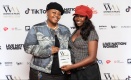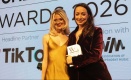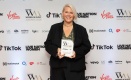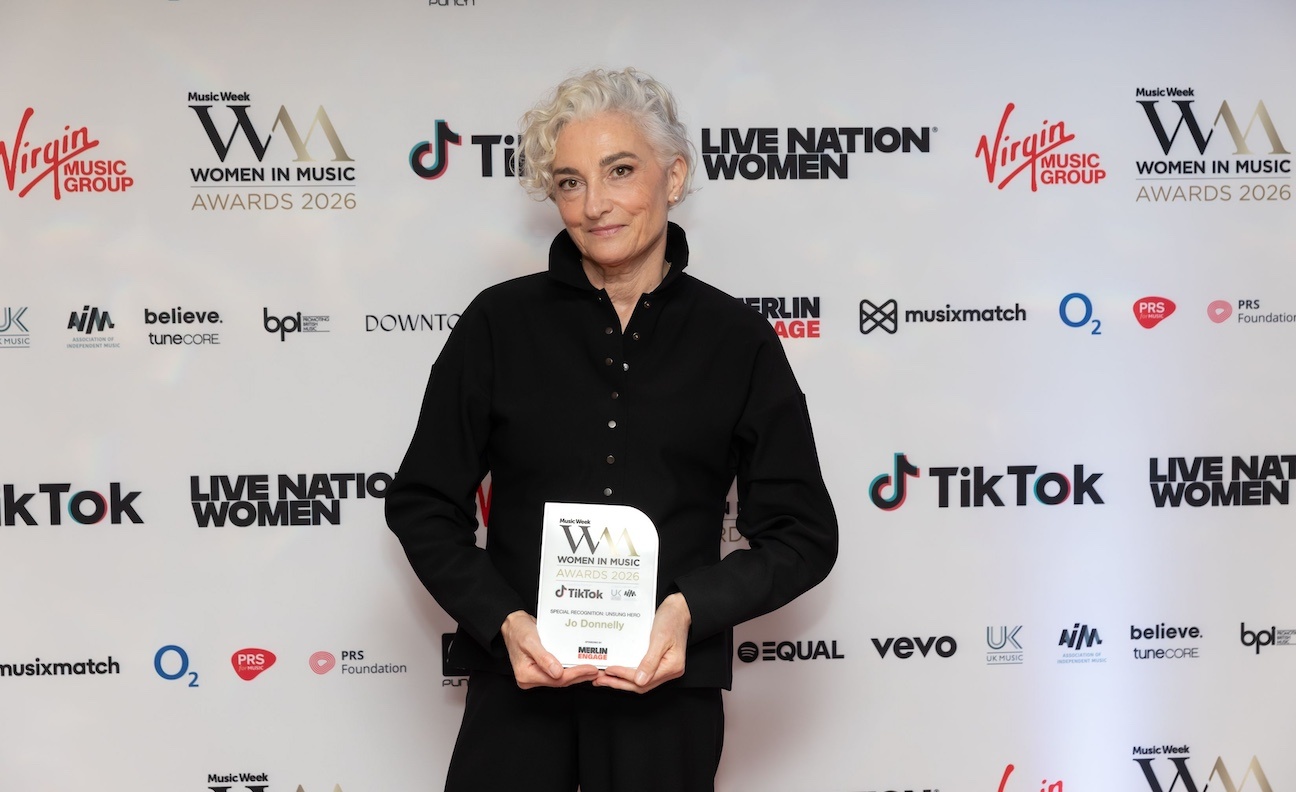
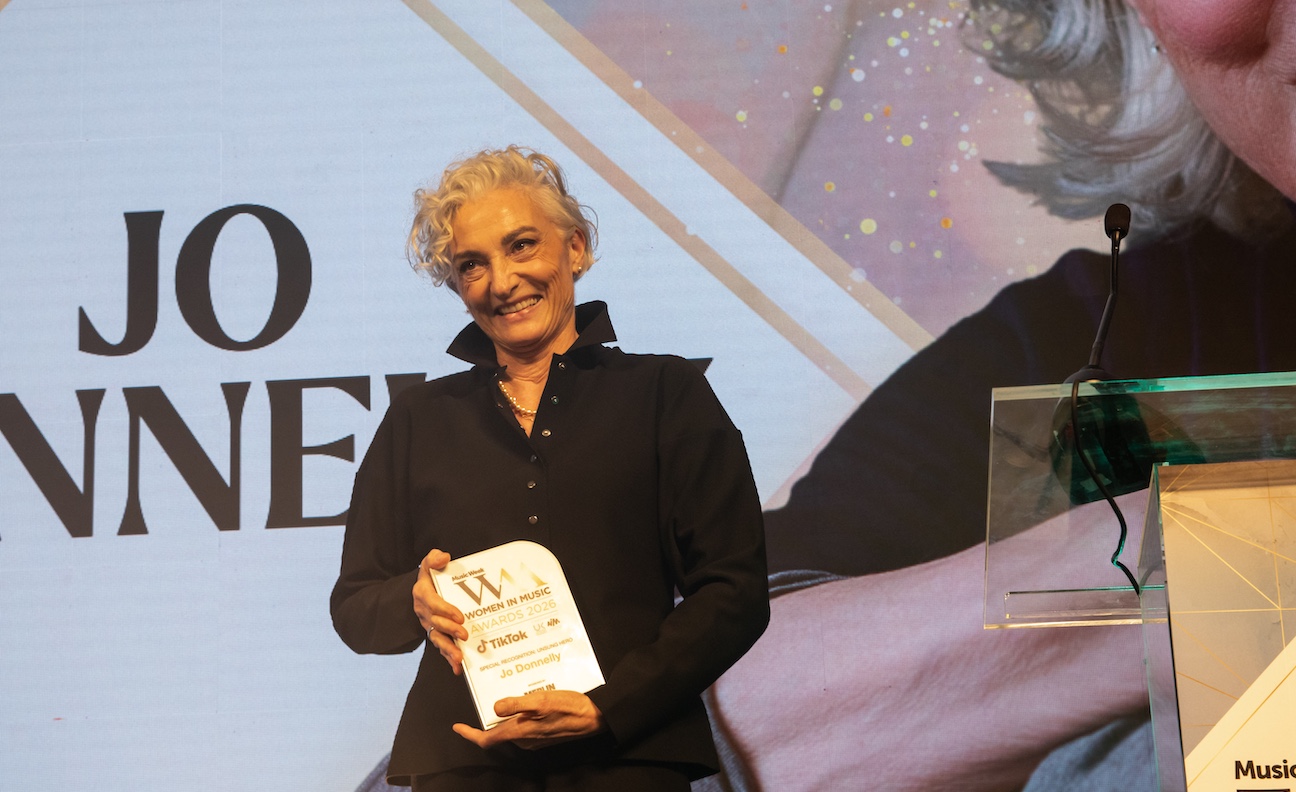
At this year's Women In Music Awards, we celebrated the achievements of game-changing executives and artists as the industry came together to honour their work. Music Week has spoken to the winners in all 14 categories to tell their stories. Here, Jo Donnelly, winner of our Special Recognition: Unsung Hero award, discusses mastering the art of PR through a truly stellar career…
Jo Donnelly’s career has been filled with many incredible moments. She has acted as a decoy to draw crowds of fans away from Bros, had Leonard Cohen offer to carry her bags and – most importantly – created publicity campaigns that have helped many, many artists realise their potential. Donnelly has helped shape the careers of Bob Dylan, Jeff Buckley, Mariah Carey and many more, having begun her career at Columbia Records (CBS) in 1985 after seeing an advert for a communications assistant.
“I literally hounded the head of personnel, a lovely woman called Maureen Heneghan who finally got me five minutes with the head of press Graham Betts and his formidable press officers, Sharon Wheeler and Fiona Grimshaw,” says Donnelly. “They grilled me and thankfully gave me a chance. They must have seen something in me. It was my lucky break and when you get a lucky break, you have to grab it. I had found my world.”
"It was a remarkable time to join such an iconic label," she adds. "I remember being at Wembley Stadium for Bruce Springsteen’s Born In The USA tour as part of the CBS team just weeks after I started thinking, 'Gosh it was only a couple of years ago I bought The River with my pocket money.' That was one of many pinch me moments in those early days."
By the age of 24, Donnelly was the label’s head of press and, in 1989, she became the youngest person ever to win Music Week’s Leslie Perrin Award for PR for her work on Bros’ debut album. The trophy, shaped like a musical note, is still in her home office.
She went on to become director of international marketing & PR at Grapevine Records, leading campaigns for Joan Baez, Emmylou Harris, and Janis Ian. She has also freelanced as a PR consultant and as an artist manager, securing a worldwide recording and publishing deal with Sony Music US for UK singer-songwriter James Maddock.
Since 2018, Donnelly has been head of press for Proper Music Group, establishing the company’s first in-house press and promotions department. Her work spans the imprints Proper Records, Navigator and Topic, and also covers the group’s distributed labels, including storied German jazz label ECM and indie favourite V2. Her work on Angeline Morrison’s 2022 album The Sorrow Songs: Folk Songs Of Black British Experience led to the release gathering a range of national press and being named The Guardian’s Folk Album of the Year.
"I was invited to join Proper by [managing director] Drew Hill who had the idea of offering in-house PR support to artists and clients across their huge number of labels," she states. "This has been one of the most rewarding roles of my career, to start a department from scratch and build it into an integral part of the services we offer.
In the last year alone, Jo Donnelly has worked on 49 separate campaigns for Proper’s artists and labels.
“It’s terrific to see Jo’s passion, dedication and hard work rewarded in this way," praises Drew Hill. "Having worked tirelessly to build and develop the careers of artists – from the biggest names in recorded music to breakthrough acts – I can think of no one who deserves this award more.”
To celebrate we spoke to Donnelly about winning the Special Recognition: Unsung Hero honour and her incredible career to date...
First of all, how do you feel about winning?
“It’s amazing and, to be honest, it wasn’t something I’d ever expected, even though I’ve been in the industry for such a long time. It’s a huge honour. I think of all the amazing, shining women in the music business and I’m very proud. I also want to acknowledge the remarkable women who have paved the way to where we are today. Thank you.”
And it’s not your first award from Music Week. You also received the Leslie Perrin Award for PR in 1989, for the campaign around Bros’ Push...
“It’s special, because the two awards feel like bookends. Not that this is the end, but in 1989 I got up on the very same stage in the very same room. I remember my legs turning to jelly.”
The Push campaign was your first big success. Can you tell us a little about it?
“We were all just babies. We were kids. I was very into rock music and I was told we’d signed this new pop act… The whole Bros phenomenon just exploded overnight. It went from nought to 100 miles per hour very, very quickly. All our lives changed. I was a newbie in the Columbia press department and then Bros arrived. I had Brosettes camping outside my flat every night. They followed me around. Bros did a signing at HMV on Oxford Street and there were police blockades. I ended up acting as a decoy. I had to put [singer] Matt’s red jacket on and all the fans thought I was him. Fans can be manic and it can be quite dangerous. They were clambering on the car, they were at the window and my earrings were torn off. That was scary, but mostly it was a lot of fun.
“When I first started out I was living in a hostel for women on Great Russell Street. It sounds really grim, but it was lovely and my windows opened out onto the British Museum. It took me five minutes to walk up the road to Soho Square. I fell into a world I loved.”
You’ve worked with some incredible names. Are there any moments that stand out in particular?
“It was a very different time. The budgets were good. Press was terribly important – crucial. And you had to be in places in person. There was a day when, in the morning, I arrived at the Montreux Pop Festival with Bros. They were just breaking and all of Europe’s media were there for them. We arrived by speedboat to meet a crescendo of paparazzi. I have photos of me in the back of the boat and the three of them at the front. So that was an incredible morning.
“Then later on that afternoon, I got a train across Switzerland to go and meet Leonard Cohen for the first time. I had arranged for him to be interviewed by The Observer. It was a very beautiful train, chugging around the shores of the lake. I arrived at a small Swiss hotel and there was another person checking in – and it was Leonard Cohen. I was wondering whether I should introduce myself, but before I said anything he turned around and said, ‘Can I help you with your bag to the lift?’ A gentleman. In the lift I told him who I was and that we were working together. We worked together for around 10 years. He was so charismatic, so funny, such good company.
“Once, he had a big interview and a photoshoot the following day. He left a message on my home answerphone the night before and said, ‘I know I've got this photoshoot tomorrow. Is there any possibility that you might be able to find somebody who could give me a haircut because I'm a bit dishevelled.’ Of course I found someone. We did the photoshoot the next day and then I subsequently deleted the voicemail. Ten years later, I felt like I’d deleted a handwritten letter from Byron.”
Music and art should never be taken for granted. It matters. It gives people a voice
Jo Donnelly, Proper Music Group
Looking back on your progress through the industry, did you have any particular mentors or role models?
“I’ve never had a female boss and I’ve never had a female mentor – there just weren’t that many women above me when I started out. I was fortunate to work closely with Mariah Carey. As head of press, I didn’t work directly on everything, but Mariah’s campaign was mine. I was part of the team for Jeff Buckley and Bruce Springsteen, and I did amazing UK artists like Andrew Roachford. Eventually, I reached a point where I was still young and I wanted to experience more, So I joined a small independent label called Grapevine. I worked with Emmylou Harris on Wrecking Ball, the album she did with Daniel Lanois – Emmylou remains a good friend to this day. I spent a couple of years doing international marketing there, working with Joan Baez and Janis Ian. It was through Grapevine that I found an artist called James Maddock and secured a major record and publishing deal for him with Sony US. I spent about three years being his manager, travelling around America, doing all of that stuff – it was an extraordinary experience. Then I worked as a freelance PR and set up my own company.
"It was not the easiest time, but it was also the most joyous as I became a mother with my husband/partner, Berni Griffiths. That was a very important part of my life. We did not have the maternity support that is available today and that is something I think is a truly important gamechanger in the industry, not just for women, but families."
What creates the magic in a good PR campaign?
“Magic? It's not magic. In my career, I've worked on hundreds and hundreds of campaigns. Some have been major, some have been debuts, and some have been very low-key. You have to look at each one, identify what the needs are, listen to the artist and what they want, and then be realistic. I like to look between the cracks and for angles that might work – not clichés. To jump forward to Proper and Angeline Morrison: she made this amazing folk record, The Sorrow Songs: Folk Songs Of The Black British Experience, and it started very low-key and just built… it ended up being The Guardian’s Folk Album Of The Year. She was in The Sunday Times. I was proud to be part of that – the time and the thought put in were crucial.
“What I do is very varied. We work with a very well-respected German label, ECM. They put out incredible releases, and I handle those on a regular basis, which has brought me into the kind of deep jazz world. Last month saw the release of Martin Carthy’s 20-CD boxset – the crown jewels. He’s an absolute folk icon. That got five-star reviews across Mojo, Record Collector, Uncut…
"Of the hundreds of campaigns I have worked, I do enjoy finding a new angle and spotting opportunities, even with the toughest briefs. Representing artists is a privilege, I listen to them and always try my best to follow what they want, but at the same time being realistic.”
How has PR changed during your career?
“It’s changed phenomenally. The media landscape is constantly evolving. There’s social media, which didn’t exist when I started and is now a massive and important part of the entire marketing picture. Print is still important – it’s a backbone and still very powerful – and endorsement by leading media is still vital."
Can you reflect more on the part your role at Proper has played in your story?
“I'd like to thank Proper for giving me the opportunity to create a department they didn't have before, and to build it into something really important and helpful to artists who wouldn’t otherwise have access to good, affordable PR. It was a fantastic idea from Drew [Hill, CEO]. Over the last eight years, I've worked across their incredible jazz and folk departments, Americana and rock – almost being a kind of gun for hire – and they've been nothing but supportive. Proper is a small company – I think the employee count is around 100 – yet with me, Erika Brennan [legal & business affairs director] and Erica Day [head of inventory & logistics], we have three women in positions of seniority. They've always looked after and cared for their female workforce.”
How has the position of women in the industry changed?
“I have seen meaningful improvements for women at work from maternity support and safeguarding, to fairer pay and continued movement towards breaking the glass ceiling, which was firmly in place in the '80s and '90s. Obstacles did not really become apparent to me during my early years, it was only later, as I got older and gained more experience that I could see there was a glass ceiling. Looking back, there were few senior females in leading roles and to watch that evolve to allow more young, talented women climb the ladder has been inspiring.
"The WIM Awards helps to keep these issues on the agenda and give a platform to the women who deserve to be celebrated. There’s still work to do, but these awards are important and they are powerful. Over the years, I have found great joy in being able to give similar chances to the one I got to young people trying to get into the industry and mentor them on their way.”
What’s your message to the industry?
“Our industry really does make a difference – that’s what motivates, excites and concerns me. Not everyone is suited to a conventional career path, and music can provide a route to meaningful work that might not otherwise be available. I would also like to say that music and art should never be taken for granted. It matters: it gives people a voice, and it creates a space for those who may not find one elsewhere. We need to keep protecting and nurturing that. And if what I do helps in any small way, then I am very proud of that. Finally, I would say: be kind and be thoughtful.”
What are your plans for the future?
“I plan to continue working hard with Proper. I'm very grateful to Drew and the entire Proper team for looking after me, and so thankful for all the lovely, lovely artists I get to work with. Everyone at Proper has been so caring and supportive, plus their industry knowledge and expertise are inspiring. We’re looking forward to another busy year next year, and with 49 campaigns behind me for 2026 so far, there are no signs, or desires to slow down.”
PHOTOS: Louise Haywood-Schiefer/Panni Renner