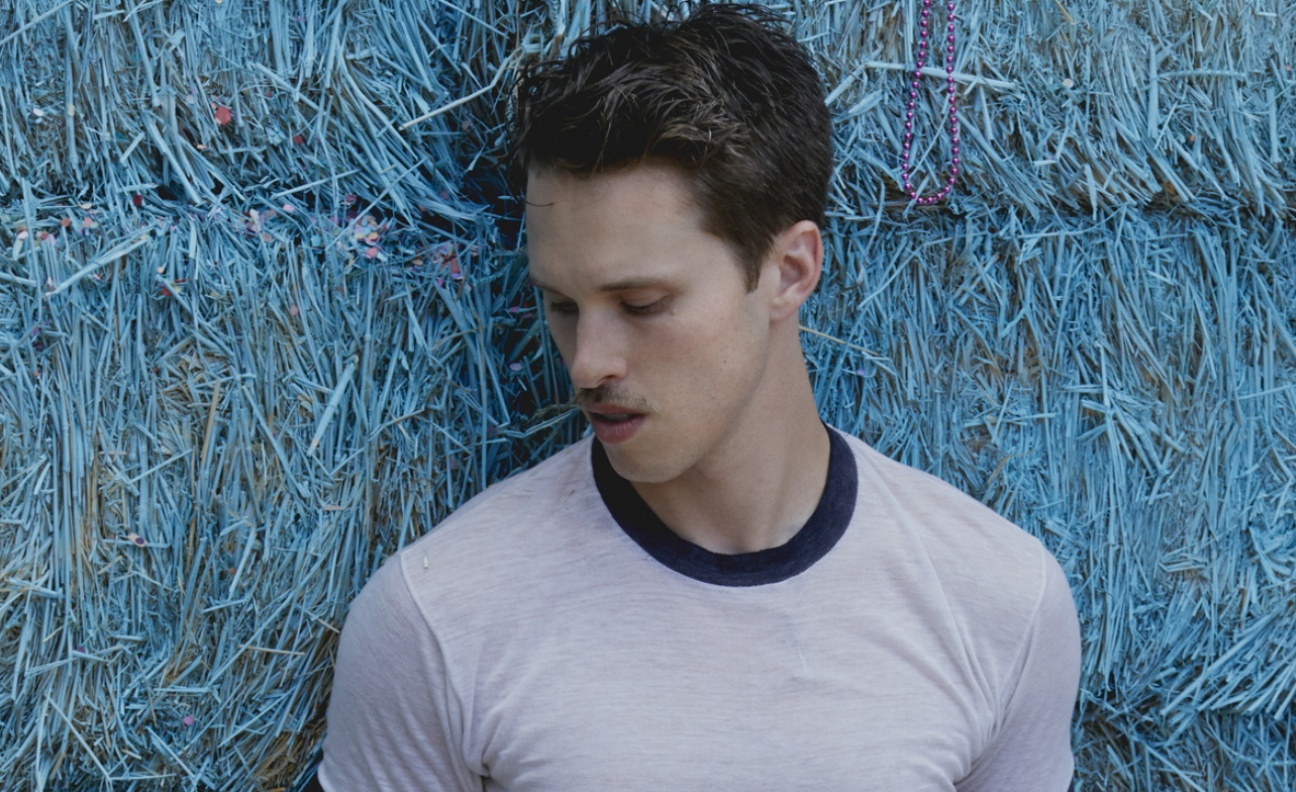
In June this year, Atlantic Records artist Ryan Beatty released his fourth album Sweet Fortune to widespread critical acclaim, and that's on top of him already counting Ariana Grande, Tyler, The Creator, Finneas and Miley Cyrus among his previous collaborators and admirers.
Fresh from concluding his Arms Over Armor tour of North America and Europe with a sold-out show at London’s Shepherds Bush Empire the star – who won a Grammy for Album Of The Year in 2025 for his contribution to Beyoncé’s Cowboy Carter – sat down with Music Week to discuss songwriting, his hopes for the Grammys in 2027 and more…
Words: Stuart Williams Photo: Michael Bailey Gates
Navigating a career as both a songwriter and an artist can be a tough thing to pull off. How have you gone about balancing those two sides of your artistic life?
“I think both go hand in hand. My songwriting is a huge part of my artistry – other than my voice it’s obviously how I express the heart of what I do. Songwriting for other people came to me as a surprise – I never saw myself actively doing that. But when the opportunity revealed itself I thought it would be a nice way to try something new and take a break from my own mind and offer that to others. What it ultimately did for me was make me a better songwriter in general – it allowed me to explore parts of myself that maybe I wouldn’t necessarily explore for my own music.”
At this point in time, do you prefer being a songwriter or a performer?
“I don’t know – I think it goes back and forth. I’m most proud of my songwriting, because it wasn’t something that felt like it would come naturally to me. Growing up, I was a vocalist. I loved performing. It was very easy for me to slip into the performer role. And singing was the first thing I ever felt good at. I had aspirations, but I was almost afraid to attempt to be a songwriter for my own stuff. Just because of my insecurities or whatever it may be. So I’m really proud of my songwriting because I really sought it out, and I had to go through what I had to go through to get the voice that I have in my writing. And so I really cherish it.”
How prolific a songwriter are you?
“I keep it pretty tight. I don’t necessarily approach it like I’m throwing things at the wall to see what sticks. I have to feel like I’m actually moved by what I’m doing. So most of the time, with any record I’ve made, there isn’t a lot on the cutting room floor because I hone in and whittle away at what I really find beautiful. I don’t just let it go. I know it’s there, but I don’t always know how to get there. Sometimes it takes me a long time and sometimes it finds itself pretty quickly.”
Are you always ‘on’ as a songwriter?
“It ebbs and flows. This is something I’ve said a lot but I think to be a good songwriter means to be a good listener to the world around you, and I think every single day there’s an opportunity to hear even a single word or hear somebody say something that you can collect and put in your pocket and save it for later. When I’m actively in songwriting mode, I’m a little more in tune with that but over time it’s become like a muscle for me. Even throughout this tour, I’ve written things down as it’s come to me. And even sometimes on stage, my mind will accidentally drift upon like a thought and I’m like, ‘Ooh, this is a good thing. Catch that!’ I try my best to remember it. In some ways, I’m always on.”
How do you decide what to keep and how to give away to other artists?
“Most of the time, when I’ve written something for somebody, it’s been for them. It’s very rare that I’ve written something for me and then given it away because I feel like it’s two separate things. There’s definitely a connection between writing for myself and writing for other artists because I have to feel personally connected to it. But I’m not writing things and then thinking, ‘Oh, maybe I can give this to somebody else.’ That’s never the goal. Being a songwriter for other people fell into my lap and wasn’t something I necessarily thought I would do. I’m never chasing to get a cut on something – that’s not important to me.”
What I find beautiful about music is it’s coming from a human heart and soul... Anything other than that, I’m completely against
Ryan Beatty
You’ve always talked in interviews about your influences like Joni Mitchell or James Taylor. This is the first album where we can hear those classic artists in your work. How much of a choice was that?
“A lot of those artists are ones that I’ve loved since I was super young. Music that my parents would listen to – the artists that are part of the fabric of my musical DNA. Sometimes it just takes time to give yourself permission to explore those parts of yourself. And this just felt like it happened naturally. It was what I was musically gravitating towards and just listening to in my free time. You have to honour what’s pulling at you.”
AI, obviously, is a hot topic around songwriters right now. Do you view it as a threat or a tool?
“I think that what I find beautiful about music and art is it’s coming from a human heart and a human soul, our own personal experiences… and I think that over everything, always and forever, it’s why we even love music or why we’re moved by art in general. So anything else other than that, I’m completely against.”
In this country, Raye and the Ivors led the charge to help songwriters secure per diems for writing sessions. What else do you think could be done to help songwriters who are struggling?
“First of all, that’s beautiful. I might not have all the answers of what needs to be done, but fairness has to happen, you know? Sometimes songwriters can be forgotten or maybe under-appreciated. It’s beautiful when anybody with a platform, who has a voice, fights for that.”
The music industry has changed a lot since you’ve been an artist. Artists are now expected to be their own marketing machines, to raise an audience and connect with it on a regular basis. Are you comfortable with that?
“It’s important for people to find their own version of that, because people fall into this idea that there’s a certain way to express your art online, and I see a lot of times artists fall into this cycle of what they think might work, but I think that I would always tell artists not to be afraid to go against the grain of that. Because it’s not fun for me if I feel like I’m just promoting the music. Everything has to come from a place of the-art-first. In-person connection is really important to me. Seeing these people come to my shows and feeling really connected to my music in real time, I think is just a reminder that that's what matters. The true connection there.”
You’ve already been involved in a Best Album Grammy thanks to your work on Beyoncé’s Cowboy Carter. Presumably, you’ll be up for consideration for your own work next year…
“Accolades are fun, but I try not to let that be what drives or motivates me, or to let it affect my creative choices in any way. But I think being honoured for your work is a beautiful thing. You just have to have a healthy relationship with that side of things.”
Finally, this is the end of your tour, but presumably not the end of the album campaign. What’s coming next from you?
“After this tour, I feel really excited to see what future performances look and feel like. We’ll just have to see!”