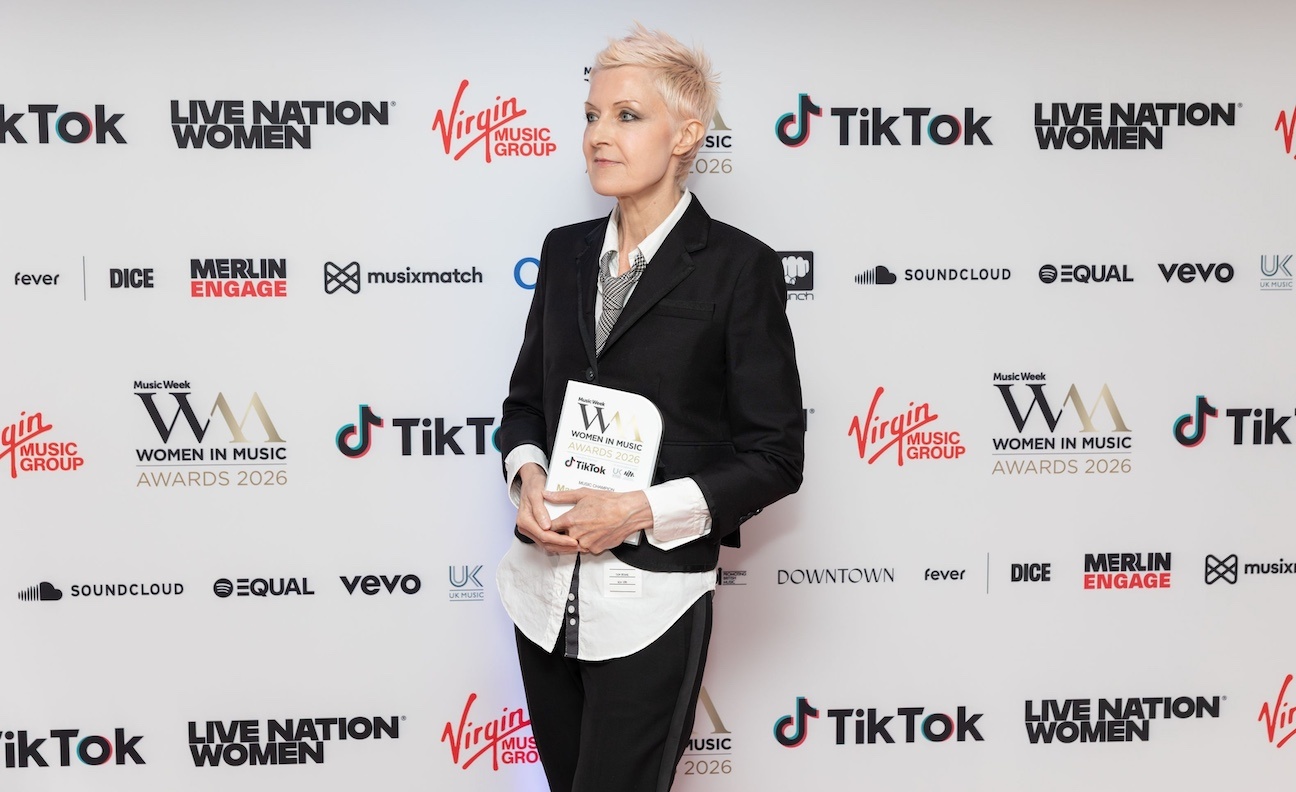
At this year's Women In Music Awards, we celebrated the achievements of game-changing executives and artists as the industry came together to honour their work. Music Week has spoken to all of the winners to tell their stories. Here, Mary Anne Hobbs, winner of our Music Champion award, discusses BBC Radio 6 Music, new artists and more...
INTERVIEW: Alex Rigotti
The winner of this year’s Music Champion honour is radio host, DJ and journalist, Mary Anne Hobbs.
For 30 years, Hobbs’ tranquil voice has been heard across BBC Radio 1, XFM, and 6 Music, her home since 2012. No stone is left unturned on her Sunday show; the Lancashire DJ regularly champions avant-garde and experimental artists otherwise untouched by mainstream media.
“I really love it when I hear a piece of music and my brain just doesn't immediately interpret the pattern,” she tells Music Week. “I have to lean into it, I have to understand it in a different way – how it moves, what the atmosphere feels like, how it travels forward. That unfamiliarity always excites me most about music.”
Hobbs regularly matches the intrepid ambition of her musical taste on her 6 Music Sunday show. Recently, she visited Blackpool’s Black Lights festival to capture field recordings of conversations and ambient sounds, creating the highly acclaimed Black Lights Festival soundscape episode. She has performed a multimedia live DJ showcase with creative partner and violinist Anna Phoebe at Manchester International Festival, and will soon host a round of free mentoring sessions at Hull’s Unthinkable Festival alongside artist Richie Culver.
Here, we speak with Hobbs about her wide-ranging career and what the industry can do right now to champion artists...
Congratulations, how does it feel to have won the Music Champion award?
“It's a great honour, really. Ultimately, I share this with all the artists that I've brought onto the various platforms that I've been lucky enough to have a tenure at. For me, the practice has always been the same: it's about the elevation of what it is that you feel is exciting and genuinely new.
“It is an award that you share with the artists, and with the audience who have trusted you. When you look at the vast media landscape, and the millions of choices that people have in any given moment… that an audience would gravitate towards my show to share what I found for them is a great honour. So I see it as a triangulation between three points – myself, the artists, and the audience.”
You talk about how important the artists have been to you becoming a music champion. Could you pinpoint a few people that you're especially proud of having platformed?
“In more recent times, Sherelle. She is so deep in my heart. I premiered every piece of music that she made earlier on in her career, and I wanted to bring her into 6 Music.
“A while back, I said to her, ‘I'm going to the Women In Music Awards – why don't you come with me? There'll be a chance to meet the management at 6 Music, and I feel like they need to understand who you are. It would be really useful if you come with me because Sam Moy, who's my boss, and Lorna Clarke, who's the director of music at the BBC, are going to be at the table. So it's an opportunity for you to meet them casually because you're hanging out with me’.
“A few years later, she got the job [as a presenter on the station], and I brought her in to dep on the daytime show for me when I was away. She's now done her first dep for me on the Sunday show.
“She's a remarkable artist, an artist who cares really deeply about the same kind of futures that I do. She really cares about community. She can headline the Roundhouse, but also go out on the road, consciously making tickets available for people who are struggling financially.”
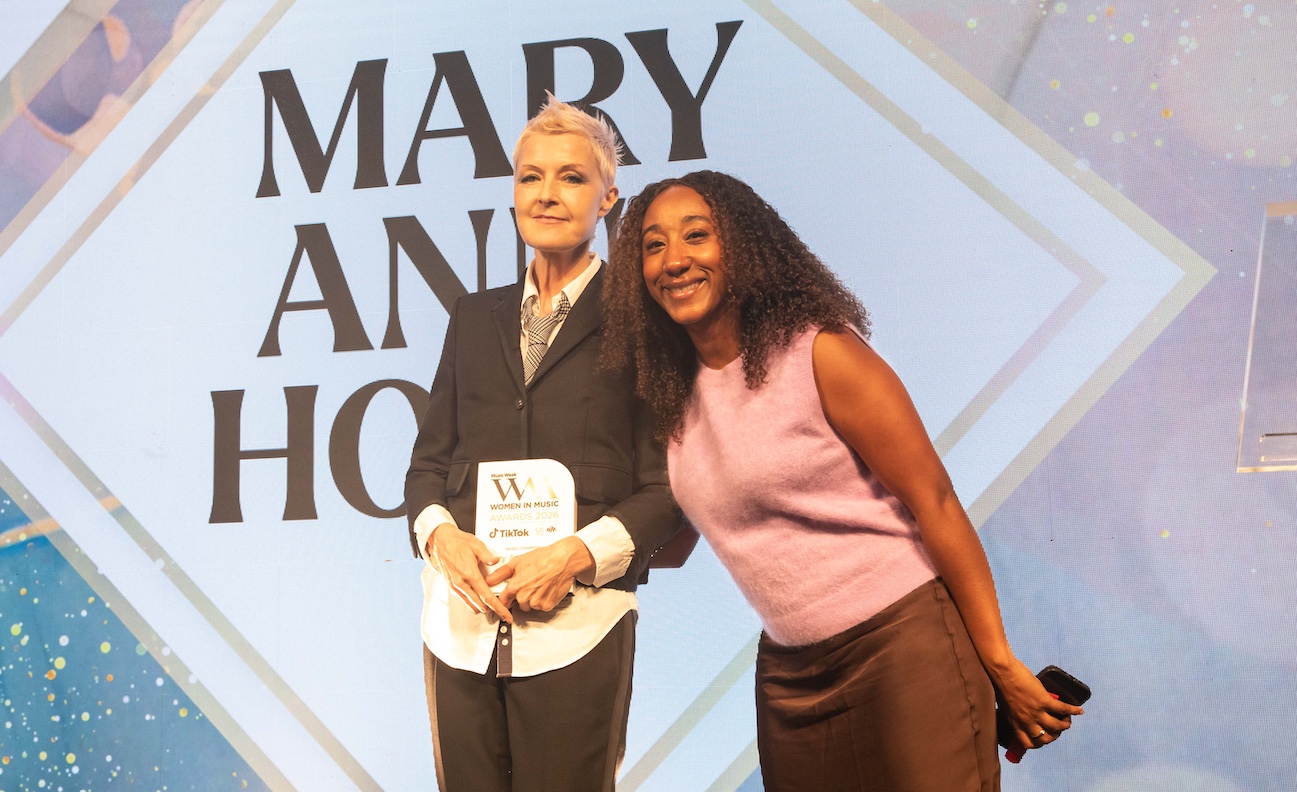
What can the industry at large do to champion artists in the way that you have?
“That's a really good question. What I would say to people from the industry is to think about mentoring. Everybody's probably in a situation where they're in contact with a lot of young people with great promise. If you have a friendship with one of those people and you think that you can offer something to them, it's mainly about listening to begin with. There are things I like to call ‘keys’. They're just ideas, really. If you're working with somebody and they've got a locked door in front of them, you can offer them a key and say, ‘Try this.’ It might work, it might not, but it's a nice way to frame the offering of an idea.
“A great deal of my time is spent mentoring. I've got projects on the ground in Middlesbrough with the young community that works there. I work alongside Richie Culver at Unthinkable Festival in Hull, which is run by a handful of really young people in their mid-20s – maybe six of them on the ground – imagining a festival in a completely radical and new way. I'm doing work in Preston, and collaborating with the Manchester International Festival on their young cohorts.”
In a world that is as troubled as the world we live in at the moment, there's nothing more powerful than the force of community
Mary Anne Hobbs
When did your mentoring work begin in earnest?
“The mentoring practices started in Berlin in 2018 with a group of refugees. We didn't have anything – just a really cold, empty room with a whiteboard in it and some chairs. We didn't have a radio station or anything like that, but we imagined how they might be able to tell their stories through radio, because you can abstract a story through the medium, so it's a really nice creative way to express yourself.
“Five years later, we got them a platform on Refuge Worldwide, and then Apple stepped up to sponsor the project, which was amazing. I left the project at that point because I work for the BBC, but to see it go from a room with eight or nine people in it to a fully realised project that Apple was sponsoring was really beautiful.
“That's the key, really: big corporations don't understand how to germinate something on the ground. That has to be done person-to-person. The reward for somebody like me is boundless, because you see firsthand the astounding talent of the new generation coming through, and you're able to understand their perspectives, what drives them, and theirunique value systems, which always change from generation to generation. The exchange of energy between elders and young people in a community is remarkable. In a world that is as troubled as the world we live in at the moment, there's nothing more powerful than the force of community.
“So I would encourage anyone in the industry who feels that they have anything to offer, even if it's an hour of their time, to share it, because God, it's so rewarding. It's the best thing in my life.”
Do you have any music mentors or music champions that you'd like to shout out who've had an impact on you?
“I'd really like to shout out my producer, Jax Coombes. I always think we're a bit like the Thelma and Louise of radio. I will usually generate most of the ideas, and then I'll work with Jax on the edit. She is an exceptional editor, and I always say that you have to queue up at the BBC for 10 years to work with Jax because she's so good at what she does.
“I think we've developed a language of our own, and we're able to work on really exciting projects together and, I hope, create an audio experience that people feel is very fresh.”
Is there a particular example you can cite?
“We did an interview recently with Stephen Morris from New Order around what would have been Ian Curtis's 70th birthday, and I said to Jax, ‘I think there's one untold story: the experience of Stephen Morris and the remaining members of Joy Division that went on to become New Order.’ What was their response and what was their experience of the suicide of Ian Curtis? What happened to them as human beings in that strange no man's land between the end of Joy Division and the beginning of New Order? Nobody really understands it from a human perspective.
“It's a very difficult subject to take on board because of the nature of broadcasting anything on the topic of suicide. But I said to Jax, ‘I want to do this.’ And it was an absolutely remarkable interview, it really was. I asked Stephen ahead of it, ‘Is this something we can talk about?’ And he said, ‘Yeah, I definitely want to do this.’
“You got the sense, even from the tone of his voice, that he'd been waiting so long for somebody to ask him these questions. But it had to go all the way up to the head of compliance at the BBC so we had the right framing around it – the trigger warnings and so on – but Jax's edit of that piece was absolutely extraordinary. We left the whole narrative about suicide untouched, but there was music that we needed to build in, there was space that we needed to maintain. It was an exceptional edit from Jax. Suicide is not part of her personal experience, [but] to have a producer that sits outside of the experience but can interpret it for the listeners is immensely valuable, because she's sitting more on the side of the listener, whereas I'm more in the centre of the experience.
“I'm so lucky to work with her. I absolutely cherish her, honestly. I have huge amounts of respect for her.”
6 Music also won the Radio Station gong at the Music Week Awards earlier in the year. What do you love about the station and why is it important to the industry right now?
“I think weekends, particularly on 6 Music, are exceptional. If you look at the two shows either side of mine, Iggy Pop and Stuart Maconie, every offering is entirely unique, and I think it's coming from a place which is increasingly rare – the place of a genuine curator. It's absolutely incredible to see artists like Jamz Supernova, Sherelle and Zakia coming in, representing their diasporas in such unique ways. I feel like 6 Music is creating a counterpoint to the rest of the broadcast industry. In terms of BBC Networks, I think 6 Music is an absolutely vital counterpoint. These spaces are becoming more and more rare within the media landscape at large.
“It's a perfect example of a BBC network that costs relatively little to run and delivers so much, because the goodwill and the love for what we do is almost boundless. So yeah, it's immensely valuable. I should shout out Sam Moy as well, who's the head of 6 Music. She's an absolutely incredible, visionary woman – I've got great love and respect for Sam.”
You've done so many things throughout your career, you've had so many achievements. What is your next ambition?
“I would like to be in a position where I have the opportunity to continue this work. I really want to find the resources to build on the mentoring projects we've put in place and to develop those, hopefully, so we can create more connections, especially through towns and cities in the North. I think that would be really valuable.
“I'd love to develop a new project with Anna Phoebe, my creative partner for MIF. Hopefully that's in the furnace at the moment, and I'd love for that to come to fruition. The opportunity and resources to continue with those things are all that I really need, and I'd be so grateful for that to come to pass.”
PHOTOS: Louise Haywood-Schiefer/Panni Renner