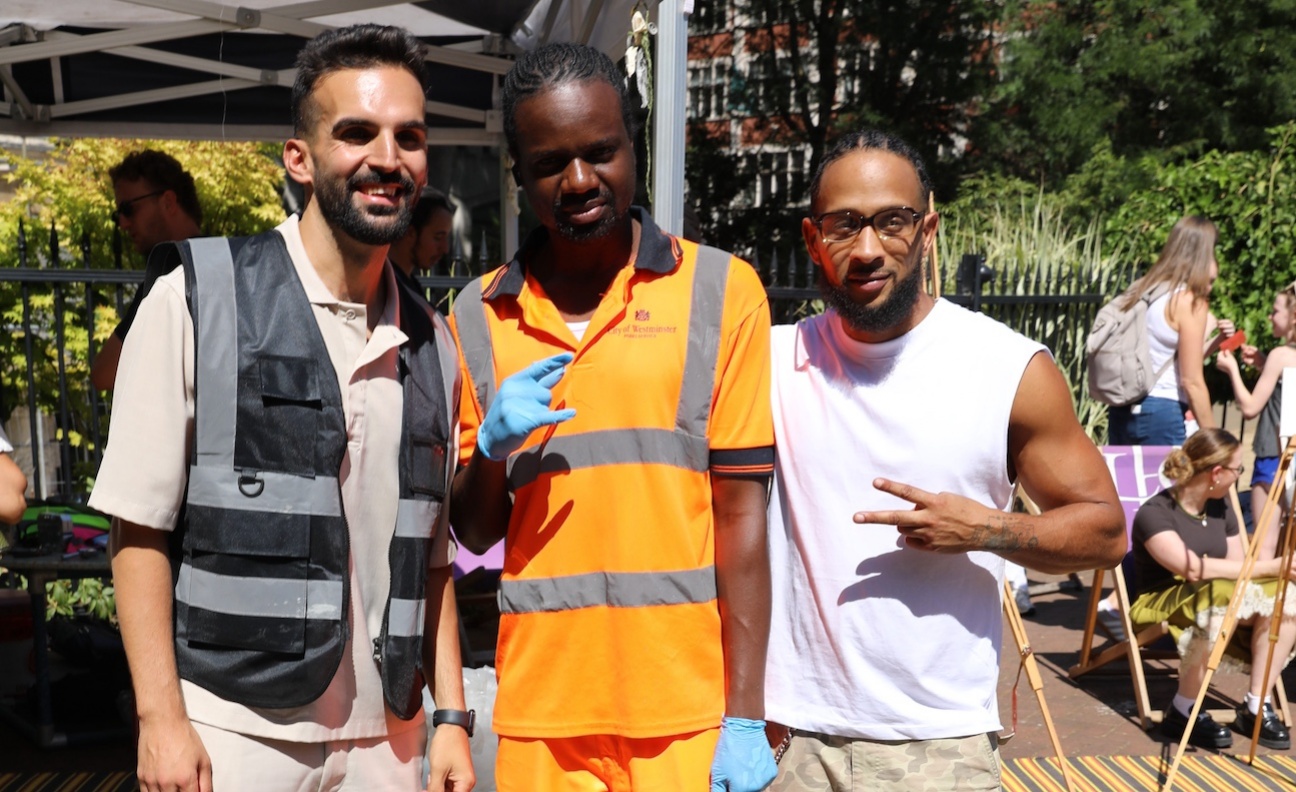
On International Youth Day (August 12), I hosted the UK’s first festival to accept plastic waste as an entry fee (supported by Westminster Council, Power Up and Mete Coban: GLA deputy mayor for energy).
Using on-site plastic recycling machinery at the UK Youth Day festival, we tested a ‘no cash, just trash’ model, where over 450 attendees brought plastic waste to unlock entry, which was repurposed on-site in our ‘Art Ain’t Trash’ plastic recycling workshops, with the remaining waste turned into art for our events in October.
The UK music industry stands at a critical crossroads. Julie’s Bicycle revealed that UK festivals produce 20,000+ tonnes of waste annually.
Meanwhile, live music and audience travel account for roughly 75% of the sector's total greenhouse gas emissions.
As the climate crisis accelerates, pressure across the industry has never been higher. Yet much of the response relies on top-down initiatives that feel like passive compliance, greenwashing, or a modern form of waste colonialism.
To build an industry framework that genuinely heals the people and environments it relies upon, we must enact systemic change across three core pillars.
1 Creative systems change
Redefining waste as value true transition requires implementing new green technologies/localised recycling methods, and renewable power directly into live infrastructure, building on the proof-of-concept established at UK Youth Day.
Global Majority-led events like City Splash and Notting Hill Carnival face high operational waste challenges and should be prioritised for circular investments.
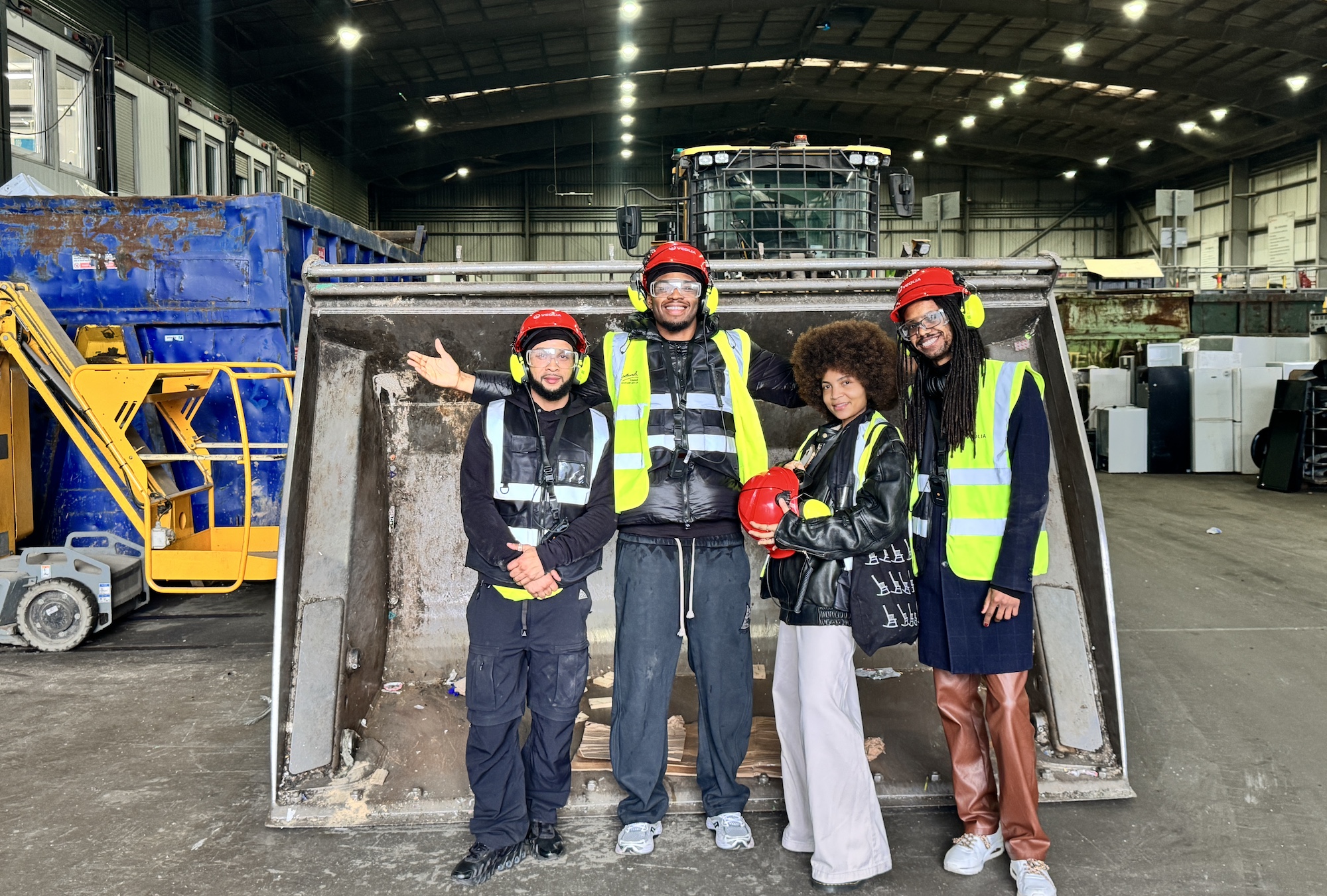
Darcy Thomas with Not3s, Sans Soucis and KVibes at a recycling centre in Lewisham
In my research funded by Westminster Council, I found Notting Hill Carnival highlights that processed waste can be diverted from landfills to manufacture stage builds, costume design and creative workshops that empower communities most affected by climate injustice; preventing that same waste from being sent back to our motherlands.
2 Holistic, sustainable and ethical talent development
Global Majority talent drives over 80% of UK recorded music revenue. Talent development can no longer be limited to studio time and social media strategies; it must empower artists as environmental stewards.
Incorporating talent into community clean-ups and our Art Ain’t Trash workshops transforms sustainability into creative flow, community connection, and improved mental and physical health.
Wellbeing is essential: according to the UK Musicians’ Census, 74% of UK musicians earn under £30,000 annually from music, with 43% taking home less than £14,000, fuelling a mental health crisis that leaves nearly 30% reporting poor wellbeing and a quarter unable to support themselves.
When most creators struggle to sustain a living, asking them to fund standard, high-emission marketing campaigns is unfeasible. Educating artists in circular practices is an economic lifeline.
Those most affected by environmental degradation must lead the solutions
Darcy Thomas
Simple choices – like sourcing wardrobe from charity shops or circular archives – dramatically reduce budgets while embedding sustainability directly into the visual aesthetics.
Implementing resource-efficient production cuts overhead for independent creators, freeing up vital capital while protecting artist longevity.
I manage musician, composer and artist Che Lingo who shows me daily how creators act as direct conduits for environmental awareness. Che is the perfect fit. His music speaks directly to the young, Global Majority demographics statistically most vulnerable to climate injustice, making his platform uniquely powerful.
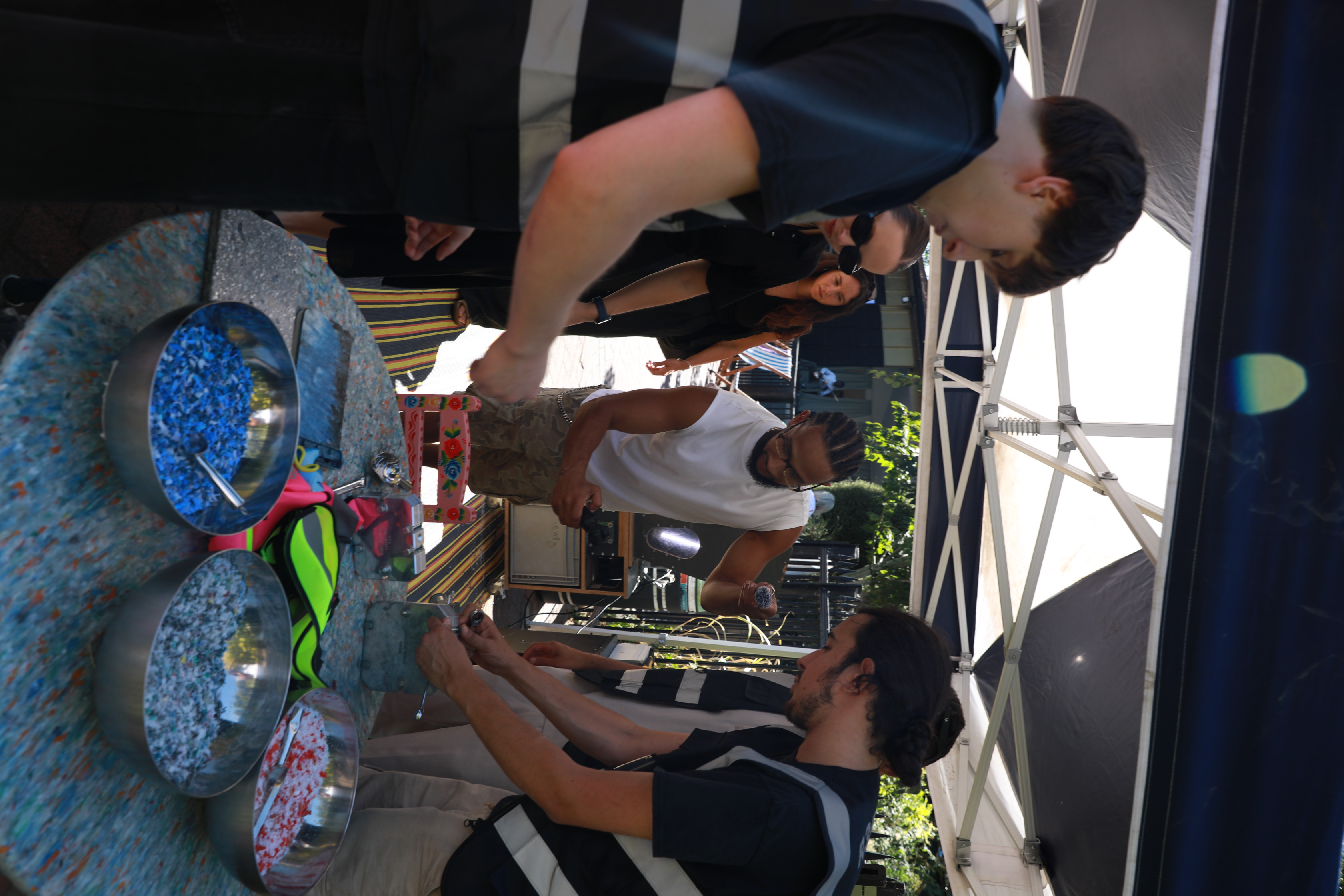
UK Youth Day festival 2026
His work with me on the Art Ain’t Trash outreach events and workshops shows a genuine sense of environmental stewardship, empowering the artist while activating his audience as catalysts for local and global change.
By hosting events like UK Youth Day or our Project R3claimed stage at The Alternative Escape 2026 (supported by Power Up), we prove labels can help artists operate sustainably while opening new revenue streams:
Solar showcases & low-emission touring:
Mobile live shows powered by renewable energy and low-carbon logistics to cut overheads.
Waste-to-resource merchandise & releases:
Turning venue waste or community clean-up plastics into merch, recycled plastic vinyl and stage infrastructure: converting a waste stream into direct artist resources/revenue.
3 Global Majority leadership & ownership
Systemic change is impossible without representative leadership. Studies by Youth Music and Black Lives In Music highlight a stark disconnect: while Global Majority creators shape the UK's sound, only 22.1% of industry leadership roles are held by ethnically diverse individuals, and just 29% of young Global Majority creatives feel represented by decision-makers.
Crucially, the Global Majority remains almost entirely absent from owning the companies holding key procurement contracts for climate mitigation: waste management, energy supply, and venue operations.
Festivals, venues and labels must actively commit to ring-fencing procurement spend for Global Majority-owned green-tech and circular suppliers.
Without Global Majority leadership, we risk letting the narrative be driven by the same systemic structures that caused the climate crisis. Those most affected by environmental degradation must lead the solutions; not only for ethical, political, and cultural reasons, but to rebuild a fairer economic balance.
If the music industry is built on the backs of Global Majority pioneers, these same leaders must be given the agency, contracts, and platforms to direct its sustainable future.