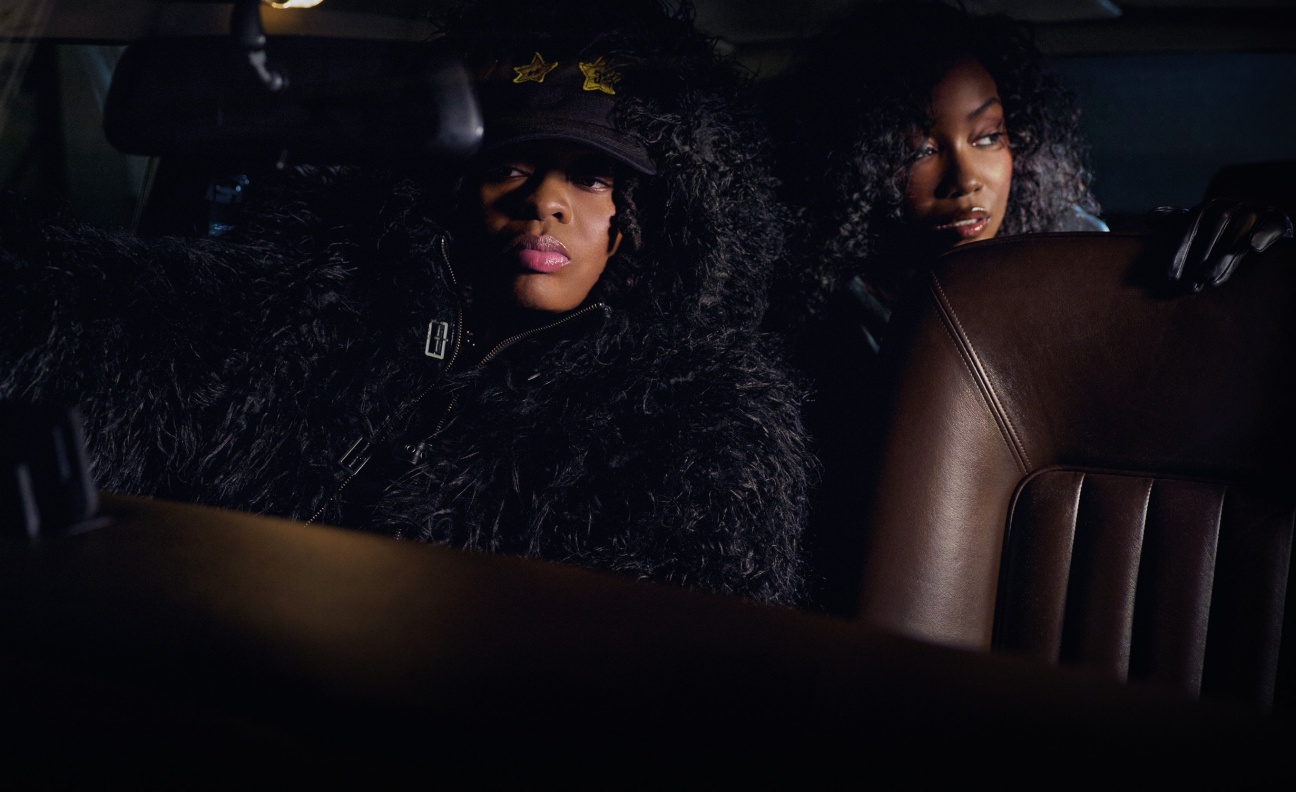
DameDame* have called for producers to receive half their fee upfront, arguing that payment delays should no longer be accepted as standard industry practice.
The Birmingham artists and producers – Barbara Boko and Edith Nelson – highlighted the financial challenges facing producers, with Boko revealing that some payments can take years to arrive.
“People assume that because we’ve had a lot of cuts, we’re rolling in it. But it can take up to two years to get paid for a cut as a producer,” said Boko. “Some cuts that have been out for over two or three years, we still haven’t been paid for. There’s no other industry where that would be normal.”
Speaking to Music Week's Yemi Abiade in the December edition, Boko said producers should receive half their fee upfront when stems are delivered, with the remaining balance paid once the contract is completed.
“We’re making the whole thing you’re making money off,” she added. "I think producers should be paid half upfront when the stems are received and half when the contract’s done, the same as you’d treat a videographer or a director. And for us, the beat is the fun part. The most painful part is the writing – finding the emotion a song needs. If we were only writers, we’d go into a session and not be paid upfront, or for our travel.”
The things that made the most difference in my life were literally that community centre and my mentor there – having a studio you can go to for free
Barbara Boko
The comments come as DameDame* celebrate a breakthrough year. The duo – who have worked with artists including Jorja Smith, Tems and Wizkid – won the New Artist category at the 2026 Music Week Women In Music Awards in October following the release of their debut album, Dreams On The Passenger Seat.
Drawing on their own experiences of breaking into the industry, Boko and Nelson also advocated for greater opportunities for emerging producers, particularly through improved access to affordable studio spaces and mentorship.
“The things that made the most difference in my life were literally that community centre and my mentor there – having a studio you can go to for free, because studio time is so expensive, and being exposed to that environment," said Boko. "So more access to spaces – a certain number of hours for a certain number of young people, through places like Pirate Studios or Qube – would be amazing.”
Nelson added: “I don’t know what the industry can do about getting parents to support creative talent in the first place, giving you the freedom to go to that community centre or buying you equipment. I asked my mum for my first set-up for my 16th birthday. But if getting paid in music was simply on time, it would make it a proper job that could feed you, and that would remove a lot of the resistance. Our parents just want to know we’re going to be able to take care of ourselves.”
There will always be a market for the nuances and mistakes, the natural occurrences of human creativity
Edith Nelson
Boko also expressed her distaste for AI and its growing impact on the industry.
“I hate AI. It’s just not nice to be replaced," she said. "What’s horrible is the desensitisation. The more you hear it, the more it’s just ‘music’ now. I was in my auntie’s car and she was listening to AI gospel songs, hands in the air, worshipping to AI music. People don’t know the difference. They’ll download them and play them on Spotify. In a way, we are competing with this now. I hope it flops like VR and NFTs, and maybe the climate cost forces restrictions.”
While Nelson believes human creativity will always have its place, she acknowledged the scale of the competition AI presents
“I don’t think we can be replaced. There will always be a market for the nuances and mistakes, the natural occurrences of human creativity," she said. "But it’s going to be a massive competitor. In electronic music especially, I don’t think you’ll be able to tell, and a lot of artists will use it secretly, even for writing. AI isn’t going to argue with you about your fee. All any artist can do is make as much music as possible and make the most of this era where humans are dominating music.”
Subscribers can read the full DAME DAME* interview here.