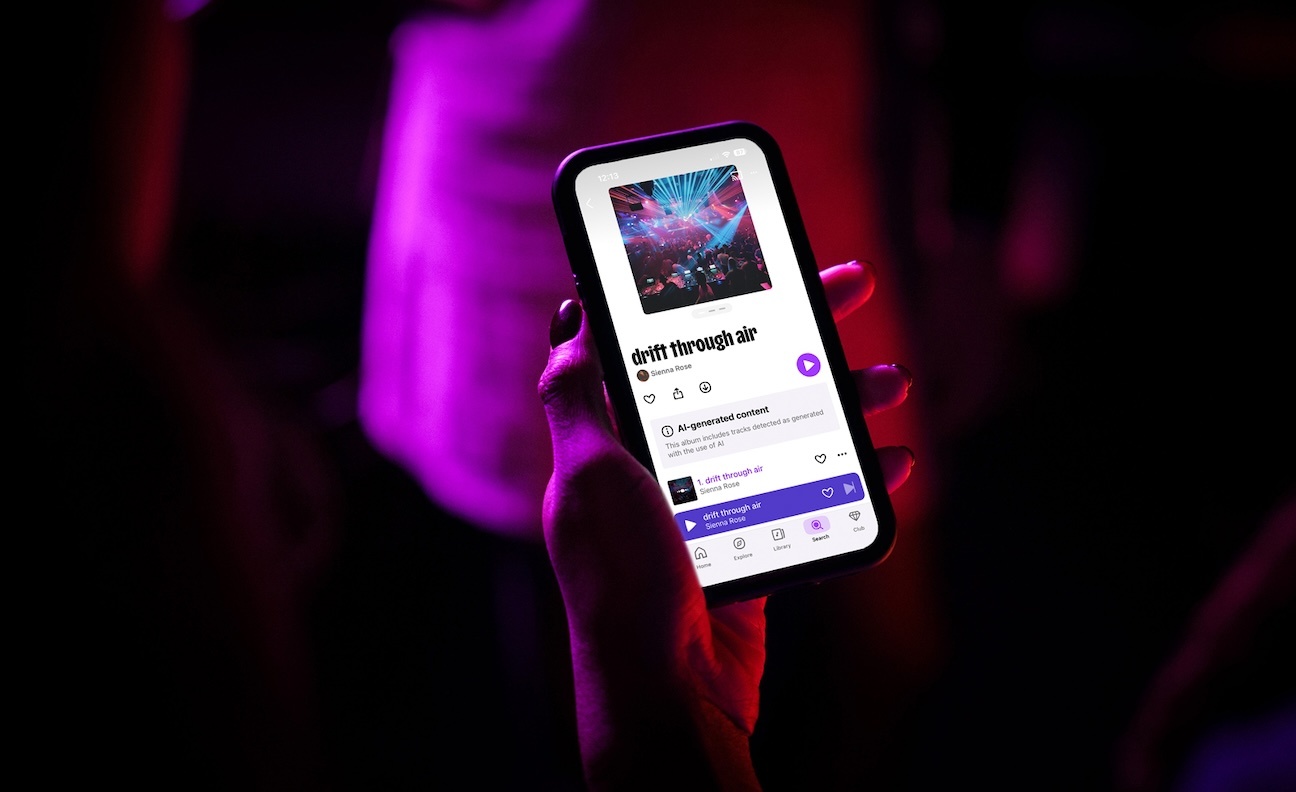
More than half of listeners switching to Deezer from other DSPs already had at least one fully AI-generated track in their playlists, according to new data.
The findings come from the second edition of the French streaming platform's annual international survey examining perceptions and attitudes towards AI-generated music.
The study was carried out by Ipsos, with a total of 9,000 people surveyed in eight countries: the US, Canada, Brazil, the UK, France, Netherlands, Germany and Japan.
It found that nearly three quarters of music streaming users (74%) thought that their playlists were free from 100% AI-generated music, but according to Deezer’s internal data a majority of new subscribers joining from other streaming platforms, had 100 % AI-generated music in their library.
Nearly 57% of over 53,000 people joining the service in October had at least one fully AI-generated track in their playlists already.
According to the research, 80% of people agree that both fully AI-generated and AI-assisted music should be labelled on streaming services
“It is clear from this year’s survey that an overwhelming majority still want transparency when it comes to AI music, and that there is a significant gap between what listeners think is in their playlists and what is actually there, which highlights the need for continued efforts to achieve greater awareness for music streaming users,"
said Deezer CEO Alexis Lanternier.
Concerns about AI having a negative impact on creativity and artistry are clearly growing, especially in the United States
Alexis Lanternier, Deezer
In addition, 67% of respondents said they fear AI could diminish creativity in music production; 69% believe fully AI generated music threatens the livelihoods of artists; and 60% believe that 100% AI-generated tracks should not be included in major charts alongside human-made tracks.
Moreover, 43% of music streaming users say that they would skip without listening to 100% AI-generated music if they came across it.
US respondents in particular have become more sceptical of AI in music in 2026, with more concerned about its impact on creativity (69%, +4pts) and fewer recognising its role in music creation (51%, -11pts) or its value as a creative tool for musicians and artists (37%, -17pts) compared to 2025.
On all questions related to general attitudes to AI in music, US respondents were significantly more negative in 2026 compared to what they were in 2025. For example, 69% believe that AI will lead to a loss in creativity in music creation (+4pts from 2025), 51% believe that AI will play a significant role in music creation (-11pts from 2025), and 37% believe that AI is valuable tool to help musicians/artists/composers to create music (-17pts from 2025).
"Concerns about AI having a negative impact on creativity and artistry are clearly growing, especially in the United States, where there is a striking difference in attitudes compared to last year," said Lanternier. "A majority of people in all surveyed countries also consider fully AI-generated music a threat to the livelihood of artists."
Last month, Deezer announced new measures that will allow users to exclude fully AI-generated music on the platform.
The Paris-based company also introduced the “world’s first AI tagging system for music streaming” last year, clearly displaying which albums include fully AI generated tracks, and also launched a free online AI music detector, covering multiple DSPs, this summer.
On all questions related to general attitudes to AI in Music, US respondents are significantly more negative in 2026 compared to what they were in 2025. For example, 69% believe that AI will lead to a loss in creativity in music creation (up 4pts from 2025), 51% believe that AI will play a significant role in music creation (down 11pts from 2025), and 37% believe that AI is valuable tool to help musicians/artists/composers to create music (down 17pts from 2025).
France is the country with the most desire for transparency, with 88% of the respondents wanting clear labels on 100% AI-generated music, a number that rises to 90% when it comes to AI-assisted music2. The French are also the most worried about AI leading to loss of creativity, with 76% agreeing with this statement (+6 pts vs 2025).
As last year, Brazilians are significantly more positive towards AI music than respondents in other countries. As an example, 61% agree that AI could be a valuable tool for music creation, compared to 35% globally. Brazil is also the country with the most people having believed they have listened to 100% AI-generated music at least once (63% vs 46% in 2025).
Japan is the country with the least reported exposure, with 46% (-6 pts vs 2025) saying they have never listened to fully AI-generated music (compared to 32% across all respondents, which is a decrease of 7 pts vs 2025).