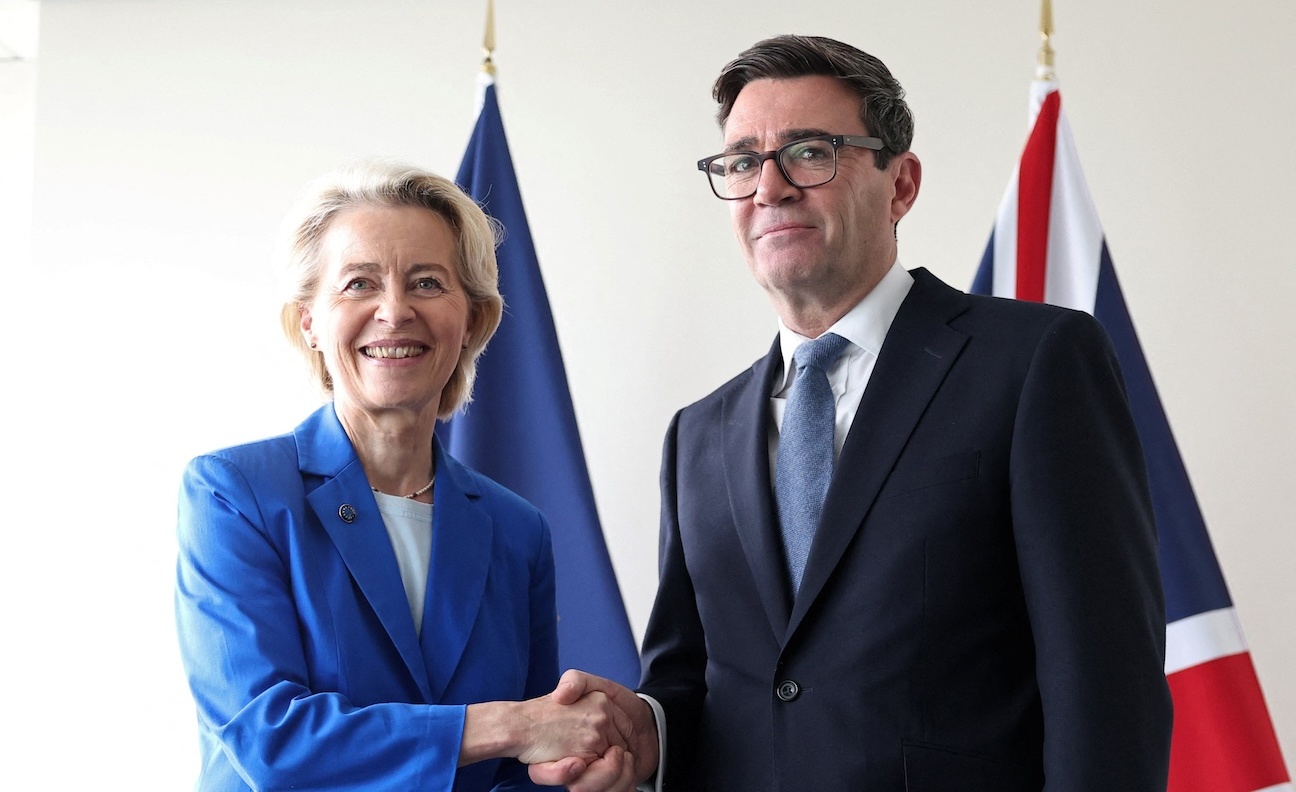
More than 300 music, live performance and cultural organisations across the UK and EU have written to PM Andy Burnham and EU leaders calling on them to use a key summit to break the deadlock over touring the UK and European Union.
The Prime Minister will meet António Costa, President of the European Council, and Ursula von der Leyen, President of the European Commission, in Brussels on November 20 for the second UK-EU summit.
Ahead of the summit, representatives of the cultural and creative sectors have written an open letter to the leaders to stress the vital importance of cultural exchange as an intrinsic part of the UK-EU relationship.
The letter from the Cultural Exchange Coalition (CEC) calls for urgent progress in tearing down the barriers that continue to limit UK and EU touring.
In a message to the PM and EU leaders, the letter said: “The 2026 Summit should establish a structured EU-UK dialogue with a clear pathway to unlock the full potential of EU-UK cultural exchange.
“This should include practical solutions for the movement of touring professionals and essential equipment, as well as the UK’s cooperation and involvement in European programmes, such as Creative Europe, which facilitate international partnerships and exchange.”
The Prime Minister aims to use the summit to push for deals to cut costs and red tape for British businesses, support industry and boost growth in the UK.
At the first summit, held in London in May 2025, the UK and the EU agreed a new strategic partnership. In Brussels, leaders will review progress and agree on practical next steps to deepen cooperation on a range of issues.
Established in December 2025, the CEC is a coalition of people and organisations from across the UK and EU that create, support and sustain culture and creativity. Founder CEC members include UK Music, the Musicians’ Union, Pearle* – Live Performance Europe, PRS For Music, Live Music Industry Venues and Entertainment (LIVE), Association of British Orchestras (ABO), Independent Society of Musicians (ISM), Society of London Theatre (SOLT) & UK Theatre and One Dance UK.
Organisations include representatives from music, dance, theatre and visual arts, technical companies, charities, trade unions and businesses from across Europe as well as orchestras. The countries with the most signatories are the UK, Netherlands, Belgium, Germany, France and Spain.
Among the artists and musicians backing the campaign are Dame Evelyn Glennie, Jools Holland, Belgian conductor Dirk Brossé and Level 42 bassist Mark King.
In a joint statement on behalf of the CEC, UK Music chief executive Tom Kiehl, head of international at the Musicians’ Union Dave Webster and director of Pearle* Live Performance Europe Anita Debaere, said: “We need urgent action from the UK government and European institutions to tackle the negative impact of Brexit on our creative and cultural sectors.
“It is vital that the summit sets out a pathway to agree practical solutions to make it easier for everyone to tour the EU and UK by removing red tape and extra costs that are major barriers to our efforts to create jobs and growth.”
We need urgent action from the UK government and European institutions to tackle the negative impact of Brexit on our creative and cultural sectors
CEC leaders
Solo percussionist and composer Dame Evelyn Glennie said: “Music has always had the extraordinary power to bring people together, transcend borders and create understanding between cultures. The ability of musicians to travel, perform and collaborate across the UK and Europe is fundamental to keeping that exchange alive.
"Since Brexit, unnecessary barriers have made it increasingly difficult and costly for musicians, orchestras and touring professionals to share their work across borders. This not only affects artists and their livelihoods but also deprives audiences of the opportunity to experience new ideas and connect through live performance.
"I sincerely hope the forthcoming summit will be a turning point. We need practical, lasting solutions that allow artists, their teams and essential equipment to move freely and easily between the UK and EU. Cultural exchange should be recognised not as an optional extra, but as an essential part of our shared future. We must not allow political borders to become cultural barriers.”
Alt-J keyboardist and vocalist Gus Unger- Hamilton said: "Touring around Europe cheaply and easily was a vital part of alt-J's early success, which has since taken us back to these countries countless times, providing employment for our crew and supporting European venues and festivals. Unless something is done to break the deadlock that is the current situation post-Brexit, I don't see a future for emerging British artists being able to do what we did, which will be detrimental to both the UK and the EU."
Pendulum guitarist and media composer Peredur ap Gwynedd said: "In the Labour Party's 2024 General Election manifesto, they promised they would "help our touring artists" and ease post-Brexit travel and trade barriers for the creative industries. It's been nearly two and a half years, and we're still waiting. Day by day jobs are being lost and the industry is dwindling. Something has to be done."
According to UK Music research, 34% of music creators surveyed in 2025 said their earnings had been affected by the UK leaving the EU – up two percentage points from 32% in 2024. Of those affected, 95% surveyed in 2025 said their earnings decreased after the UK left the EU – unchanged on the 2024 figure.
According to research published by the Department for Digital, Culture, Media and Sport (DCMS) in August, the UK is estimated to have lost £208 million and 2,490 full-time equivalent jobs between 2022 and 2024 within the touring sector.
The Economic Benefits of Touring and the Impact of EU Exit report, underpinned by PRS For Music data, highlighted the economic and cultural impact of Brexit red tape on touring for performers, crews, promoters, venues and local economies in the UK and EU.
The research found the decline in touring by UK musicians across Europe resulted in estimated losses of £1.04 billion and 17,010 full-time equivalent jobs in EU member state economies.
PHOTO: Toby Melville/WPA Pool/Getty Images
 FOLLOW