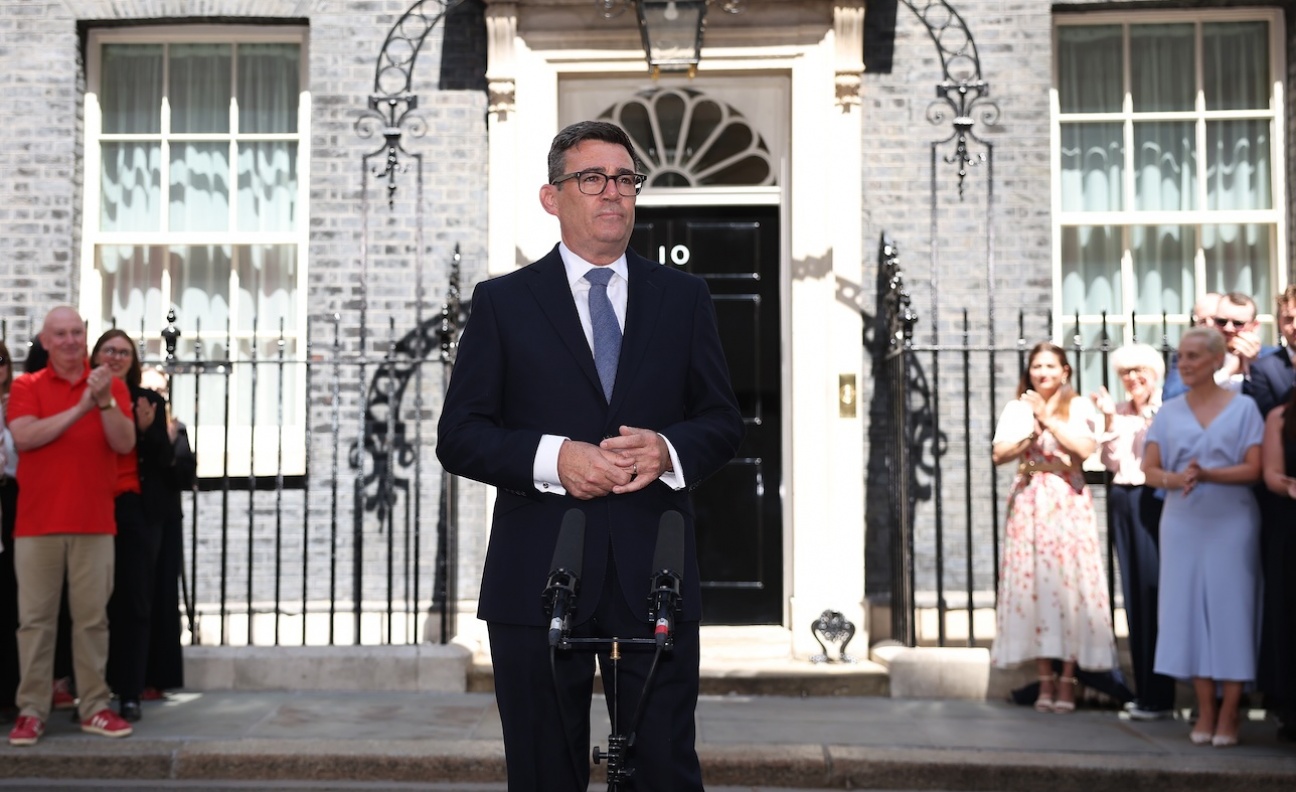
The British music industry has moved swiftly to set out its priorities for new Prime Minister Andy Burnham.
Burnham, who became Labour leader on Friday, took charge in Downing Street today (July 20) after succeeding Sir Keir Starmer as PM.
A known music lover, Burnham's appointment comes less than a week after the UK government unveiled a raft of new measures – covering exports, licensing, music education and funding for artists and teams – as part of a new long-term Music Plan to back the music sector.
The BPI has pledged to work with the former Greater Manchester Mayor – who made a surprise appearance at the O2 Silver Clef Awards earlier this month to present James with an award – to build on the sector's global standing, while UK Music has outlined five key tests for his government.
“The BPI extends its good wishes to Andy Burnham as he becomes Prime Minister," said BPI chief executive Dr Jo Twist OBE. "Over many years the BPI has known Andy as an ardent champion of music and a passionate fan of artistic talent – both as Culture Secretary and latterly in his role as Mayor of Greater Manchester.
"More recently we have worked closely with him and his team to bring The BRIT Awards to Manchester, and we have also engaged with him in our capacity as founding partners of Beyond the Music that he has driven to success.
“With the government’s Turn It Up Music Plan just published, the Prime Minister will be profoundly aware of the commercial and cultural value of our industry at home and globally – the world’s third largest – and the unique power that music has to inspire people, bring communities together, and deliver economic growth. Our members look forward to working with him and the government to support this.”
The music industry is not anti-AI – it is pro-creators and pro-business
Tom Kiehl, UK Music
Meanwhile, UK Music CEO Tom Kiehl welcomed Burnham to his role, praising his long-standing commitment to a sector that contributes £8 billion to the UK economy and supports 220,000 jobs.
He set out five key tests for Burnham's government, days after Culture Secretary Lisa Nandy unveiled the Music Plan at UK Music's summer party:
-
Removing costly and prohibitive barriers to touring the EU
-
Delivering on the government’s manifesto pledge to root out ticket touts
-
Devolving power to grow music in towns and cities right across the UK
-
Ruling out any new copyright exceptions in relation to artificial intelligence
-
Ensuring that a strong and well funded BBC continues to showcase and support UK music
“We welcome Andy Burnham back in Westminster as the new Prime Minister and look forward to continuing our work championing the music industry with him," said Kiehl. “As a former Culture Secretary and big music fan, he has a deep understanding of what makes the music industry tick. He also knows the challenges facing a sector which is one of the government’s best international calling cards with the £4.8 billion we generate in annual exports."
Beginning on the issue of EU touring barriers, Kiehl said: “We need greater government action to deliver on its pre-election pledge to tear down the barriers of red tape and extra costs that make it so hard for UK music creators, performers and crew to tour the EU post-Brexit.
“The new Prime Minister must speed up long-promised legislation to crack down on ticket touts who rip off millions of music fans by reselling concert and festival tickets at exorbitant prices.
“UK Music is also keen to see the new administration develop Andy Burnham’s pledge for more devolution. As we have outlined in our Local Music Action Charter, music can be used as a key tool to help boost regional economies in towns and cities right across the UK."
Kiehl also called on the government to establish stronger protections around artificial intelligence, warning that music creators and businesses must not have their work exploited without consent.
"AI firms must seek consent if they want to use music, pay creators properly and be transparent about the use of AI," he said. "The music industry is not anti-AI – it is pro-creators and pro-business."
Turning to the BBC's Charter Renewal next year, Kiehl added it was important for the government to remember the value the broadcaster places in music, and the importance of its support to domestic talent.
"We need a strong, well-funded BBC that cherishes and supports music at its core,” he said.
Separately, Ivors Academy chief Roberto Neri congratulated Burnham on his appointment and called on the government to prioritise creators.
"As a former Culture Secretary and champion for the creative industries in the North West, he seems to understand music’s value to our culture, society and economy, and we look forward to working with him and his team," said Neri.
"Songwriters and composers are the foundation of the music industry. We need this government to put music creators at the heart of its strategic priorities, recognising their essential contribution to the country’s creative and economic success while protecting their rights.”
Earlier, AIM CEO Gee Davy also welcomed the new PM to the role with a call to back the independent music sector with key measures to support the SMEs taking risks to discover, record, and market new talent and emerging genres.
PHOTO: Getty Images