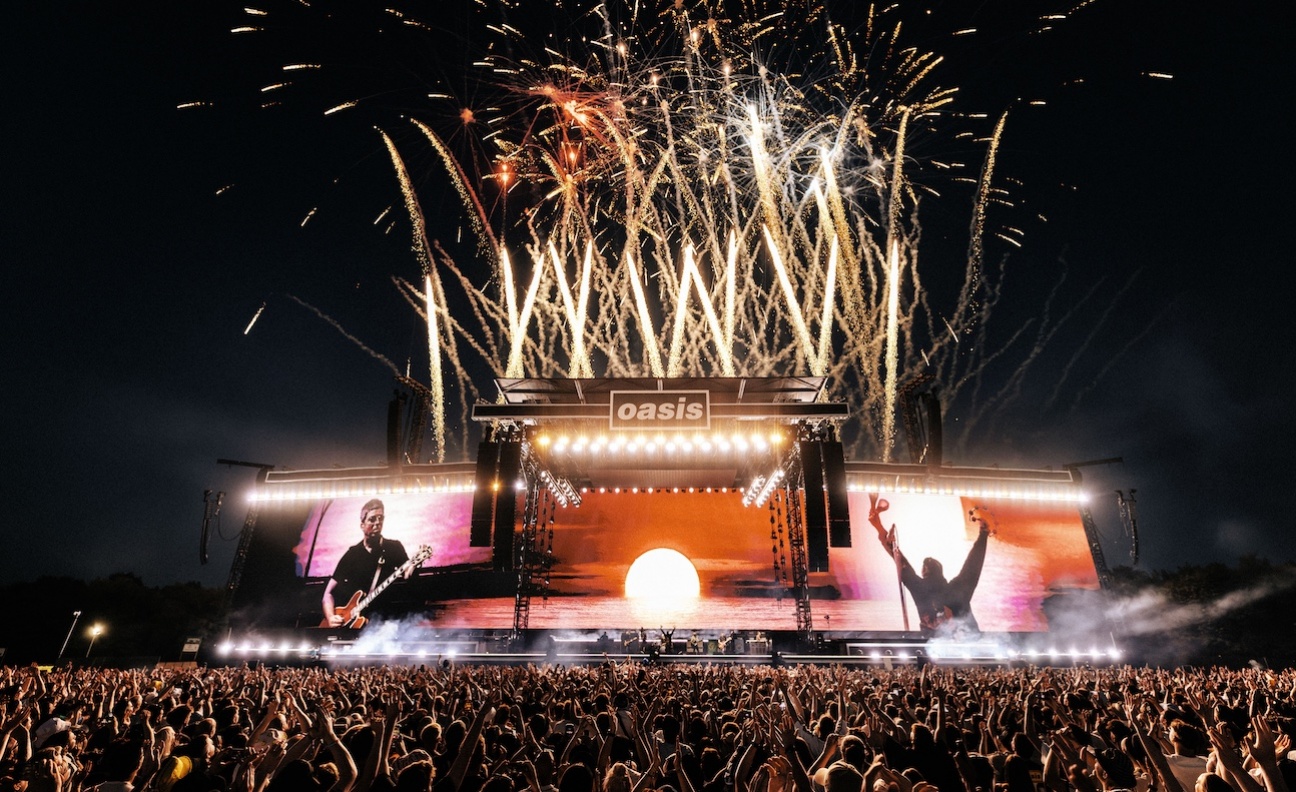
Oasis, Beyoncé, Dua Lipa, Coldplay, Lana Del Rey and Kendrick Lamar were among the artists who helped attract a record 24.7 million music tourists to concerts and festivals in the UK in 2025, according to new figures from UK Music.
As the UK experiences another summer of spectacular stadium shows from Harry Styles, BTS, Bad Bunny, Jay-Z and more, as well as major outdoor headline shows from bands including Wolf Alice and Kasabian, there are already encouraging signs for 2026.
The long-awaited reunion saw the Oasis Live ’25 Tour sell out stadiums, helping boost the total number of music tourists in the UK by 4.8% from 23.5m in 2024 to the new record of 24.7m last year.
Oasis are now tipped to return for stadium shows in 2027. The band are pushing for the Top 10 this week with unofficial England anthem Wonderwall, which would be its highest chart appearance in 30 years.
Those music tourists spent an all-time high of £11.2 billion in 2025 across the UK at major festivals and concerts like Glastonbury, Download, Reading, Boomtown and Wireless. The figure marks an 11.3% increase on the 2024 total spend of £10bn, according to the figures published by UK Music.
Of the 24.7m total number of UK visitors, 22.6m were music tourists from the UK – a 3.2% rise on the 2024 figure of 21.9m visitors.
A total of 2.1m visitors were overseas music tourists – soaring by 26.8% on the 2024 total of 1.6m. The increase was driven by the large number of overseas music fans heading to popular stadium shows in the UK – some of which were the only 2025 European dates for artists like Coldplay, Lana Del Rey and Oasis.
A series of Oasis gigs – including five at Manchester’s Heaton Park, seven at Wembley Stadium and two at Cardiff’s Principality Stadium - saw revenues surge across the UK. In the North West, music tourists’ spending rose 15.6% from £1.2bn in 2024 to £1.4bn in 2025. In the capital, music tourism spending increased by 27.4% from £2.7bn in 2024 to £3.4bn last year.
With the right support, we can help the UK music industry continue to boost the economy, create jobs and give music lovers some unforgettable experiences
Tom Kiehl
The 1975, Neil Young, Olivia Rodrigo and Charli XCX were among the big names at Glastonbury in 2025 ahead of this summer’s fallow year and helped boost music tourism outside London and the North West. Meanwhile, Ed Sheeran’s run of shows at Ipswich Town’s stadium saw a boost for East Anglia. Sam Fender’s tour included homecoming shows at St James’ Park.
South Korean artists Blackpink and Stray Kids played their own stadium headline shows in the UK, having both previously headlined British Summer Time in London’s Hyde Park, while Catfish & The Bottlemen stepped up to stadiums in 2025.
Music tourists supported 74,000 full-time equivalent jobs in the live music sector in 2025 – up 3% on the 2024 total of 71,760. This small increase reflects growth in both direct and indirect employment through the value chain supported by music tourism, particularly at stadium and arena level.
However, the report stressed that this is not necessarily reflective of employment trends across the live music sector, and particularly at grassroots level where employment levels were hit by higher operating costs and NI contributions.
Music tourism spending is made up of £5.7bn spent directly by music tourists attending concerts and festivals in the UK, including the cost of a ticket, on-site spend, travel, accommodation, and meals while travelling to events. A further £5.5bn was spent indirectly through the value chain, including costs such as fencing and security or a restaurant paying for ingredients.
In addition to the high-profile tours, 2025 saw major music awards ceremonies move beyond their usual London settings to new locations across the UK. In 2025, for the first time outside of London, the Mercury Prize was hosted in Newcastle, with a week-long programme of fringe events helping attract 8,000 visitors to the city and contributing a £1.4m boost to the North East’s regional economy. The MOBO Awards were also held in Newcastle in 2025.
RISING COSTS & GRASSROOTS UNDER PRESSURE
The report identified challenges for the UK music sector, including the rising cost of touring in the UK and overseas, the threat of more closures to smaller and grassroots music venues and the cost-of-living crisis facing many music fans.
Barriers to UK-EU touring post-Brexit continue to hamper the opportunities of artists seeking to build new fanbases in new markets. UK Music has campaigned for policymakers in the UK and the EU to work together and boost cultural cooperation. In 2025, UK Music co-founded the Cultural Exchange Coalition (CEC) to unite MPs and MEPs to remove the obstacles to touring the EU.
According to the Association of Independent Festivals, a total of 43 UK festivals were cancelled, postponed or shuttered entirely in 2025, following a record 78 festivals that did not proceed in 2024.
UK Music Chief Executive Tom Kiehl said: “The record 24.7 million music tourists who spent £11.2 billion to enjoy the experience of seeing their favourite acts live is a tribute to the 220,000 people who work across the UK music industry. The billions spent are a huge shot in the arm for towns and cities right across the UK and benefit hotels, restaurants, bars and transport firms and thousands of other businesses.
“However, the government must support music fans by delivering on their manifesto pledge to tackle the menace of ticket touts who charge exorbitant prices for resale tickets – squeezing the amount of cash fans have to spend on gig-going."
This is a nation of incredible live performance, with world-renowned venues to support it
Ian Murray
He added: “We need to see long overdue government and EU action to help UK performers and musicians touring the EU who have to deal with soaring costs and red tape post-Brexit.”
“We also need to see music’s grassroots protected and nurtured. This includes the artists, venues, festivals, studios and rehearsal rooms that are embedded in our local communities and who are essential to the future prosperity of our world-leading industry. We must make sure that policymakers recognise their vital economic and cultural value and deliver the support they need.
“With the right support, we can help the UK music industry continue to boost the economy, create jobs and give music lovers some unforgettable experiences.”
Creative Industries Minister Ian Murray said: “These record-breaking figures are a testament to what the UK's music industry does better than anywhere else in the world. Whether it's Oasis playing Heaton Park, or an up-and-coming artist finding their feet on a smaller stage like the Dublin Castle or The Troubadour, this is a nation of incredible live performance, with world-renowned venues to support it.
"That's why this government is committed to backing the entire music ecosystem in its upcoming plan for music: protecting fans from the exploitation of ticket touts, supporting the grassroots venues and studios that are the lifeblood of our future talent, and working to improve opportunities for UK artists to tour in Europe.”
PHOTO: Oasis at Heaton Park, Manchester (credit: Big Brother Recordings)
 FOLLOW