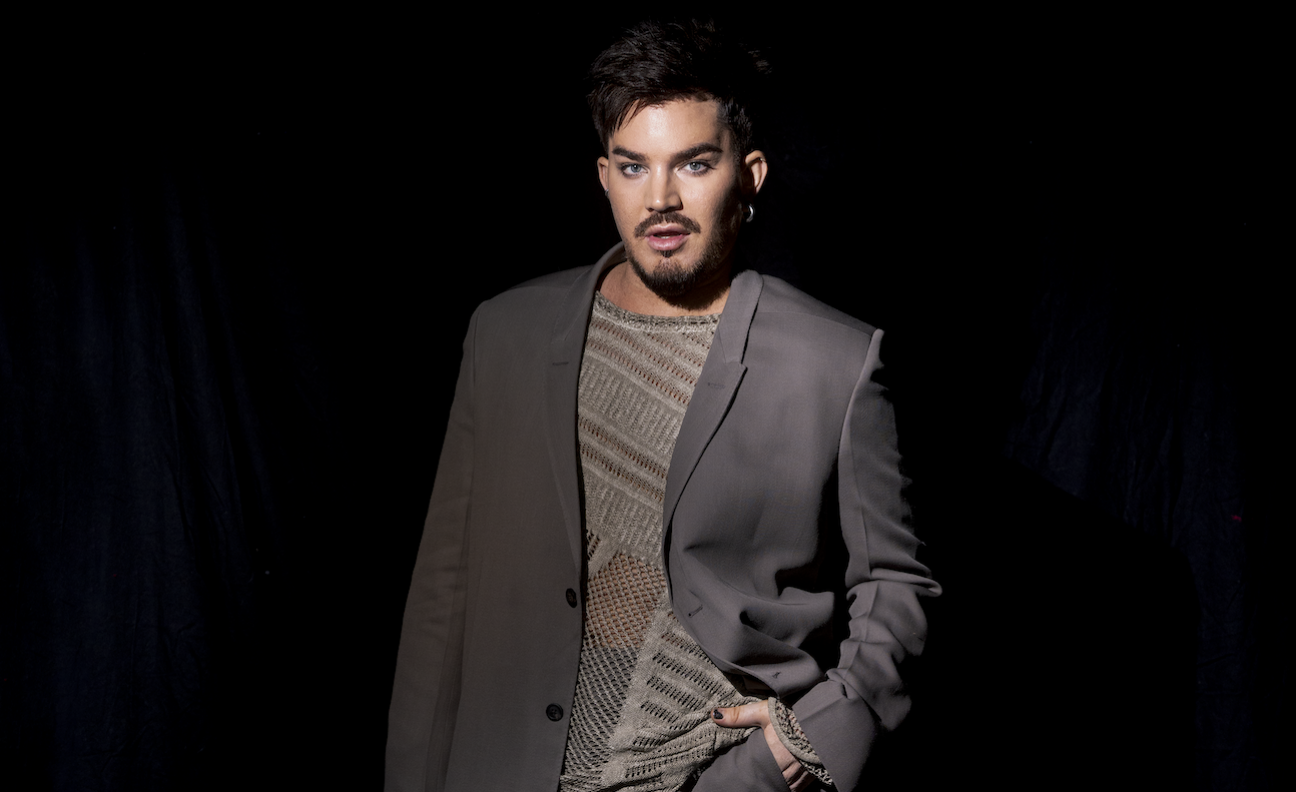
Pop powerhouse Adam Lambert is back with his first album of original material since 2020’s Velvet. Here, the US star talks about the industrial tone of Adam (released this Friday, July 10), how the streaming era has impacted industry gatekeeping, and why he decided to found his own record label…
INTERVIEW: Charlotte Krol
PHOTO: Dana Scruggs
Congratulations on Adam, your sixth album. How are you feeling about it?
“I'm really excited. I feel like I stumbled onto a sound that fit and feels a bit new, but one that also sounds like something my fans will have heard me do here and there. I moved from LA to New York and that's been a big inspiration – sonically and for storytelling. It made me want to create a more industrial, heavy, monolithic sound for some of the songs. It feels like a more dense, urban environment than the hills of Hollywood. It’s always been interesting for me because I like a lot of different genres. Figuring out a way to stitch them together with a sonic throughline isn't always the easiest thing to do, but I think we nailed it.”
Tell us about the team you assembled for this album…
“For this project, I hired an amazing A&R named Jess Thomas [head, A&R, 100 Management Inc]. In order for her to get an idea of what I wanted to make, I sent her a pretty extensive playlist, and it just became very clear to us what the album was supposed to be. And then bringing in Pete Nappi, who's the executive producer on this project. He’s somebody I’d worked with on a couple of songs over the years including Face, which was on my Afters EP, released a couple summers ago. That was the last track on the EP and the most industrial sounding one. The rest was much more house [music]-oriented. But I wanted to put something on there that was leading to the next thing.
“So I already had in my mind this was going to be the next direction to go in. Pete and I had shorthand by the point of making the album. I had great topline song ideas and then he was able to take them and launch them to the next level. He’s patient with me, too, and he’s always willing to try things. It's a really collaborative experience. The songwriters on this album were incredible as well. One of the main ones is Trey Campbell, who's an incredibly gifted writer. He also produced a lot of the vocals with me. It was helpful to have him there because he's really good at getting me to stop beating myself up or being a perfectionist. He's very tranquil, with a calming aura.”
Adam is released via your own label, More Is More, with distribution support from The Orchard. Why did you decide to leave the majors such as RCA behind and launch your own indie?
“I've been on a couple of different major labels and I did an indie label release, too. Financially, it’s more ideal. But I've experienced a lot of instances where I’ve felt like everyone had a different opinion of what I should be doing. That noise was starting to get really hard to tune out. And all the input on the creative and this and that over the years, even from the beginning, was a bit fear-based. I've worked hard and long enough to have earned the right to be in the creative driver's seat of my own art. That's where I'm happiest. Also, I've spent 17 years with a fan base and I have a feeling that I know them better than a lot of people who work at these labels. I know what the fans are going to respond to and what they're going to like.”
I've worked hard and long enough to have earned the right to be in the creative driver's seat of my own art
Adam Lambert
Looking back to your 2009 debut album, For Your Entertainment, up to now, what big changes have you seen in the music business?
“When I first started, being someone who is proudly and very visibly LGBTQ was kind of like the Wild West. I was dealing with – especially in America – being a mainstream pop artist doing the radio circuit where there weren't any other gay guys. It was exciting because, at least at that point, [my music was] semi uncharted, and it motivated me to prove a point, which was good. But also, on the flip side, there were a lot of obstacles, a lot of false starts and early endings. It definitely wasn't boring and it wasn't simple. I learned very quickly where the boundaries started to appear. It was a trial by fire in order to figure that out.
“The other point about my experience in the music industry over the past 15 to 17 years is that the whole system with the gatekeepers changed. Everything back then was built around radio and a handful of people made all the decisions about whether you got backing and got pushed.
"Now, obviously, we know that streaming gives a lot more power to the public. It seems to have flipped the table a bit. The numbers are so easily quantifiable now and they weren't in the beginning. It would take a month to do radio research on a song. When I started, you didn't get any numbers back. Now, everything is instant: you can see who's listening to it, see the demographics. And that's an amazing tool, but it's also become such a science. In the beginning, the mystery around it was almost nice. You're like, ‘Well, I don't know if it's gonna work or not!’ I'm not necessarily complaining, because it's also validating what the public wants. It's not a bad thing; it’s just very much a change.”
Do you have designs on chart success with Adam?
“I guess the idea is that I make music for myself but also for an audience to feel something, or to realise something, or to act as a type of medicine, or to be a ticket to some other sort of liberation – whatever the motivation is. The more people hear it, the more impact you're making. Of course, it’s validating. When something's popular, you feel like you've accomplished something. But I've also really gotten very clear and have a healthy perspective in recognising that that’s only one side of it. The quality of the work is really important. I ask myself, ‘Would I listen to this album?’”
Four live shows are in support of the new album, including at London’s Roundhouse on July 21. Can fans expect a longer tour at some point?
“Yeah, this promo album release tour is short and sweet. It’s four shows: LA, New York, London and Berlin. Ideally, I’d love to be able to put together a more expanded, fully realised tour, whether that's solo or with somebody else….
…with Queen? Is that blockbuster live touring project restarting?
“Look, if Queen wants to go back out again, I'm sure I’d love to do it. I just haven't heard of anything or there’s nothing planned. But I would love to get back out there and tour my album properly. That's a big reason for wanting to put out an album in the first place: to have new material to go perform live. I don't exactly know what it looks like right now, but the hope is there.”