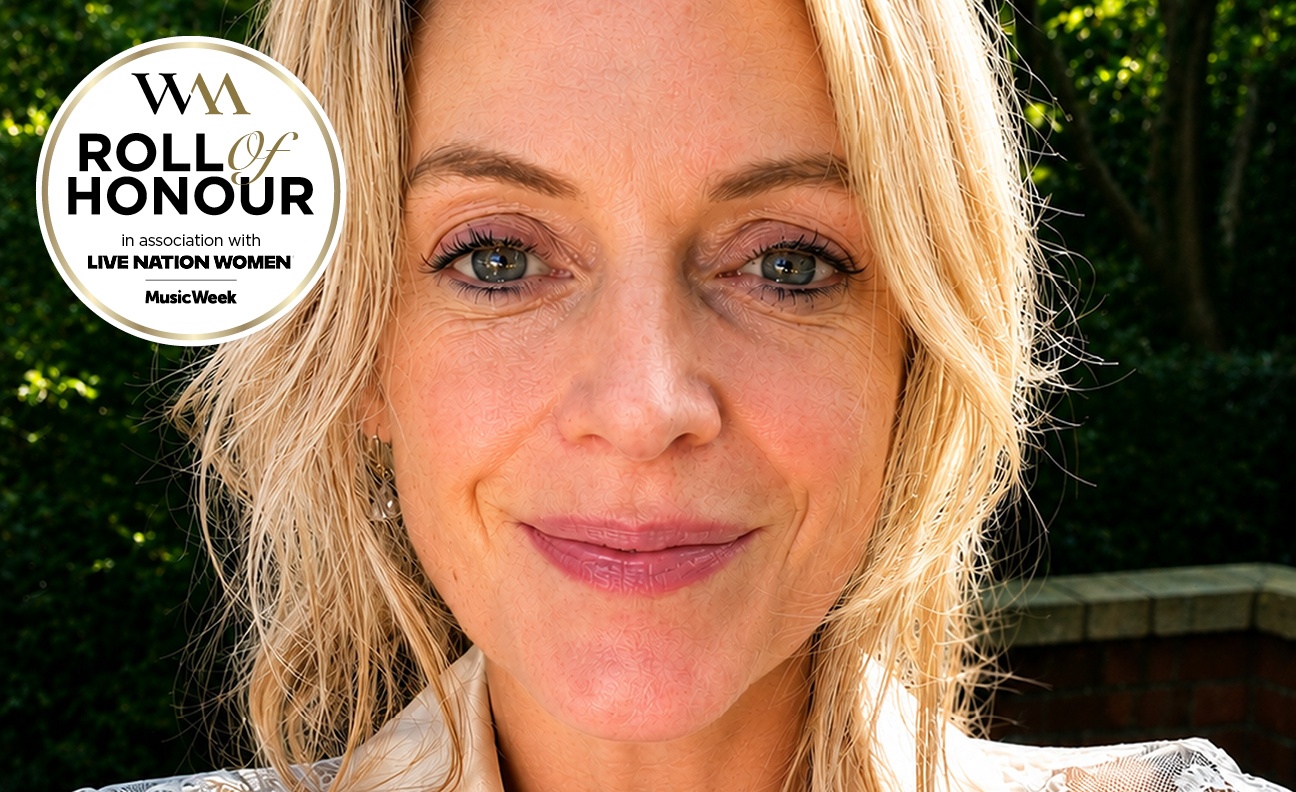
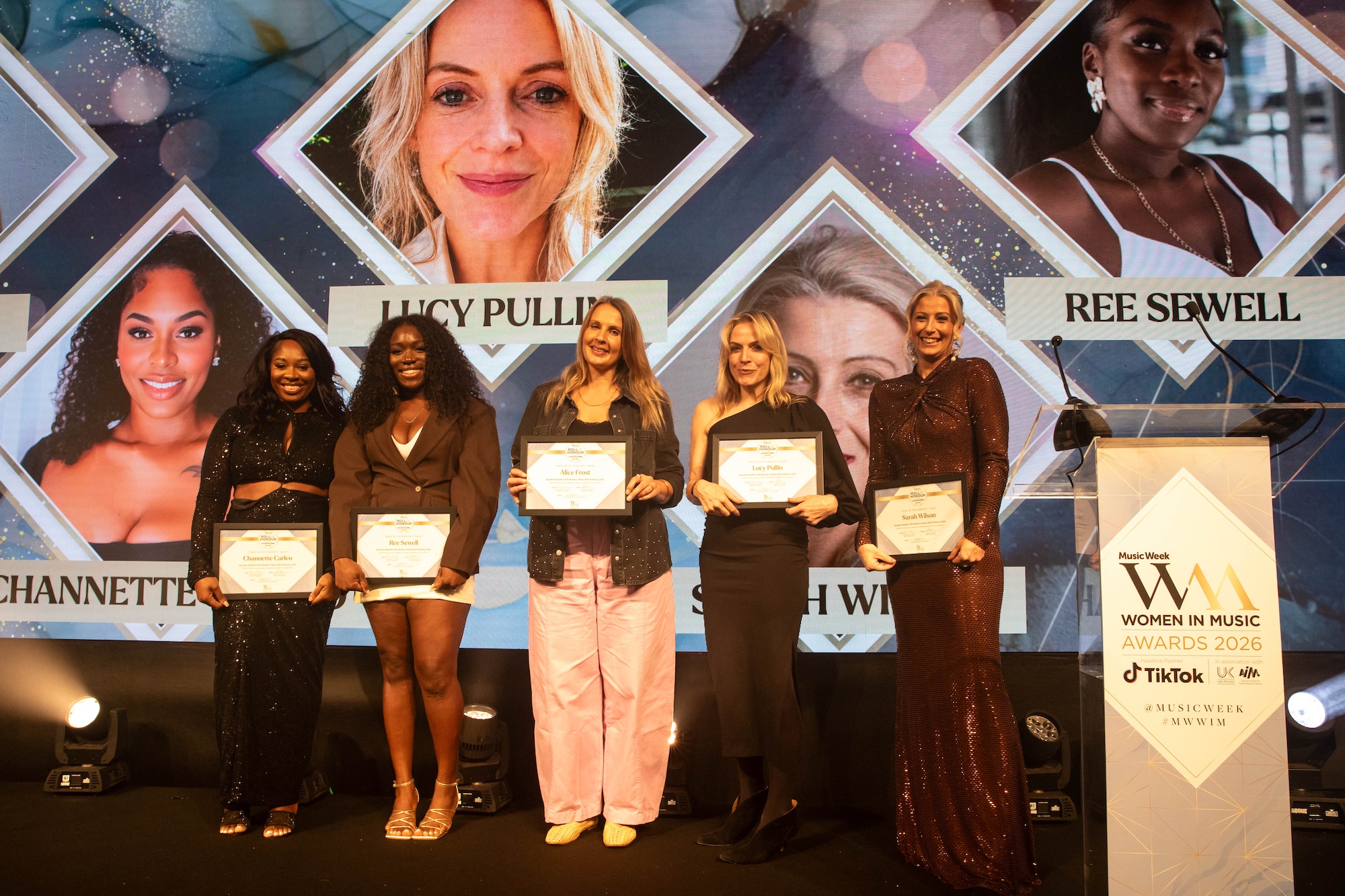
During the Music Week Women In Music Awards 2026, we inducted a host of trailblazing industry executives into the Roll Of Honour, in association with Live Nation Women.
They join a huge list of previous honourees, including some of the leading names from across the business like Kanya King, Emma Banks, Charisse Beaumont, Rebecca Allen, Stacey Tang, Laura Monks, Shani Gonzales and Mary Anne Hobbs, who have been selected since the awards began in 2014. The Roll Of Honour aims to shine a spotlight on the variety of individuals who are leading the charge in the music industry and consistently using their platforms to support women, or focus on empowerment and gender disparity.
Following the Women In Music Awards ceremony, Music Week is running Q&A interviews with all of this year’s Roll Of Honour inductees.
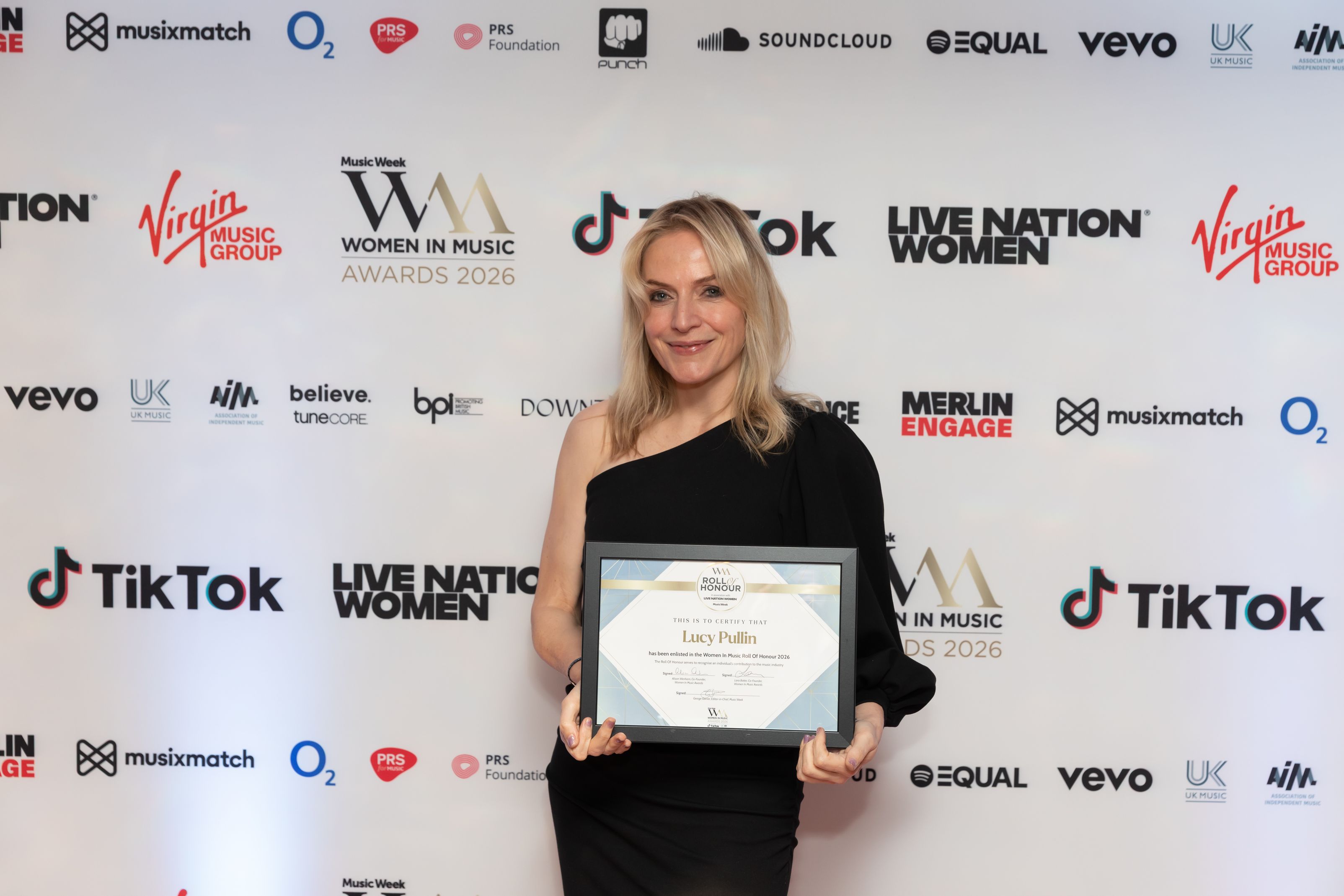
Lucy Pullin is senior music crossover agent at the global talent, entertainment, sports and advisory company, UTA, where she creates innovative opportunities for artists across film, television and the wider cultural landscape. An award-nominated executive producer, music supervisor, songwriter and creative executive with nearly two decades of experience spanning music, film and television, Pullin has built a reputation as a respected champion of artist-led storytelling and creative collaboration.
Originally from the Isle of Man, Pullin divided her childhood between there, Manila in the Philippines, and England, developing a global perspective that would later inform her work. Prior to joining UTA, she was co-founder and creative director of the independent production company IE:Entertainment, where she developed and executive produced acclaimed documentaries and music-led factual content. She began her career at the BBC before spending more than 15 years at the artist management company, IE:Music, working with internationally renowned artists including Robbie Williams and Will Young.
As an executive producer and production company partner, Pullin has been behind some of the most celebrated music documentaries of recent years. She served as executive producer on Nothing Compares (2022), the Emmy, BIFA and Grierson Award-nominated documentary exploring the life and legacy of Sinéad O'Connor, which was widely praised for its distinctive feminist perspective and powerful storytelling.
Pullin also developed Will Young: Losing My Twin Rupert, the RTS and Grierson Award-nominated Channel 4 documentary examining grief, loss and mental health, and developed The Yardbirds for Sky Arts, a documentary about the seminal British band. She was executive producer and music supervisor on Nostalgie, the BAFTA-nominated and IFTA-winning short film directed by Kathryn Ferguson, written by Stacey Gregg, and featuring an original score by Bastille frontman Dan Smith.
At UTA, Pullin works across one of the industry's most diverse and influential rosters, creating opportunities that connect artists with film, television, documentary, brand and cultural platforms. She is proud to collaborate with an outstanding range of internationally recognised talent, helping artists expand their creative ambitions beyond traditional music industry boundaries while championing meaningful, artist-led storytelling.
A passionate advocate for creative talent and artist rights, Pullin was one of the original female board directors of the Featured Artists Coalition (FAC), helping advance transparency, fairness and artist empowerment across the music industry. She consistently champions female creatives and supports the development of new voices across music, film and television. As an accomplished songwriter and vocalist, Pullin has four Beatport Trance No.1 records to her name. She is also a proud supporter of The Cat’s Mother network and Nordoff And Robbins. Away from her professional achievements, Pullin is a proud mother to her 13-year-old son, Camber, and can often be found in the company of her beloved French Bulldog, Grogu.
How do you feel about joining the Roll Of Honour?
“Excited and energised by it. I’ve spent my career around extraordinary women who made things happen when nobody was particularly interested in giving them permission. To be recognised alongside women I admire is incredibly special. I’m not always good at stopping to take things in, but this is worth pausing for, so I’m allowing myself to stop and enjoy it.”
Looking back, how do you reflect on your early years getting into the industry?
“I had absolute determination despite feeling intimidated at times. I grew up on the Isle of Man, I’m Manx, and I had zero contacts in music to find a way in. However, I knew from a very early age what I was going to do – and that was music. It’s what I loved, what I was good at, and it was helping me understand my life from a very early age. I acknowledged when I was very young that I was musical and creative – and nothing was going to stop me. The industry gave me extraordinary friendships, adventures and music. It was also more male and far less accountable. Abuses of power were normalised because the people with the power got to decide what normal was. Both things can be true. For much of my career, I wasn’t fearless. I spent years assuming everyone else had been issued with some Teflon confidence that I hadn’t. However, you don’t have to feel invincible to be brave. The industry has broken my heart more than once, but like Sia sang, ‘I have an elastic heart,’ and it’s a muscle I’m working on.”
Did you have a mentor at that stage?
“I realise when looking back that none of us land here alone. I didn’t have one official mentor, but I learned by watching brilliant people, taking what resonated and working out what kind of person I wanted to be, and how I didn’t want to behave. Josie Cliff [ex-Robbie Williams manager] showed me the extraordinary lengths you sometimes have to go to as an artist manager in a male world. She was an exceptional manager through a very demanding period, and an important mentor to me. Tim Clark [co-founder, IE:Music] and David Enthoven [co-founder, IE:Music] taught me to fight not only for artists’ rights, but also about manners, generosity and putting talent at the centre of every decision. They led a very female team, and I’m incredibly proud that many of those women remain among my dearest friends, decades later.My family has also influenced me enormously. My parents, stepmother and wider family are all creative. My older sister has an extraordinary sense of personal responsibility and moral clarity. If she says she’s going to show up, she shows up. Watching the life she has built has always inspired me, and she is one of the people whose judgement I trust most. Artists, writers, directors and brilliant producers are the ones that really inspire me, though. I’m incredibly proud of my enduring relationships with Kathryn Ferguson, Will Young, Marion Pilowsky [film producer], Helen Flint [CEO, Little Island Productions], Craig Armstrong [artist/composer], Lene Bausager [film producer], and John Reynolds and Tom Watson [music producers]. There’s a form of mentorship in all those relationships. Some of the most valuable lessons have also come from people who challenged me, frightened me or disappointed me, and occasionally left me thinking, ‘I never want to lead like that or leave people feeling like that.’”
How do you feel your role at UTA specifically complements that vast, creative and commercial experience of your preceding career roles?
“It feels as though the different strands of my career have finally come together and formed their own band – or should we say brand! I run music crossover at UTA in London, helping artists take ideas beyond music and into film, television and other creative worlds. It feels like a natural progression. As an artist myself who then joined the BBC, moved into management, became involved with the FAC and eventually co-founded IE: Entertainment developing film and television projects around artists and music. For decades, I’ve moved between artists, managers, rights, deals, production and audiences – understanding the creative ambition, but also what it takes to actually make an idea happen. That experience is useful at UTA because I understand the different sides of the table: being the artist with an idea, the manager trying to protect it, the producer figuring out how to make it work, and the executive deciding whether to back it.For me, crossover isn’t about putting a famous musician on screen because they’re famous. The best work comes from something real – an artist’s personality, interests or story – and gives us a chance to see something we haven’t seen before. What I love about UTA and Curtis Brown Group (which UTA acquired) is being surrounded by people who know their worlds inside-out. I can move between music, film and television and bring the right people together when an idea calls for it. I’m constantly learning from the people around me – particularly David Zedeck [global head of music], Sam Kirby Yoh [partner & co-head of global music], and colleagues across the agency. They challenge my thinking and make me think bigger.”
Representation isn’t just about getting women into the room; it’s about who has power once they’re there, who controls the money, owns the rights, gets heard and gets a second chance
Lucy Pullin, UTA
How important is it to you to lift up female artists and creatives in particular? Is it something you set out consciously to do – and is there enough female representation on the business side of the live sector?
“It’s very important to me, but my instinct has always been to back brilliant women in music and the creative industries. Hire them. Commission them. Pay them properly. Give them opportunities, protect their creative voice and help them build longevity. The industry has changed enormously, but there is still a significant imbalance, particularly in the business and leadership side of music. Representation isn’t just about getting women into the room; it’s about who has power once they’re there, who controls the money, owns the rights, gets heard and gets a second chance. I’m particularly conscious of the additional pressures women face around appearance, age, confidence and how they’re expected to behave.I want women to feel entitled to take up space, lead, make the work and use their voices without having to conform to somebody else’s idea of who they should be. But ultimately and truthfully, regardless of gender, I’m interested in talent, longevity and giving people the opportunity to do their best work. That’s true of artists and creatives of every generation and background. I know, 100%, that my best work is still ahead of me. I’m more experienced, more creative, braver and far less interested in wasting time on things that don’t matter. The industry can be very interested in youth and occasionally confuse newness with relevance.”
FAC is another cog in your career wheel. Why did you decide to join the board there so early on?
“Because the principle was blindingly obvious: artists needed a voice in the rooms where decisions about their livelihoods were being made. The music business has always been very good at loving artists while constructing systems they barely understand: rights, revenue, contracts, technology, power.Artists needed to become better at representing their own interests. The FAC was an attempt to address that imbalance and give artists a collective voice. It could be a difficult board. Imagine a collection of lead singers trying to agree! But we made enormous progress, and I remain very proud of the work we did.The FAC was artist-led, intelligent and prepared to ask awkward questions. I like awkward questions. They are often where progress starts.It also gave me one of the most exciting moments in my life: meeting my hero George Michael, courtesy of [his friend and songwriting partner, David Austin] at Air Studios and hearing him talk one to one about his own experience of the business and artist rights. One of those ‘pinch me’ moments.”
Your colleagues and peers remark how passionate and creative you are, while you retain sharp commercial acumen. How do you strike that balance between the heart and the head?
“I always lead with the heart and the instinct. The head comes afterwards. I’m inspired when the heart feels something. That’s usually my first test. I’m drawn to work that feels honest, original and emotionally resonant, something with a point of view, rather than something designed simply to be successful or ‘cool’. I like heart-forward work. Artists who have something they genuinely need to say, and the courage to say it. The projects I’ll go up the hill for have something beating at the heart of them: an idea, an emotion or a story that needs telling.I don’t separate creativity and commerce. Great creative work has value, and understanding that value protects it. Once the heart has said yes, I use my head to work out how to protect the idea, find the right partners and make it viable. Leadership requires the same balance. Invest in your team. Read the room. Keep your ego in check. Stand up for yourself but use good grace where you can. Tim Clark and David Enthoven taught me that manners matter. I watched them walk away from both established and emerging artists when the behaviour became unacceptable. No manners – no management.I’ve seen board members turn on one another. Succession, King Lear… it’s as old as the hills. Greed, ego and power can do extraordinary things to people. Keep your head, keep your integrity and know when not to join in.”
What’s your biggest achievement so far?
“My proudest achievement is being a parent to my beautiful, kind and loving son, Camber. Everything else sits alongside that. Professionally, I’m most proud that I’ve continued to create while helping other creators realise their ideas. Developing and executive producing Nothing Compares, the award-winning documentary about Sinéad O’Connor, is a particular highlight. Working with Kathryn Ferguson, then a debut feature director, was extraordinary. We shared a belief in the film and in telling Sinéad’s story with honesty and complexity.The awards it gathered are wonderful, but what stays with me is watching audiences connect with her courage, vulnerability and truth. That is the work I care about – work that moves people, starts conversations and leaves something behind. I’m also incredibly proud of the enduring relationships I’ve built with artists like Craig Armstrong and Will Young, and of more recent work with Take That at UTA – wonderfully full circle after coming from Robbie Williams’ management team. I’ve reinvented myself several times without losing the thread: artist, songwriter, manager, producer, creative director, artists’ rights campaigner and now agent. I’ve continued to make my own work while creating opportunities for other people to make theirs. For me, that is the real achievement: to keep creating, support other creators, give people the confidence to take risks, and still feel excited about what comes next.”
What advice would you offer young women about enjoying a successful career in music?
“Get stuck in and don’t wait for permission. Say yes to things slightly before you feel qualified to do them. Some of the best opportunities come from having a go, making yourself useful and showing people what you can contribute.If you mess up, hold your hands up quickly and honestly. Believe in yourself, especially on the hideous days. There will always be people who think you’re the wrong person for the job. Keep going anyway. Talk about ideas and the work. Be wary of rooms where the main currency is talking about other people. Nothing good gets built there. Learn the money and the business. Read the contract. Ask the supposedly stupid question. Don’t pull the ladder up behind you. Never accept somebody else’s assessment of your worth. Find another table or build your own bloody table. Don’t think you have to be just one thing. A creative career can evolve in ways you could never have planned. Take it from the girl who sang at 3am on a speaker stack with Armin van Buuren last year to 20,000 people. Stay curious. Have a life. Love people. Go home. Most importantly, never let anyone persuade you that your most interesting work is behind you.”
And what’s the best advice you’ve ever been given that you could share with us?
“To listen. Listen to people who know more than you. Listen to your instincts. Listen to what isn’t being said. Read the room. And know when to leave it.Keep your ego in balance. Stay curious. You don’t have to be the cleverest person in the room – you just need to pay attention. How you behave when you have power tells people far more about you than how you behave when you need something.”
Is there a young woman you’d like to shout out who you think is a rising star in the industry?
“There are several: Kayleigh Lawrence, Dani Simmonett, Charlotte Chow and Emily Rhodes at UTA. And my assistant, Livvy Rosenberg, is a brilliant part of my working life. Livvy is a can-doer. She reminds me of myself when I was starting out. I love her energy and drive. She gets stuck in, works things out and makes things happen. That instinct is difficult to teach, and I’m excited to see where she goes. Pay attention to who speaks up for you when you’re not in the room. I’m lucky to work with people I respect, and I’m especially proud of the younger people coming through. People took chances on me when I was young. Part of the deal now is doing the same for others. If you’ve learned where some of the holes in the road are, at least point them out to the person walking behind you.”
Similarly, is there a young woman artist whose music you’re enjoying right now or excited about?
“Gigi Moss. She has a beautiful, soulful voice but more importantly, you believe her. Tilda Maplestone is similarly authentic as an artist. I’m drawn to artists where you can hear the truth in the work. You can manufacture a lot in this business, but you can’t manufacture connection. Fliss excites me for the same reason: individuality. I’m interested in artists with something unmistakably their own, because that’s where the really interesting work begins.”
Finally, what’s your biggest lesson from 2026 so far?
“Tell people you love them. Make the thing. Say yes when you mean yes. Walk away when you mean no. Equity is the best therapy – it’s painted on the Park Stage at Glastonbury, my favourite stage in the world. We’re here. We don’t know for how long. So love people properly, do the work that matters to you, and don’t waste too much time on anything that doesn’t. And try to have some fun and pleasure. Life is serious enough without us making it more so.”