Last year, MUSEXPO founder Sat Bisla told Music Week that India had become a “dominant force" in the music industry in the last few years, before observing that it "hasn’t even reached its pinnacle yet."
Recent headlines only serve to prove his point.
Just last week, during UMG’s recent earnings call, the major revealed plans for a windowing streaming initiative for paid subscribers in India (domestic and international artists) from late August – a move which only applies to established artists, not those emerging acts still building an audience.
“Tailored to the diverse and dynamic Indian market, we’ve also built a multi-label system to cater to many different genre and dialects,” said Sir Lucian Grainge. "We’ve also expanded our capabilities through strategic investments and acquisitions, across artist management, live entertainment, film and television and regional repertoire. Now, we’re taking the next step.”
This, too, comes on the back of PPL India being granted registration as a copyright society by the government of India, and Kobalt agreeing a new partnership with Madverse music, which supports more than 150,000 independent artists and labels across India and South Asia.
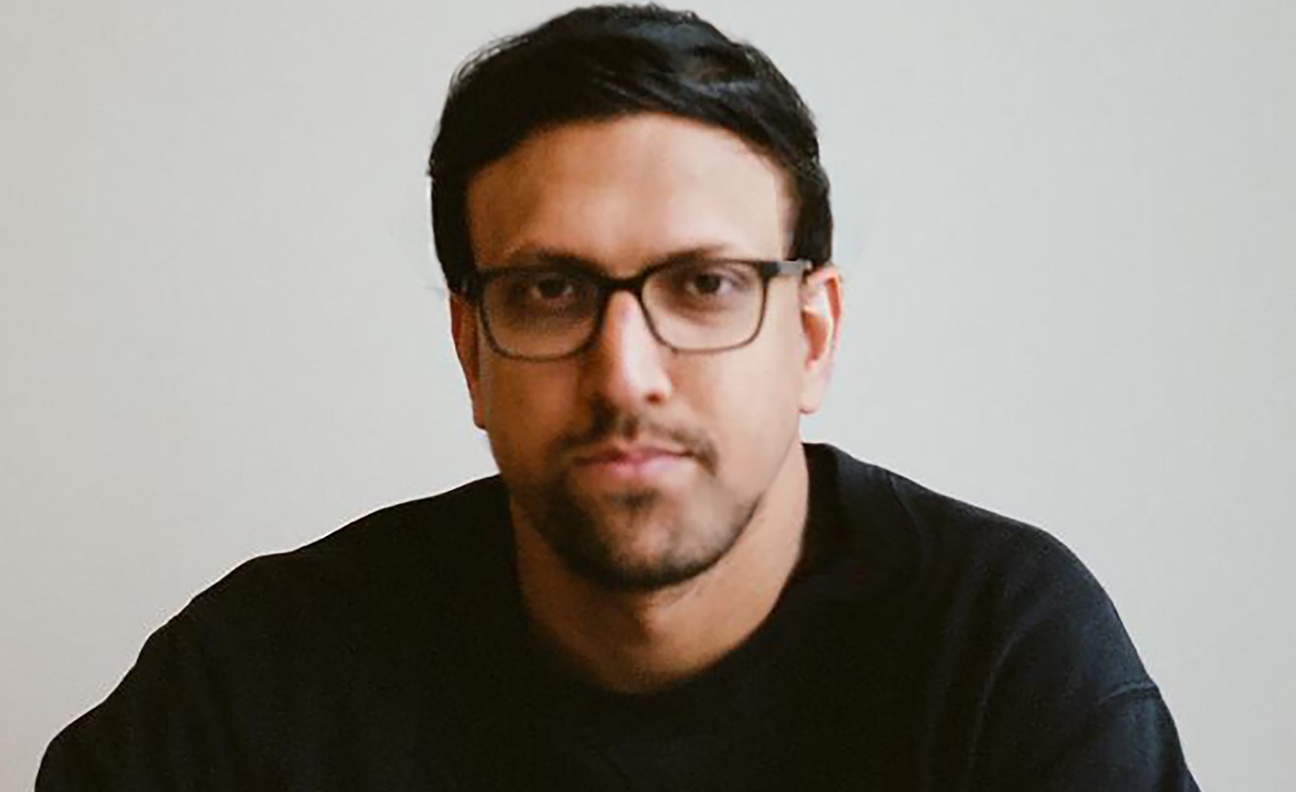
With all of this in the offing and more, here Jonathan Badyal – a partner at Trafalgar Strategy, board member for the Manchester United Foundation and the Black Country Living Museum, and former Universal Music UK director of communications – delivers an Op-Ed detailing why India can no longer be an "optional territory" for the UKs' creative sectors...
India and the UK have a long shared history. A complicated one which must never be forgotten.
As a proud British Indian, it’s a journey I have been exploring in recent years. The good, the bad, and everything in between. I think back 25 years ago when I was in school, the perspective on India was not really a positive one. Indian culture was not in the zeitgeist.
And then seemingly out of nowhere, Bend It Like Beckham hit the big screen. I will never forget it. It was the first DVD I owned, and it was a gift from my nan. And suddenly, our culture was thrust into the mainstream. It felt for many of us like the first time our culture was visible. The food, the outfits, the humour, and of course, the music. To that point, I think I had only heard a dhol beat during the seemingly never-ending Indian wedding seasons.
The soundtrack for that film remains legendary in the minds of many British Asians. It should have been the catalyst for our culture knocking on the door of the mainstream. But for reasons I still can't quite work out, this didn't happen. Investment in our stories never materialised. Our artists were not signed. Our designers were not stocked.
But fast forward to today, and things are changing rapidly. It was a senior Indian Government diplomat who said to me: young Indians globally are now walking with their heads held high, with a quiet confidence in their roots to a growing superpower. And he was absolutely right.
Almost 80 years on from India’s independence, the relationship between the two countries has arguably never been stronger. This was underlined recently by the UK-India Comprehensive Economic and Trade Agreement coming into force which is essentially easing the path to greater commercial opportunities between the two nations.
And the creative industries have a significant part to play.
Ask an Indian for their UK cultural reference points, and you will often hear the Premier League, Shakespeare, The Beatles, our universities and, of course, cricket. There’s an open door for UK IP which presents a significant commercial opportunity for the UK’s creative industries.
Most industry executives will talk about the rise of Hallyu, the Korean wave. You can't really have missed it. And it’s not just music. Even British museums have given it significant exposure through major exhibitions. And this was the result of a carefully planned, long-term strategy pursued by successive South Korean governments. Billions of pounds were invested, trade and diplomatic officials were dispatched, while a coherent government narrative positioning creativity as a form of soft power was rolled out globally.
But the Indian opportunity, on paper, has the potential to outstrip Korea. With a population of 1.4 billion, an economy growing at nearly 7%, and nearly one billion smartphones, it’s time for the UK’s creative industries to take India seriously. To put that population into context: India is larger than the combined populations of Europe, the US, and Nigeria.
And the good news? There is still time to be part of the India story.
A fascinating Economist piece, back in 2022, argued that US and UK culture would remain dominant for years to come. It turns out that the opposite has happened. A teenager in South London can just as easily listen to a rapper from Mumbai as they can one from Manchester. The analysis correctly points out that we are rapidly moving from a monoculture to true multipolarity. And this is for two reasons: developing countries getting richer means more content production, and the rapid growth in internet adoption. And here's where India has significant advantages, particularly when it comes to UK/India collaboration. Those one billion smartphones are powered by some of the cheapest data plans in the world. And with a low price point comes increased accessibility. Even in the deepest villages of India, everyone is watching YouTube. According to Statista, India has the world’s largest YouTube audience by a considerable margin. Some 518 million Indian users compared to 259 million in the US and 57 million in the UK. India is also Instagram's biggest market with 481 million users, more than double the users in the US and UK combined.
Add to this the fact that nearly 145 million people in India speak English – more than double the population of England – and the export opportunity becomes crystal clear.
We are already starting to see organisations make their moves into South Asian culture broadly, and this is increasingly reflected in the UK's cultural tapestry. From a growing South Asian presence at Glastonbury to the British Museum’s Ancient India exhibition, and the Barbican's longstanding partnership with Darbar Festival – one of the world's leading celebrations of Indian classical music. There was Raf Saperra selling out Somerset House, Island Record’s partnership with Dialled In, the stunning AR Rahman x Rushil Ranjan show at the Royal Albert Hall, and fashion label HARRI dominating London Fashion Week. And still to come, Indhu Rubasingham, director of the National Theatre, will unveil a new adaptation of The Jungle Book by celebrated Indian playwright Anupama Chandrasekhar, while Chila Kumari Singh Burman is set to reopen Tate Liverpool, both of which are expected to command significant attention.
And it has been hard to miss the noise around Ed Sheeran and Coldplay's Indian appearances and collaborations. Max Richter, Fred Again and Foo Fighters are also slated to make historic performances in India in the coming months.
The good news? There is still time to be part of the India story
Jonathan Badyal, Trafalgar Strategy
Indian culture and the Indian market are not just having a moment in the UK; in fact, we're seeing clear signs of complete cultural realignment globally, and India is about to enter the driving seat.
And this cultural realignment is being recognised at the very highest levels in India and the UK. Indeed, the past year has probably been the most consequential year in UK/India relations in recent times, a year shaped by reciprocal prime ministerial visits and the signing of the much-anticipated Free Trade Agreement.
This followed last year's inaugural WAVES Summit in India, billed as a "key forum for promoting discussions, collaboration, and innovation in the media and entertainment industry“. The Indian Prime Minister spoke about the dawn of India's 'Orange Economy' with "content, creativity, and culture" as its core pillars.
He went on to say, "India's creative economy has the potential to contribute even more to the GDP in the coming years. Today, India is becoming a global hub for film production, digital content, gaming, fashion, and music. There are numerous opportunities in the live concert-related industries as well. Today, the global animation market is worth more than 430 billion dollars, and it is expected to double. This presents a huge opportunity for India's animation and graphic industry."
The speech was a warm invitation to all the content companies around the world, and the message could not have been clearer: India is open for cultural business.
Also speaking at the Summit was the UK Department of Culture, Media and Sport Secretary of State, Lisa Nandy. She spoke passionately about the shared histories of India/UK and the importance of the diaspora: "Many of you here will know that there are nearly two million people of Indian descent living in the UK, and they are the living, breathing bridge between our two nations. And while Britain undoubtedly has shaped India, it is equally true that India has profoundly shaped Britain, bringing an energy, a resilience, and a richness that has had an immeasurable impact on British society, culture, and identity. From the biggest British band in history, The Beatles, to Great British films like Bend It Like Beckham, India has helped to define what it means to be British. We deeply value this rich contribution to our national life and to our culture."
All of this raises a central question: are our creative companies and arts institutions ready to do business with India? Because India is no longer watching from the sidelines – it is setting the tempo. You'd expect so, but there will likely need to be some strategic shifts, not least in hiring, particularly on boards and at graduate level. The economist, Shruti Rajagopalan, pulls no punches in her 'why India' analysis: "This is no longer about diversity but about survival… this generation of young Indians will be the largest consumer and labour source in the knowledge and network goods economy."
At Trafalgar Strategy, our global advisory firm, we recently announced our expansion into India with the appointments of Jag Khangura MVO (HM The King’s former protection team leader) to our advisory board and respected consultant Ani Kaprekar as senior counsel – India. We are often asked by companies and artists, ‘Where do we start with India?’ I always give the same answer. Go to India! Get on a plane and see for yourselves. Meet people and build relationships. The rest will follow. More flights to India are available than ever before, and the visa process is getting quicker all the time. Nobody comes back from India without some kind of desire to collaborate. And I think that is probably the most instructive thing I can share today.
To conclude, the question is not whether India matters to the UK’s creative industries, but how quickly institutions adapt to that reality. Markets of this scale do not wait to be discovered; they reward those who show up early, invest seriously, and build relationships that last. For artists and creative companies with global ambition, India is no longer an optional territory. It is a core pillar of any credible growth strategy.
Words: Jonathan Badyal (Trafalgar Strategy, Manchester United Foundation, Black Country Living Museum)