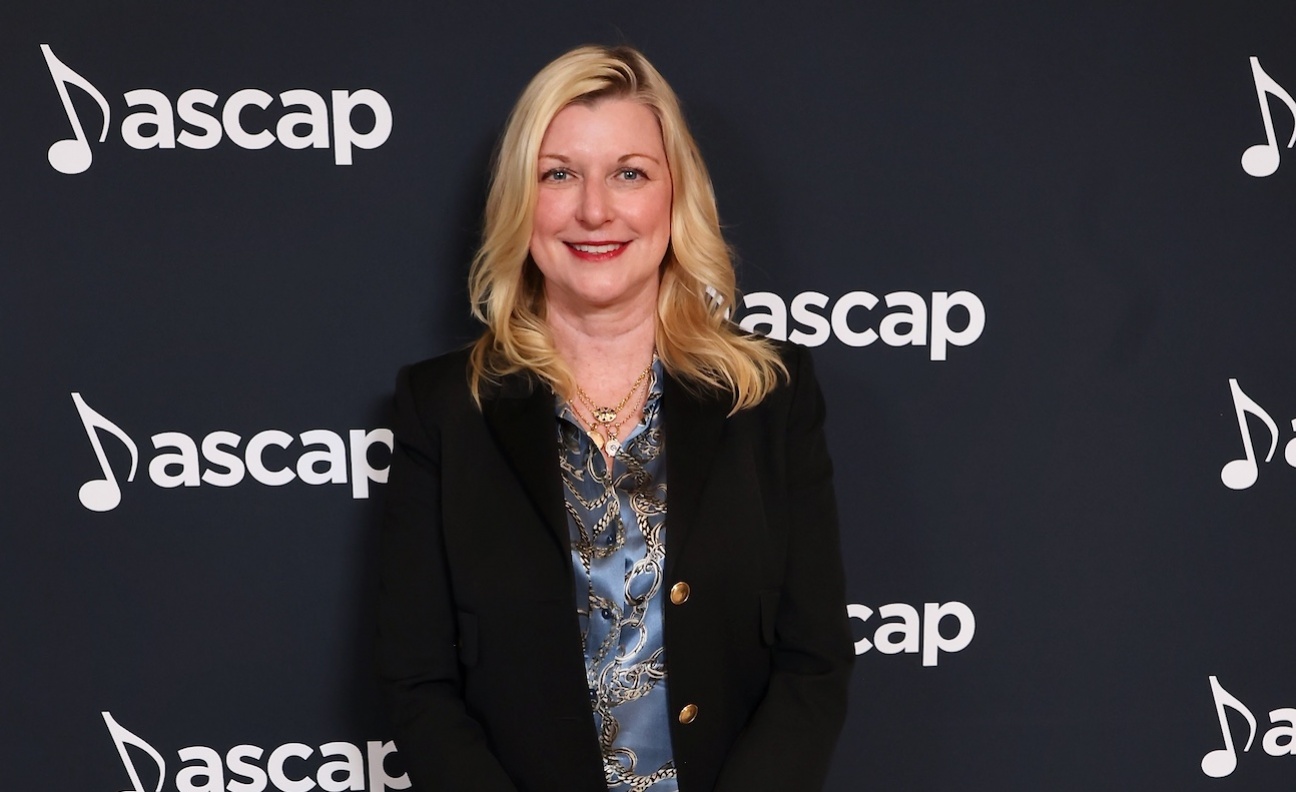
Elizabeth Matthews marked her first decade as chief executive of ASCAP (American Society of Authors, Composers and Publishers) in 2025 – a year in which the organisation reported record revenue of $1.9 billion.
The leading performance rights organisation is also at the forefront of tackling the challenge from AI that is confronting songwriters and rights-holders. As a US non-profit PRO, its revenue collections operation is complemented by political advocacy work in Washington at a time when lawmakers are scrutinising AI and its impact on copyright law.
ASCAP represents over one million songwriters, composers, lyricists and music publishers across every genre. As the organisation noted last summer in a submission to a Senate Committee investigating the issues surrounding AI, "ASCAP has protected the value and the dignity of our members’ music for more than a century of technological innovation, and we’ll continue to do so as AI evolves."
“The Senate Judiciary Subcommittee hearing affirmed what ASCAP has always known: American copyright law does not discourage innovation – it fuels it," said Matthews at the time. "The unauthorised use of copyrighted works to train generative AI models fundamentally undermines the vibrant US creative economy, which generates over a trillion dollars each year and supports the livelihoods of millions of creators.”
Here, in an extract from Elizabeth Matthews’ interview in the latest edition of Music Week, the ASCAP CEO sets out the organisation's approach to dealing with the rapid growth of GenAI and acknowledges the opportunities the new technology brings to music creators…
Are you working more closely with other societies now in light of the rise of AI as an issue for rights-holders?
“We have a long history of working with other societies, because we're 112 years old. In view of what's been going on with the digital inflection point, and now, of course, coupled with AI, it's never really been more important to work with other societies around the globe. We have membership on the executive board of CISAC, which is a little bit like the United Nations of all these collectives – they're celebrating their 100th anniversary. So we work with almost all of the CMOs [collective management organisations] through CISAC, and then we have a special relationship now with SACEM [in France].”
Will you collaborate closely on addressing challenges from AI?
“Absolutely, and it doesn't just stop at the collectives, it requires cooperation with labels, with publishers, and to the extent we can with DSPs, just so we can protect the rights of creators ultimately, and protect the value of music, whether it's on the sound recording side or composition. So we tend to do a lot of that advocacy work through entities like CISAC, but there's also a lot of campaigns in the United States, the Human Artistry Campaign, for example, and legislative advocacy work we do on our own at ASCAP. That's also something quite unique about our not-for-profit model. Because we spend a lot of time and attention advocating for the rights of creators, we’re in Washington quite frequently.”
It requires cooperation with labels, publishers and DSPs, just so we can protect the rights of creators ultimately, and protect the value of music
Elizabeth Matthews
How are you supporting your members in this area?
“I would say not all members, but many of our members are using AI to some degree to help them and assist them in the creative process. I don't think there's anywhere in the music space that's not trying to [take action] on monetising AI works, whether it's 100% AI works or partial AI works. At ASCAP in particular, we’re heavily invested in pushing forward on infringement litigation. In the United States, there's a lot of litigation pending on the training aspect of AI; when people have inappropriately trained [AI] on musical works, they've done so without disclosure, they've done so without consent, they're not paying anything for it. They like to argue that that's an exception to the copyright law called fair use, and we, of course, argue that that's theft.”
As AI tools and features become incorporated into platforms, is there a concern that this could replace songwriters in any way?
“I don't think that you can replace songwriters, but the tools are what's most interesting, in the sense that they can allow you to be more efficient in your creative process. That's what a lot of the tools do for the creative process. It's just going to take time and some level of patience, and certainly bullish advocacy on our part, to ensure that there's a fair balance. When you talk to young songwriters, they’re not really scared of this at all – just embrace the technology, adapt and come along for the ride.”
How is ASCAP working with AI to streamline operations?
“I think of it as almost a 360 view of where can we work with outside vendors to make our internal processes more efficient? Meaning that if we can take out manual requirements of intervention and automate something, then that only brings down our overheads and that would allow us to get more value back to the creative community. We're doing a lot of work on that basis. We've run numerous external symposiums for our members. We're also running boot camps internally for ASCAP employees teaching people how to use AI. And then we’re thinking about ingestion processes of how do you register your copyrights? How are we going to figure out disclosure of the use of AI?”
How will you address disclosure of the use of AI in musical works being registered?
“That requires a lot of consortium-type thinking with lots of other stakeholders. BMI, ASCAP and SOCAN went out together to the marketplace and said, don't register 100% [AI] works, it's okay to register partial, because there's a lot of risk of [streaming] fraud related to AI that I think we all need to work on together in order to mitigate creators being taken advantage of. It could implicate all of our revenue bases in very inequitable ways.”
Subscribers can read the full Music Week interview with Elizabeth Matthews here.
 FOLLOW