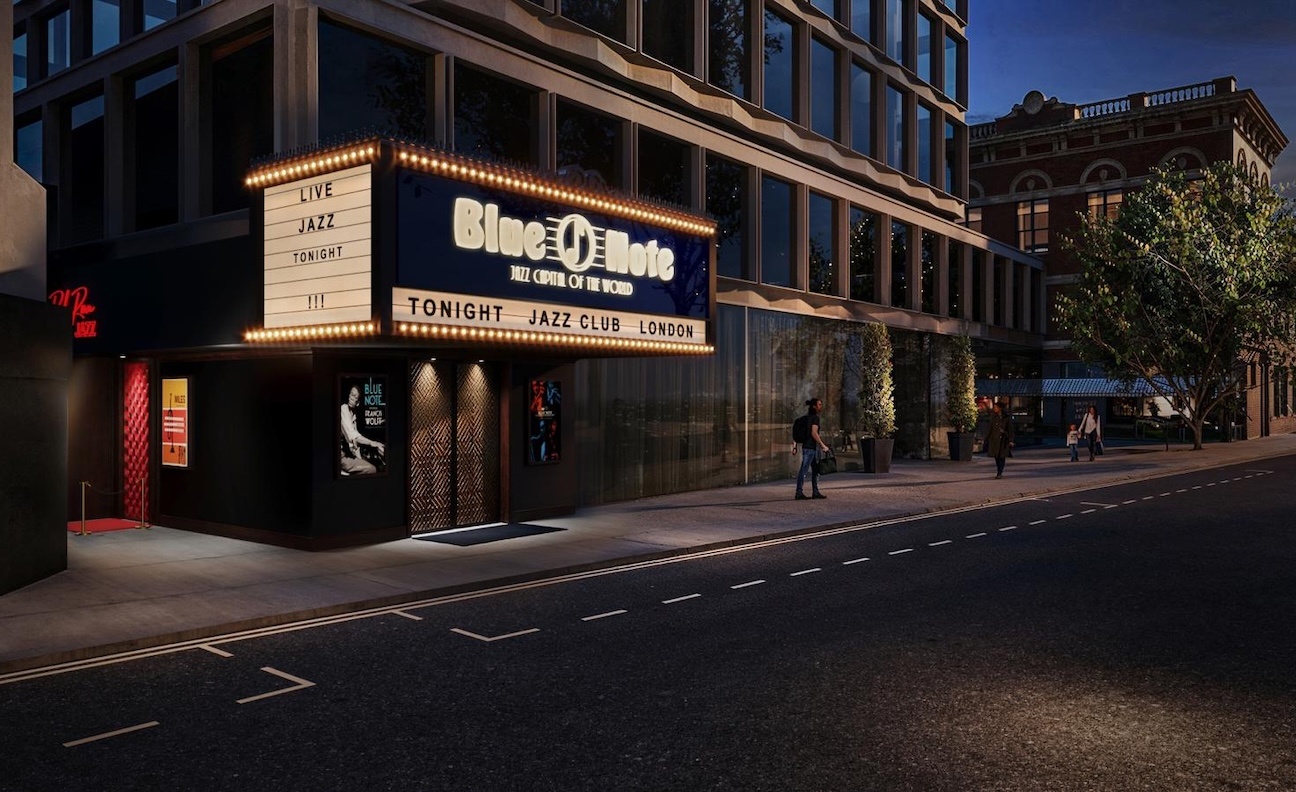
Blue Note Jazz Club's Steven Bensusan and Nick Lewis have told Music Week about their plans for the jazz institution's first London venue, set to open in early September.
Founded in New York City’s Greenwich Village in 1981, the iconic brand has expanded to other US cities, as well as overseas to Japan, China, Brazil and Italy.
Artists such as Raye, Ezra Collective, Yussef Dayes, Kokoroko, Shabaka and Sienna Spiro have performed at Blue Note clubs around the globe.
Blue Note’s first UK spin-off, which is set within the basement of the St Martins Lane hotel in Covent Garden, was granted a licence in May 2025 despite opposition from local residents and the Metropolitan Police.
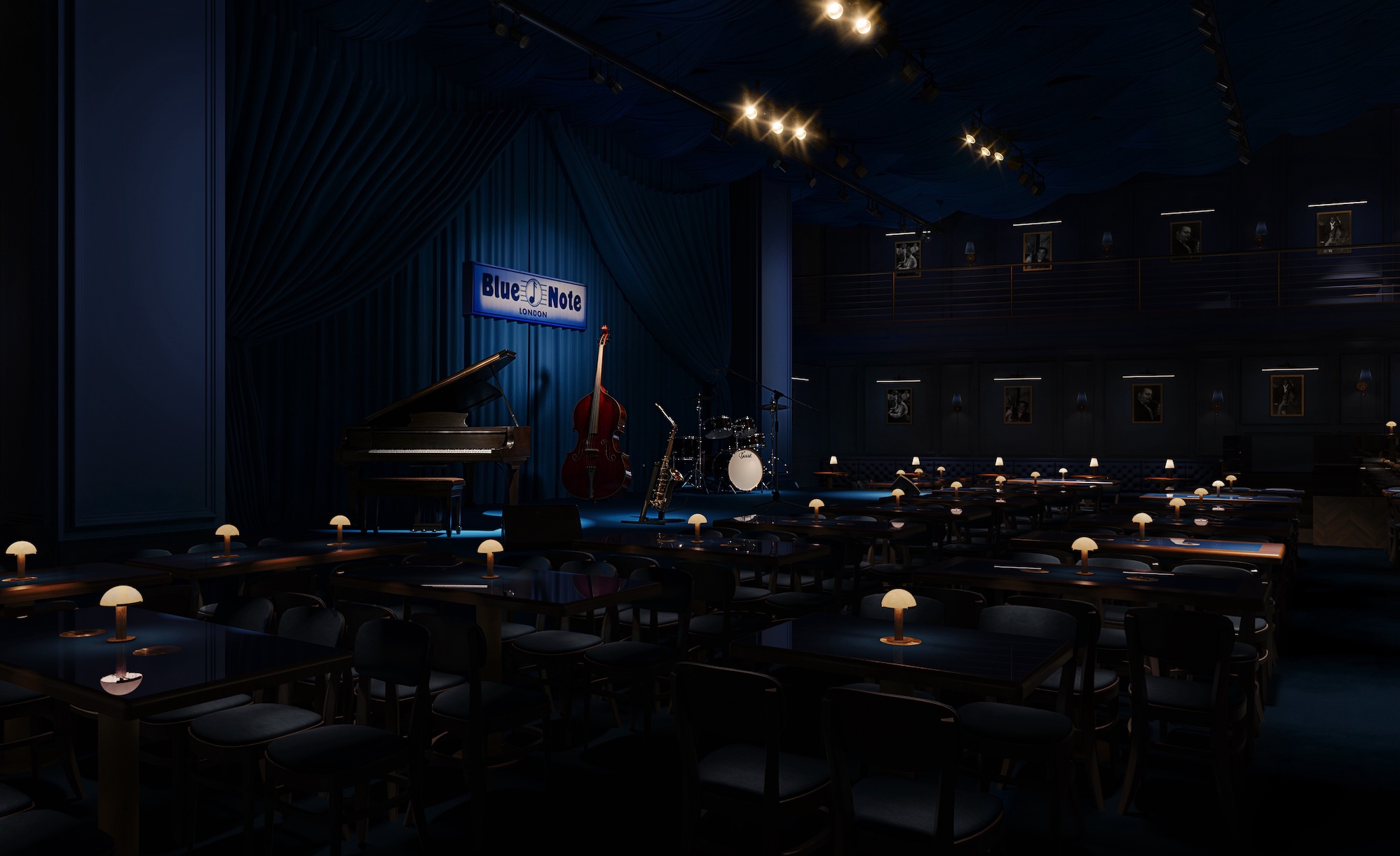
The club will boast two performance spaces: the 250-capacity Blue Note and the 100-cap B Side and has promised to stage gigs from “celebrated icons to rising stars and genre-defying collaborations that reflect the evolution of jazz”.
Here, Blue Note Entertainment Group president Bensusan and director of music & programming Lewis, who recently joined from Camden's Koko, discuss "jazz DNA", the thriving UK scene, what makes London the right move…
How did London – and Covent Garden, specifically – emerge as the right location?
Steven Bensusan: “We've always targeted London as a place that we'd love to see a Blue Note, so we were looking for the right location. It took us a very long time to find what we thought would be great, and our location, Covent Garden, checked all the boxes that we were looking for. It was a shell of a space which we can actually tailor to our needs, which was very rare. Typically, you find these buildings that have columns. But with this, it was basically a blank slate, and so we were able to build it the way we want to, and we're looking forward to opening.”
Jazz is obviously central to the Blue Note identity, but how wide will the programming net be cast?
Nick Lewis: “We're going to go contemporary, obviously majoring on jazz as the core, but taking in jazz-adjacent genres. That's the entire diaspora of Black music, so anything with soul, R&B, hip-hop, maybe even a little Afrobeats, reggae… As long as it has jazz DNA, we will look at it. We want to particularly focus on the UK scene. It's so strong at the moment and especially in the last 10 years. I was in a fortunate position – I was at Ronnie Scott's for 15 years, so I was completely across promoting and championing this recent wave of new cool jazz that's appealing to young audiences, from Ezra Collective to Shabaka's projects to Nubya Garcia to Moses Boyd to Yussef Dayes and all the rest of them, these artists are cutting across not just jazz but young audiences and even pop festivals like All Points East. So it's going beyond the jazz bubble, and that's what we want to do and bring to London with Blue Note as well.”
SB: “That's always been the philosophy of the Blue Note since we opened in 1981 in New York. We presented the legends of jazz – Dizzy Gillespie, Sarah Vaughan – but then artists like Kool & The Gang and Isaac Hayes in the same year, and all these leaders in the other genres of music that are adjacent to jazz. That's always been what we do at all of our clubs, and we want to continue to do that in London.”
We hope to expand further into Europe, with this being our flagship model for future expansion
Steven Bensusan, Blue Note Jazz Club
The UK jazz scene is thriving right now. Is the timing of Blue Note London a happy coincidence, or was that always part of the plan?
SB: “We've been observing the growth and development of the UK artists over the last five to 10 years. I wouldn't say it was a coincidence – one of the reasons why we've targeted London is because of the vibrant music scene. We just want to contribute to it.”
What will differentiate the Blue Note room from the B Side – will they have distinct programming identities or complement each other?
NL: “I think it will be complementary. We've got an opportunity with the two venues, the Blue Note and the B Side, to have a cross-generational appeal. With the main club, it's a seated format, which dictates a certain aesthetic. But with the B Side, I think there'll be an opportunity to perhaps take the tables out and seats out from time to time. Then we can perhaps lean into DJ-led music and club culture, and Latin music and dancing events. So in that respect, you'll be able to cover more genre ground, but also the age demographic from young to old, which is really exciting. If we can unlock that, then you become a cross generational venue, do the best job you can to represent different communities and give music fans a sense of ownership of the venue as well.”
You’ve mentioned the possibility of occasional big-name underplays – can you give a sense of the calibre of artist you're targeting?
NL: “The calibre of artists we're targeting is pretty A-list. I could name some names, but it might get me in trouble...”
SB: “Our most recent Blue Note club opened in Los Angeles, and I think you can look at some of the underplays there as an example of what potentially could happen in London.”
Many independent venues are struggling. Why is now the right time for Blue Note to open in London?
SB: “There are many challenges with small [venues], but I think we have an advantage being that we are a larger network of clubs, and our relationships with the artists are personal and run deep. I think what we bring to the table is a little bit different than just opening another 200 to 250-capacity club in the market.”
You faced some opposition when applying for your licence, how did that play out?
SB: “That was an eye-opening experience. It was a little bit difficult to get the late-night licence, and I understand the community is always concerned about noise and pedestrian traffic and all of that. But I feel that with our experience and expertise in running venues over the last 40 years, we work really well with the communities in every market that we're in, and we make sure that everybody's happy. It was just that some of the pushback initially from the police and the community was a little harder than we've ever seen in other markets.”
NL: “This is a really good news story for London that such a reputable established brand worldwide is choosing to come here. And we're absolutely delighted that we ended up getting the right result on the licence, which allows us to contribute something great to the city.”
What is your relationship with the Blue Note record label?
SB: “The label is not us. The label is owned by Universal Music Group, but we do work hand in hand with them from time to time on projects, as we do share the same name. And we have a good working relationship with Don Was, who runs the label in the United States, and the whole UMG team.”
Where does Blue Note London fit in with your other international venues?
SB: “We hope to expand further into Europe, with this being our flagship model for future expansion. We've had the Blue Note Milan for 22 years, but it sat alone in Milan. And Milan, even though it's a metropolitan city, is a much smaller market than London. We’re feeling that, if we're going to open any other Blue Notes, it will be in cities similar to New York, London, Tokyo, Los Angeles, major markets. Nick is a very experienced talent buyer and director of programming and music, and we're going to rely on him to book the room. But he has a support group of talent buyers from all of our other clubs. So there will be situations, like we're seeing now amongst our existing clubs, where an artist will play Tokyo, LA, New York and London. That enables us to do really special things with artists and give some bigger name artists an opportunity to showcase those smaller venues in all of the major markets around the world.”
This is a really good news story for London that such a reputable established brand worldwide is choosing to come here
Nick Lewis
You talk about fans and musicians feeling a sense of ownership – how are you building relationships with the UK jazz community ahead of opening?
NL: “Again, I’m lucky enough to have spent well over a decade at Ronnie Scott's, so I know the whole scene. I know all the musicians personally; I'm lucky enough to count many of them as friends. So literally, when Steve appointed me, I called them up and invited them to come and play. So to Steve's point earlier about how the jazz industry really does work on personal relationships, it is literally a case of reaching out to these artists to get them to come and celebrate what is a great thing for UK jazz in this country. So we're certainly going to be engaging the major breakout stars of our homegrown scene to come and play some of the first shows.”
SB: “We've been booking a number of UK artists in our clubs and our festivals. We just had the Luna Jazz Festival in the Hollywood Bowl in Los Angeles, where we had Yussef Dayes. Kokoroko also played our festival in New York at Central Park Summer Stage. So we're engaging, and we're hoping that they come out and support us in their hometown.”
The ethos talks about musicians feeling "at home and taken care of" – what does that look like in practice?
NL: “I think that runs to the core of the Blue Note ethos, and the jazz scene in general. There's a general feeling that we must take care of our musicians and our artists above all else. A lot of us are failed musicians, or lapsed musicians, so it's that classic phrase – you try to treat people how you would like to be treated yourself. So when it comes to first-class hospitality, we want to welcome the industry around the artist as well: the agents, the managers, the promoters, the labels, etc. It is all one big ecosystem, and we want to be known for great treatment. Because at the end of the day, a lot of these artists we have relationships with where we want them to come back at least once a year, maybe two or three times a year. So it's great for business. We want to stay friendly with them. We want them to have a great experience. It’s hopefully geared towards a perfect experience.”